THE ADVENTURE COLLECTIVE® · Independent discovery and booking for outdoor travel

Cover the Great Wall, Forbidden City, Temple of Heaven and Summer Palace in a compact private tour that runs between Shanghai and Beijing by high‑speed train. Ideal for travelers pressed for time who want guided context and efficient logistics.
Cover the Great Wall, Forbidden City, Temple of Heaven and Summer Palace in a compact private tour that runs between Shanghai and Beijing by high‑speed train. Ideal for travelers pressed for time who want guided context and efficient logistics.
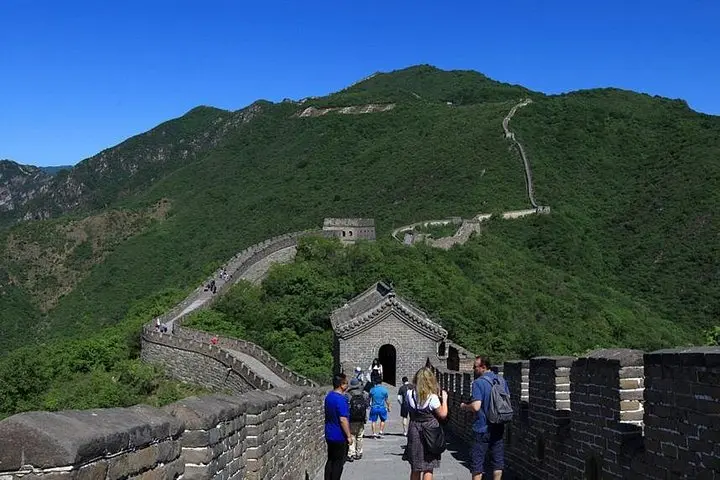
Morning light slices across the platform as a high‑speed train eats distance between Shanghai and Beijing—metal and motion promising two days of imperial scale and altitude-sharp history. Arrive before noon and the city unfurls: the Great Wall at Mutianyu pushes the skyline with stone ramparts, while the Forbidden City and Temple of Heaven sit like chapters of a long, deliberate story.
Verified experiences and guided adventures in the surrounding area.
Operated by China Travel Service · Beijing, Beijing
Morning light slices across the platform as a high‑speed train eats distance between Shanghai and Beijing—metal and motion promising two days of imperial scale and altitude-sharp history. Arrive before noon and the city unfurls: the Great Wall at Mutianyu pushes the skyline with stone ramparts, while the Forbidden City and Temple of Heaven sit like chapters of a long, deliberate story.
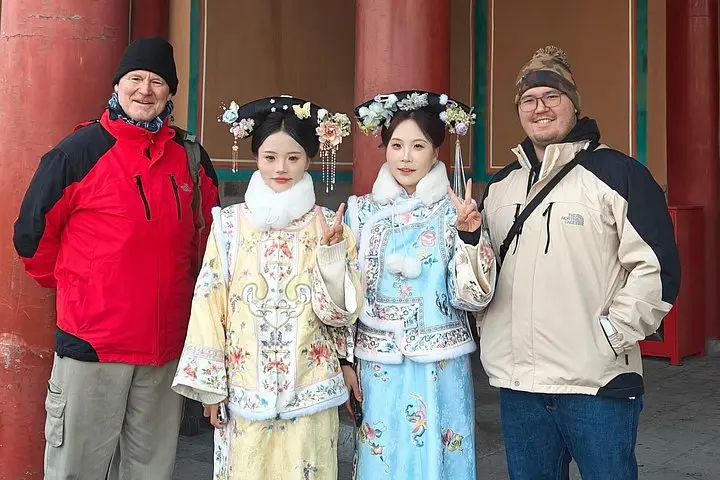
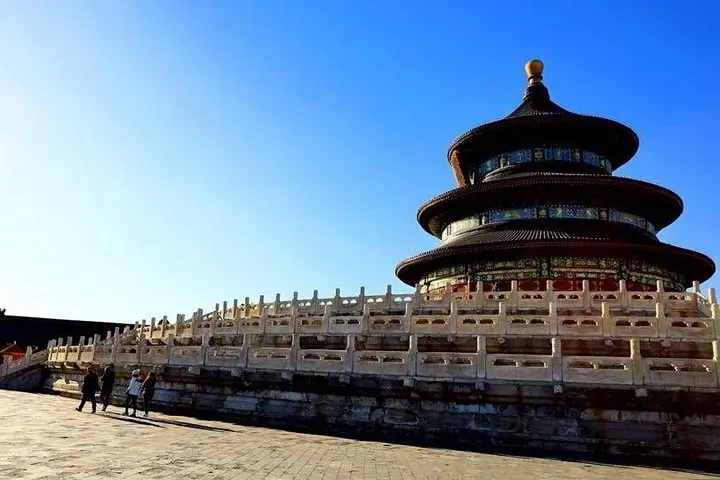
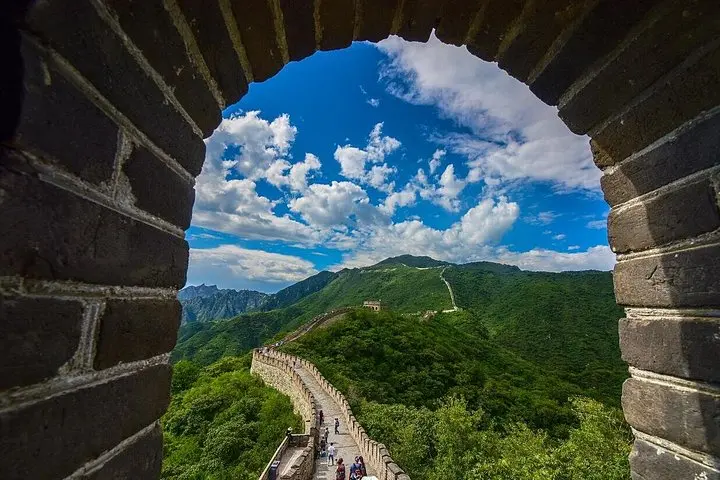
Mutianyu was rebuilt during the early Ming Dynasty and its mossy bricks and stepped towers read like geology and human labor braided together; the wall follows ridgelines, forcing hikers to confront steep stone staircases and open views where wind becomes a companion. Tiananmen Square and the Forbidden City map China’s political geography—wooden halls, courtyards, and axial planning reflecting imperial ritual. The Temple of Heaven illustrates cosmology in architecture, and the Summer Palace turns landscape gardening into lyrical control of water and hill.
Practical guidance: expect a lot of walking on uneven stone and paved plazas; bring a passport and comfortable, grippy shoes. The Mutianyu section offers an optional cable car if stairs are too much; allow transit buffer for train schedules and security lines at major sites. Local guides handle tickets and short transfers, but lunches are usually independent—use that time to sample Beijing snacks.
Timing matters: start early to beat crowds at the Forbidden City, carry water and a light layer for sudden temperature shifts, and keep a photocopy of travel documents. Two days by bullet train compresses China’s imperial narrative into a brisk, manageable experience—efficient, sensory, and richly contextualized.
Yes — the tour price excludes accommodation; you must book a Beijing downtown hotel for the overnight between days.
The Mutianyu section has steep steps and uneven surfaces; it's manageable for most but the cable car is available as an easier alternative at personal cost.
Entrance fees to listed attractions are included as noted in the tour inclusions, but optional extras like the cable car are not.
Children under 18 must be accompanied by an adult; infants must sit on an adult’s lap on public transport and trains.
China Travel Service operates guided outdoor trips and adventures with an emphasis on safety, stewardship, and memorable experiences.
Morning light slices across the platform as a high‑speed train eats distance between Shanghai and Beijing—metal and motion promising two days of imperial scale and altitude-sharp history. Arrive before noon and the city unfurls: the Great Wall at Mutianyu pushes the skyline with stone ramparts, while the Forbidden City and Temple of Heaven sit like chapters of a long, deliberate story.
Morning light slices across the platform as a high‑speed train eats distance between Shanghai and Beijing—metal and motion promising two days of imperial scale and altitude-sharp history. Arrive before noon and the city unfurls: the Great Wall at Mutianyu pushes the skyline with stone ramparts, while the Forbidden City and Temple of Heaven sit like chapters of a long, deliberate story.
Mutianyu was rebuilt during the early Ming Dynasty and its mossy bricks and stepped towers read like geology and human labor braided together; the wall follows ridgelines, forcing hikers to confront steep stone staircases and open views where wind becomes a companion. Tiananmen Square and the Forbidden City map China’s political geography—wooden halls, courtyards, and axial planning reflecting imperial ritual. The Temple of Heaven illustrates cosmology in architecture, and the Summer Palace turns landscape gardening into lyrical control of water and hill.
Practical guidance: expect a lot of walking on uneven stone and paved plazas; bring a passport and comfortable, grippy shoes. The Mutianyu section offers an optional cable car if stairs are too much; allow transit buffer for train schedules and security lines at major sites. Local guides handle tickets and short transfers, but lunches are usually independent—use that time to sample Beijing snacks.
Timing matters: start early to beat crowds at the Forbidden City, carry water and a light layer for sudden temperature shifts, and keep a photocopy of travel documents. Two days by bullet train compresses China’s imperial narrative into a brisk, manageable experience—efficient, sensory, and richly contextualized.