THE ADVENTURE COLLECTIVE® · Independent discovery and booking for outdoor travel

A private 10‑day overland itinerary that starts in Beijing’s imperial heart and finishes under Everest’s north face. Expect cultural depth in Lhasa and demanding high‑altitude travel with night options ranging from hotels to basic guesthouses near Rongbuk.
A private 10‑day overland itinerary that starts in Beijing’s imperial heart and finishes under Everest’s north face. Expect cultural depth in Lhasa and demanding high‑altitude travel with night options ranging from hotels to basic guesthouses near Rongbuk.
The van peels away from Beijing at dawn, windows fogged from two worlds: lowland bustle and the high, thin air waiting ahead. Over ten days you trade imperial courtyards and hutong alleys for snow passes, prayer flags, and the raw, vertical face of Everest. In Lhasa the Potala’s white and ochre tiers watch the city below; by day seven the plateau opens into a stark, wind-scalloped landscape where Rongbuk Monastery keeps vigil beneath Everest’s north face.
Verified experiences and guided adventures in the surrounding area.
Operated by happychinatours · Lhasa, Tibet
The van peels away from Beijing at dawn, windows fogged from two worlds: lowland bustle and the high, thin air waiting ahead. Over ten days you trade imperial courtyards and hutong alleys for snow passes, prayer flags, and the raw, vertical face of Everest. In Lhasa the Potala’s white and ochre tiers watch the city below; by day seven the plateau opens into a stark, wind-scalloped landscape where Rongbuk Monastery keeps vigil beneath Everest’s north face.
This route threads centuries of history and geology. Beijing’s Forbidden City reminds you of dynastic power; the Tibetan Plateau — uplifted by the India-Asia collision — is a high desert of glacial valleys and moraine fields carved over millennia. Cultural customs are present-tense: butter lamps at Jokhang, morning debates at Sera, and yak caravans skirting high passes. Local guides translate both language and etiquette, explaining prayer wheel rhythms and monastery protocols.
Practical guidance: acclimatize—plan quiet arrival time in Lhasa and avoid heavy exertion the first 24–48 hours. Expect long drives (several 4–8 hour legs), high passes above 4,500–5,200 m, and basic accommodations near Everest (guesthouse or tent). Bring layered clothing, UV protection, and a reusable water bottle; hydrate steadily. Winter months can close high roads, while late summer brings occasional monsoon clouds. Photography is rewarding but respectful distance is essential at religious sites. This tour balances cultural immersion with high‑altitude adventure—prepared travelers return with sharp photos, a steadier breath, and a clearer sense of the roof of the world.
Yes — foreign visitors require a Tibet Travel Permit arranged by your operator before arrival; additional permits may be needed for travel to border regions like Everest.
Altitude illness is a real risk above 3,000 m; the itinerary includes acclimatization time in Lhasa but monitor symptoms and consult your guide; medications and oxygen can help in moderate cases.
Accommodation varies from basic mountain guesthouses to simple tented options near Rongbuk; services are more limited than in Lhasa or Beijing.
Families can join, but children should be capable of handling long drives and high altitude; consult the operator about age recommendations and child seating.
happychinatours operates guided outdoor trips and adventures with an emphasis on safety, stewardship, and memorable experiences.


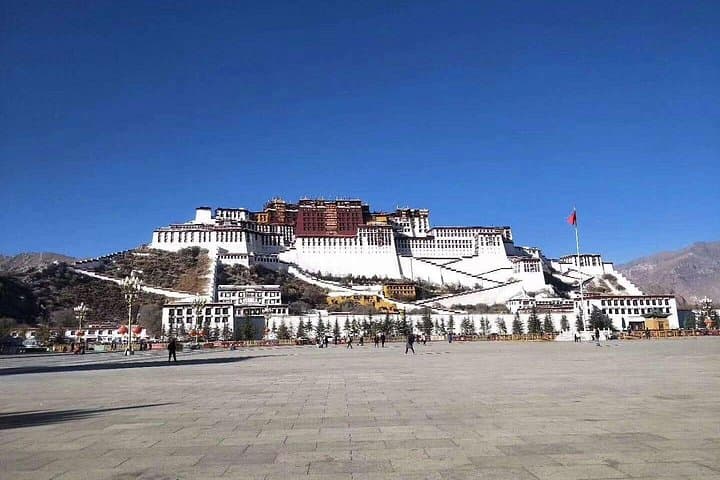
The van peels away from Beijing at dawn, windows fogged from two worlds: lowland bustle and the high, thin air waiting ahead. Over ten days you trade imperial courtyards and hutong alleys for snow passes, prayer flags, and the raw, vertical face of Everest. In Lhasa the Potala’s white and ochre tiers watch the city below; by day seven the plateau opens into a stark, wind-scalloped landscape where Rongbuk Monastery keeps vigil beneath Everest’s north face.
The van peels away from Beijing at dawn, windows fogged from two worlds: lowland bustle and the high, thin air waiting ahead. Over ten days you trade imperial courtyards and hutong alleys for snow passes, prayer flags, and the raw, vertical face of Everest. In Lhasa the Potala’s white and ochre tiers watch the city below; by day seven the plateau opens into a stark, wind-scalloped landscape where Rongbuk Monastery keeps vigil beneath Everest’s north face.
This route threads centuries of history and geology. Beijing’s Forbidden City reminds you of dynastic power; the Tibetan Plateau — uplifted by the India-Asia collision — is a high desert of glacial valleys and moraine fields carved over millennia. Cultural customs are present-tense: butter lamps at Jokhang, morning debates at Sera, and yak caravans skirting high passes. Local guides translate both language and etiquette, explaining prayer wheel rhythms and monastery protocols.
Practical guidance: acclimatize—plan quiet arrival time in Lhasa and avoid heavy exertion the first 24–48 hours. Expect long drives (several 4–8 hour legs), high passes above 4,500–5,200 m, and basic accommodations near Everest (guesthouse or tent). Bring layered clothing, UV protection, and a reusable water bottle; hydrate steadily. Winter months can close high roads, while late summer brings occasional monsoon clouds. Photography is rewarding but respectful distance is essential at religious sites. This tour balances cultural immersion with high‑altitude adventure—prepared travelers return with sharp photos, a steadier breath, and a clearer sense of the roof of the world.