THE ADVENTURE COLLECTIVE® · Independent discovery and booking for outdoor travel

Ride in an original black cab through Belfast’s mural-lined streets and peace walls. This private 2-hour tour pairs first-hand driver stories with close-up views of political murals and sites from the Troubles.
Ride in an original black cab through Belfast’s mural-lined streets and peace walls. This private 2-hour tour pairs first-hand driver stories with close-up views of political murals and sites from the Troubles.
A black taxi pulls away from the outlines of Belfast City Hall and the city reconfigures itself through the window: brick terraces, loud murals, and high concrete peace walls that divide neighborhoods by memory and meaning.
Verified experiences and guided adventures in the surrounding area.
Operated by Belfast famous black taxi tours · Belfast, Northern Ireland
A black taxi pulls away from the outlines of Belfast City Hall and the city reconfigures itself through the window: brick terraces, loud murals, and high concrete peace walls that divide neighborhoods by memory and meaning.
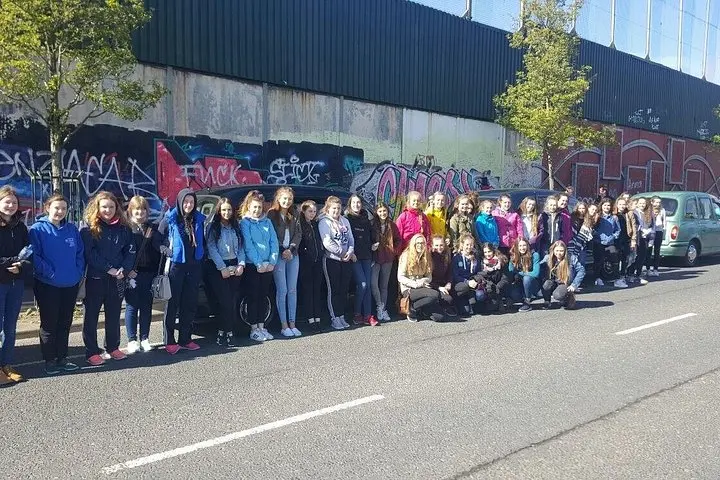
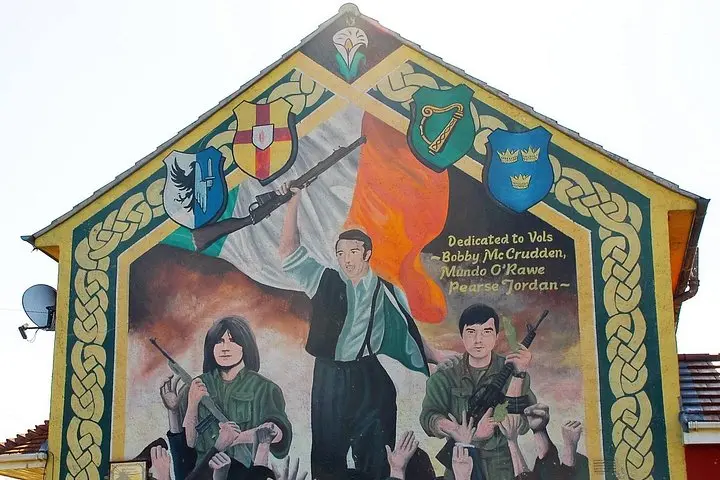
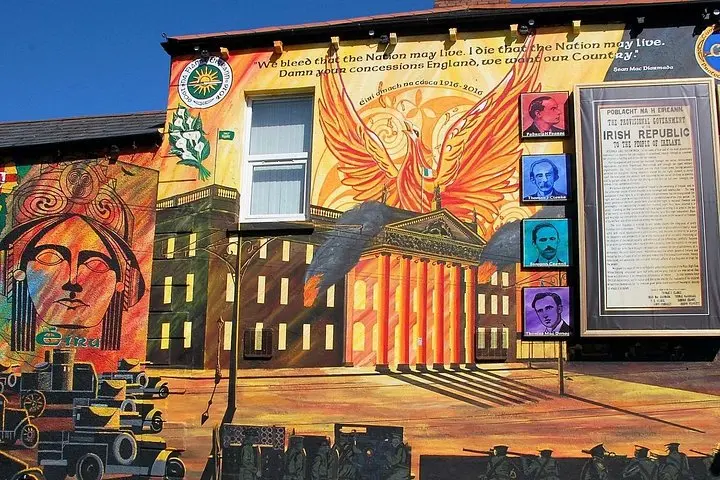
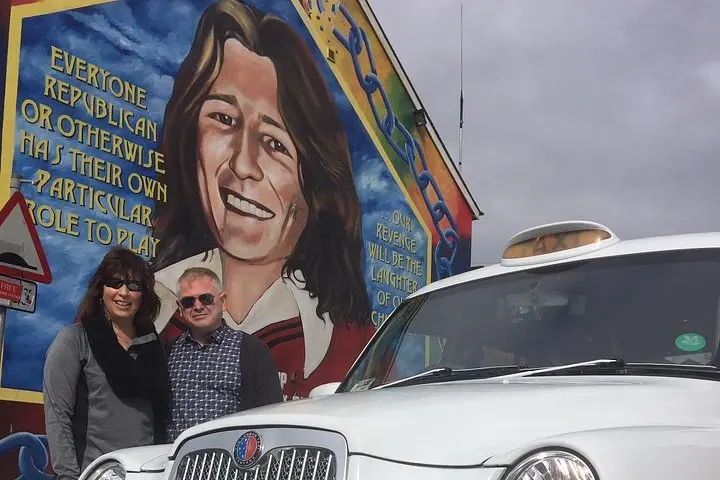
This private cab tour threads the Falls and Shankill roads, Bombay Street and the Peace Lines—places where political art and lived experience meet. The murals here are not decorative; they are shorthand for decades of conflict known as the Troubles, and they change with the news. Guides on these tours are often the original black cab drivers who ferried people during the worst years; their accounts stitch local culture, religion, and working-class life to sites such as Bobby Sands’ mural, Clonard Monastery and the Divis Flats.
Geologically Belfast sits at the mouth of the River Lagan; its urban form grew from maritime trade, shipbuilding and the scarred landscapes of industrialization—now reinterpreted by street art and community-led peace projects. Expect close-up views of murals, short photo stops, and contextual narratives about paramilitary history, sectarian memory and the peace process.
Practical guidance: the tour is about two hours with pickup from central Belfast (within ~1 km of City Hall). Wear weatherproof layers and comfortable shoes—you’ll mostly ride but step out for photos and short walks. Bring a charged camera and an open, respectful attitude: many murals are political and neighborhoods are living communities. Book a morning slot for softer light and quieter streets; consider combining this with a walking visit to the Clonard Monastery if time allows.
The tour runs about two hours by private black cab with several short stops for photos and commentary; most time is spent seated with guided narration.
Guides are often long-standing black cab drivers who lived through the Troubles and share first‑hand accounts alongside historical context.
Yes—pickup is provided within roughly 1 km of Belfast City Hall; confirm the exact meeting point when booking.
Yes—suitable for families, but content covers recent political violence; children should be accompanied by adults and parents may wish to prepare them.
Belfast famous black taxi tours operates guided outdoor trips and adventures with an emphasis on safety, stewardship, and memorable experiences.
A black taxi pulls away from the outlines of Belfast City Hall and the city reconfigures itself through the window: brick terraces, loud murals, and high concrete peace walls that divide neighborhoods by memory and meaning.
A black taxi pulls away from the outlines of Belfast City Hall and the city reconfigures itself through the window: brick terraces, loud murals, and high concrete peace walls that divide neighborhoods by memory and meaning.
This private cab tour threads the Falls and Shankill roads, Bombay Street and the Peace Lines—places where political art and lived experience meet. The murals here are not decorative; they are shorthand for decades of conflict known as the Troubles, and they change with the news. Guides on these tours are often the original black cab drivers who ferried people during the worst years; their accounts stitch local culture, religion, and working-class life to sites such as Bobby Sands’ mural, Clonard Monastery and the Divis Flats.
Geologically Belfast sits at the mouth of the River Lagan; its urban form grew from maritime trade, shipbuilding and the scarred landscapes of industrialization—now reinterpreted by street art and community-led peace projects. Expect close-up views of murals, short photo stops, and contextual narratives about paramilitary history, sectarian memory and the peace process.
Practical guidance: the tour is about two hours with pickup from central Belfast (within ~1 km of City Hall). Wear weatherproof layers and comfortable shoes—you’ll mostly ride but step out for photos and short walks. Bring a charged camera and an open, respectful attitude: many murals are political and neighborhoods are living communities. Book a morning slot for softer light and quieter streets; consider combining this with a walking visit to the Clonard Monastery if time allows.