THE ADVENTURE COLLECTIVE® · Independent discovery and booking for outdoor travel

Walk Belfast’s streets with a local: from the Big Fish and hidden Farset to the Cathedral Quarter and Titanic memorials. This 2–3 hour guided tour blends industrial history, street culture and practical city-side tips.
Walk Belfast’s streets with a local: from the Big Fish and hidden Farset to the Cathedral Quarter and Titanic memorials. This 2–3 hour guided tour blends industrial history, street culture and practical city-side tips.
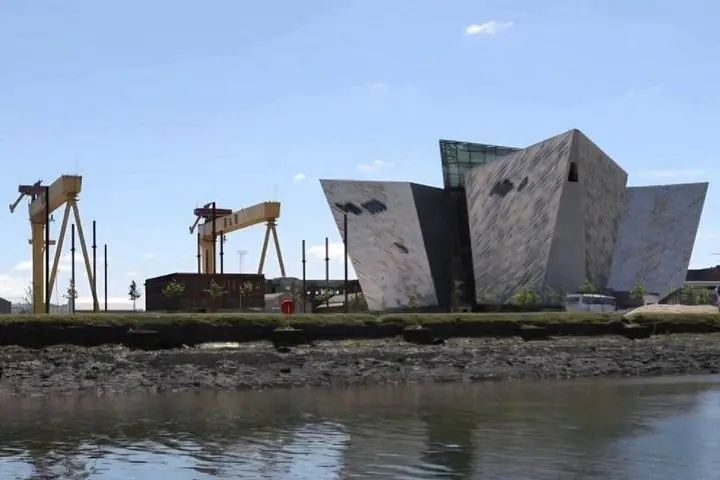
You step out under a low grey sky and the river Lagan pulls your eye toward the docks — rusted gantries and modern glass share the shoreline like two storytellers arguing over the same past. The guide draws you toward the Big Fish, its ceramic scales nodding to old legends and the hidden Farset beneath the streets; the city’s story is spoken in brick, bronze and narrow alleys.
Verified experiences and guided adventures in the surrounding area.
Operated by This is Belfast Walking Tours · Belfast, Northern Ireland
You step out under a low grey sky and the river Lagan pulls your eye toward the docks — rusted gantries and modern glass share the shoreline like two storytellers arguing over the same past. The guide draws you toward the Big Fish, its ceramic scales nodding to old legends and the hidden Farset beneath the streets; the city’s story is spoken in brick, bronze and narrow alleys.
Belfast rose fast in the industrial age, its shipyards producing the ships that carried both commerce and reputation — the Titanic’s shadow still lingers at the quays. The High Street echoes the radical politics of the 18th and 19th centuries; Presbyterian meeting houses and Victorian civic blocks reveal a city remade by trade and argument. Geologically, the surrounding drumlins and basalt outcrops of County Antrim frame the harbour, while the Lagan carved a working route that defined settlement patterns.
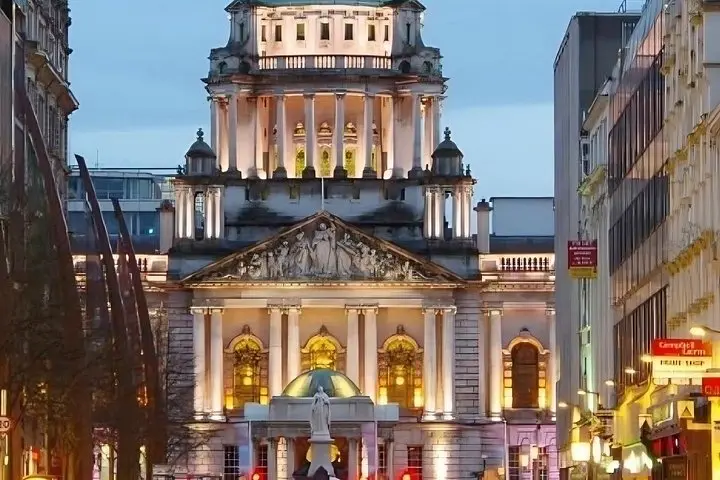
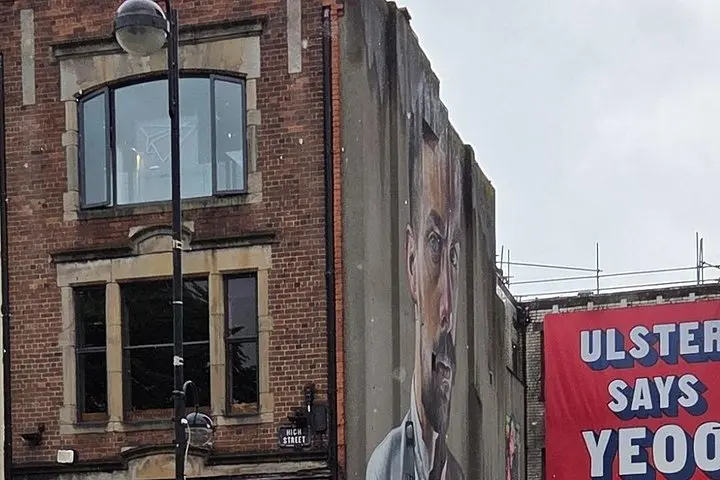
Culturally, the tour threads through the Cathedral Quarter’s music and pub life, pauses at municipal monuments, and points out murals that mark community memory. Local insight: conversations here move fast, and humor often hides hard histories.
Practical guidance: allow 2–3 hours, wear waterproof shoes and a mid-layer — Belfast weather shifts quickly. Public transport connects to start points and the route is stroller- and most-accessible friendly, but expect cobbles and short climbs. Bring a camera, respect memorial sites, and plan for an easy-paced walk that balances storytelling with stopping time for photos and questions.
The tour runs about 2–3 hours depending on group questions and walking pace.
The tour is labeled stroller accessible; however, expect some cobbles and short steps that may be challenging for full mobility aid use — contact the operator if you need specifics.
This walking tour visits public sites and does not include entry fees to paid attractions; any indoor admissions are noted in the itinerary if applicable.
Tours are conducted in English; check with the operator for private or alternative language options.
This is Belfast Walking Tours operates guided outdoor trips and adventures with an emphasis on safety, stewardship, and memorable experiences.
You step out under a low grey sky and the river Lagan pulls your eye toward the docks — rusted gantries and modern glass share the shoreline like two storytellers arguing over the same past. The guide draws you toward the Big Fish, its ceramic scales nodding to old legends and the hidden Farset beneath the streets; the city’s story is spoken in brick, bronze and narrow alleys.
You step out under a low grey sky and the river Lagan pulls your eye toward the docks — rusted gantries and modern glass share the shoreline like two storytellers arguing over the same past. The guide draws you toward the Big Fish, its ceramic scales nodding to old legends and the hidden Farset beneath the streets; the city’s story is spoken in brick, bronze and narrow alleys.
Belfast rose fast in the industrial age, its shipyards producing the ships that carried both commerce and reputation — the Titanic’s shadow still lingers at the quays. The High Street echoes the radical politics of the 18th and 19th centuries; Presbyterian meeting houses and Victorian civic blocks reveal a city remade by trade and argument. Geologically, the surrounding drumlins and basalt outcrops of County Antrim frame the harbour, while the Lagan carved a working route that defined settlement patterns.
Culturally, the tour threads through the Cathedral Quarter’s music and pub life, pauses at municipal monuments, and points out murals that mark community memory. Local insight: conversations here move fast, and humor often hides hard histories.
Practical guidance: allow 2–3 hours, wear waterproof shoes and a mid-layer — Belfast weather shifts quickly. Public transport connects to start points and the route is stroller- and most-accessible friendly, but expect cobbles and short climbs. Bring a camera, respect memorial sites, and plan for an easy-paced walk that balances storytelling with stopping time for photos and questions.