THE ADVENTURE COLLECTIVE® · Independent discovery and booking for outdoor travel

Walk from Queen’s University’s Gothic Lanyon Building into the humid glow of the Palm House, then stand among weathered stones at Friar’s Bush Ancient Graveyard. This 2½-hour guided tour blends architecture, botany, and somber local history with skip-the-line access to the Ulster Museum.
Walk from Queen’s University’s Gothic Lanyon Building into the humid glow of the Palm House, then stand among weathered stones at Friar’s Bush Ancient Graveyard. This 2½-hour guided tour blends architecture, botany, and somber local history with skip-the-line access to the Ulster Museum.
A late-morning light slips through Victorian glass as the group moves from the Lanyon Building’s red-brick façade into the humid hush of the Palm House. The air here tastes faintly of soil and citrus; tropical leaves lean toward the warm glass while outside the city hums. From the university’s Gothic arches the guide threads stories of 19th-century civic ambition into the gardens’ plant histories, then leads the group into the graveyard where weathered stones keep quieter, older chapters.
Verified experiences and guided adventures in the surrounding area.
Operated by The Belfast & Dublin 1798 Walking Tours · Belfast, Northern Ireland
A late-morning light slips through Victorian glass as the group moves from the Lanyon Building’s red-brick façade into the humid hush of the Palm House. The air here tastes faintly of soil and citrus; tropical leaves lean toward the warm glass while outside the city hums. From the university’s Gothic arches the guide threads stories of 19th-century civic ambition into the gardens’ plant histories, then leads the group into the graveyard where weathered stones keep quieter, older chapters.
Queen’s University rose in the mid-1800s as part of Ireland’s campus-building boom; its Lanyon Building is a textbook example of Gothic Revival architecture. The Botanic Gardens—opened 1828—host one of the world’s earliest curvilinear cast-iron glasshouses (the Palm House) and the restored Tropical Ravine. Friar’s Bush Ancient Graveyard, with markers dating back toward the early medieval era and a stark mid-19th-century famine mass grave, connects Belfast’s civic story to its human costs. The Ulster Museum completes the loop with archaeology, art, and exhibits on the Troubles.
Practically, expect mostly flat, walkable paths but pockets of uneven stone in the graveyard and steps inside some historic buildings. The tour runs about 2½ hours and suits most fitness levels; wear sturdy shoes, bring a weatherproof layer, and allow time for photography and reflective pauses at Friar’s Bush. Guides are local historians—ask about inscriptions, plant provenance, or the museum’s Egyptian mummy. For travelers who want history with a pulse, this compact circuit pairs urban energy with intimate, sometimes solemn, encounters with the past.
Yes — the tour covers admission to the Palm House, Tropical Ravine and the Ulster Museum as described.
Most areas in Queen’s and the Ulster Museum are accessible, but the Friar’s Bush graveyard has uneven ground; contact the operator to discuss specific needs.
This is a small private tour limited to ten guests for a more intimate experience.
No — refreshments are not included, but the route ends near cafés and pubs where you can linger after the tour.
The Belfast & Dublin 1798 Walking Tours operates guided outdoor trips and adventures with an emphasis on safety, stewardship, and memorable experiences.
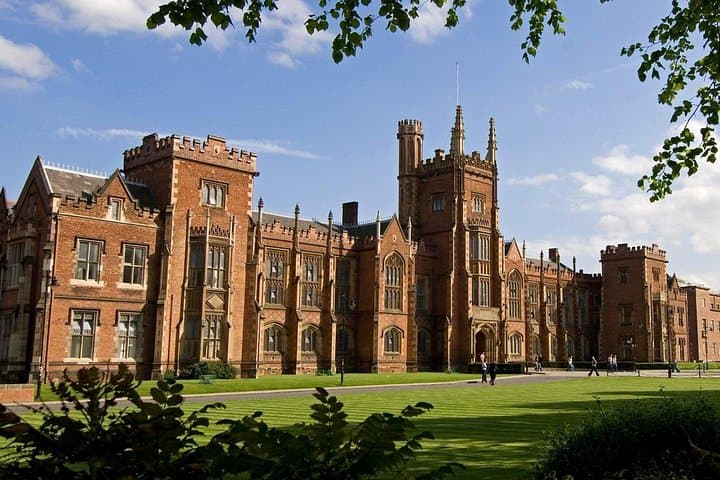


A late-morning light slips through Victorian glass as the group moves from the Lanyon Building’s red-brick façade into the humid hush of the Palm House. The air here tastes faintly of soil and citrus; tropical leaves lean toward the warm glass while outside the city hums. From the university’s Gothic arches the guide threads stories of 19th-century civic ambition into the gardens’ plant histories, then leads the group into the graveyard where weathered stones keep quieter, older chapters.
A late-morning light slips through Victorian glass as the group moves from the Lanyon Building’s red-brick façade into the humid hush of the Palm House. The air here tastes faintly of soil and citrus; tropical leaves lean toward the warm glass while outside the city hums. From the university’s Gothic arches the guide threads stories of 19th-century civic ambition into the gardens’ plant histories, then leads the group into the graveyard where weathered stones keep quieter, older chapters.
Queen’s University rose in the mid-1800s as part of Ireland’s campus-building boom; its Lanyon Building is a textbook example of Gothic Revival architecture. The Botanic Gardens—opened 1828—host one of the world’s earliest curvilinear cast-iron glasshouses (the Palm House) and the restored Tropical Ravine. Friar’s Bush Ancient Graveyard, with markers dating back toward the early medieval era and a stark mid-19th-century famine mass grave, connects Belfast’s civic story to its human costs. The Ulster Museum completes the loop with archaeology, art, and exhibits on the Troubles.
Practically, expect mostly flat, walkable paths but pockets of uneven stone in the graveyard and steps inside some historic buildings. The tour runs about 2½ hours and suits most fitness levels; wear sturdy shoes, bring a weatherproof layer, and allow time for photography and reflective pauses at Friar’s Bush. Guides are local historians—ask about inscriptions, plant provenance, or the museum’s Egyptian mummy. For travelers who want history with a pulse, this compact circuit pairs urban energy with intimate, sometimes solemn, encounters with the past.