THE ADVENTURE COLLECTIVE® · Independent discovery and booking for outdoor travel

Follow a guide into Bébour-Bélouve’s high rainforest to reach the dramatic Trou de Fer viewpoint. This accessible five-hour hike combines endemic flora, volcanic geology, and a powerful waterfall finale.
Follow a guide into Bébour-Bélouve’s high rainforest to reach the dramatic Trou de Fer viewpoint. This accessible five-hour hike combines endemic flora, volcanic geology, and a powerful waterfall finale.
A damp canopy opens above the trail as the group slips from the gîte car park into the Bébour-Bélouve forest. Fern fronds brush shoulders; orchids cling to trunks; birds—zosterops and Réunion bulbuls—call from the shadows. The path winds across a high-elevation rainforest, the air heavy with mist that seems to push walkers forward toward the rim where Trou de Fer drops in stepped curtains.
Verified experiences and guided adventures in the surrounding area.
Operated by OTENTHIKE · Hell-Bourg, Réunion
A damp canopy opens above the trail as the group slips from the gîte car park into the Bébour-Bélouve forest. Fern fronds brush shoulders; orchids cling to trunks; birds—zosterops and Réunion bulbuls—call from the shadows. The path winds across a high-elevation rainforest, the air heavy with mist that seems to push walkers forward toward the rim where Trou de Fer drops in stepped curtains.
Geology here is volcanic and recent in geological terms: older lava flows erode into deep cirques and narrow canyons, and Trou de Fer pours through a collapsed caldera system that shaped the island’s interior. Culturally, the Salazie region grew around small Creole farming communities and mountain refuges; Hell-Bourg, the nearest village, preserves 19th-century houses and a slow pace that contrasts with the kinetic energy of the falls.
On this guided route expect soft, often muddy dirt tracks, wooden boardwalks across boggy patches, and occasional steep steps near viewpoints. The guide points out endemic plants—tree ferns, Takamaka—and explains local use of forest resources. Wildlife is discreet; listen for calls rather than expect close encounters.
Practical notes: plan for five hours door-to-door from the Bélouve parking area, wear grippy boots and a lightweight rain layer, and bring 1–2 liters of water and high-energy snacks. Start earlier in the day to avoid low cloud on the rim and to give yourself time at viewpoints. The trail is suitable for reasonably mobile walkers but can be slippery after rain—respect trail closures and stick with your guide for the safest, most informative visit.
The guided experience is about five hours round-trip from the Bélouve gîte parking area; terrain is mostly easy to moderate with some muddy and stepped sections.
Yes—many family groups attend; participants should be mobile and comfortable on uneven ground; discuss specific needs with the operator at booking.
No special permits are required for this guided hike, but access rules can change—confirm with the operator and respect any protected-area signage.
Expect endemic bird species such as Réunion bulbuls and white-eyes, and abundant plant life like tree ferns and native orchids; mammal sightings are rare.
OTENTHIKE operates guided outdoor trips and adventures with an emphasis on safety, stewardship, and memorable experiences.
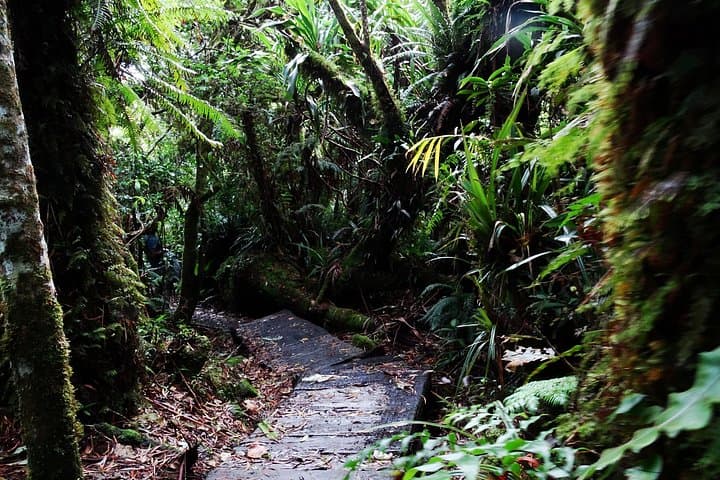
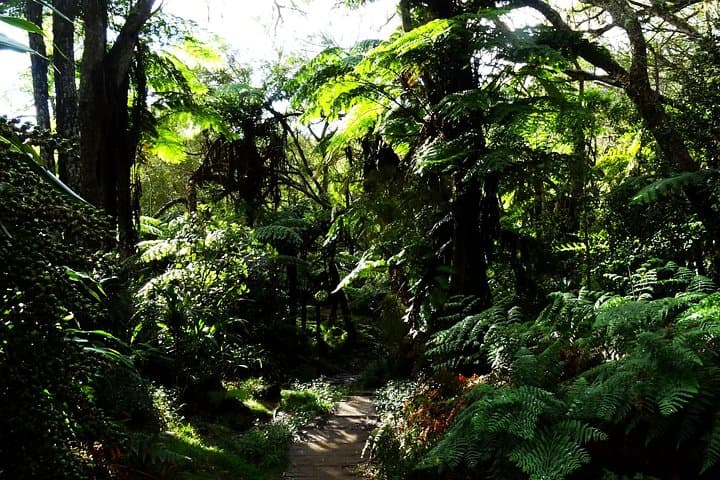
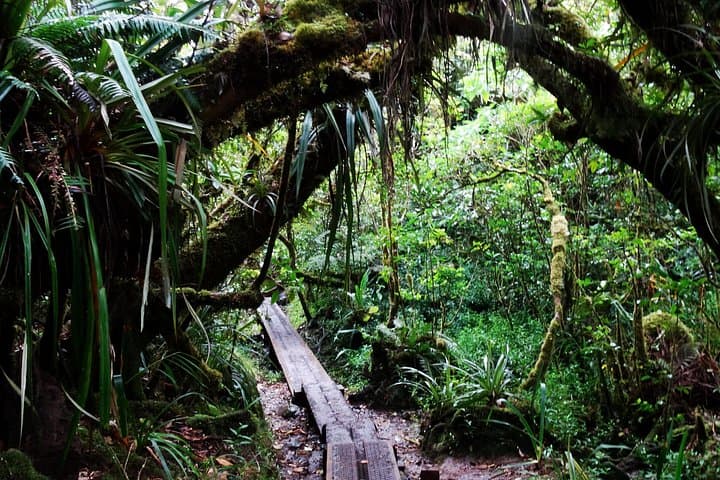
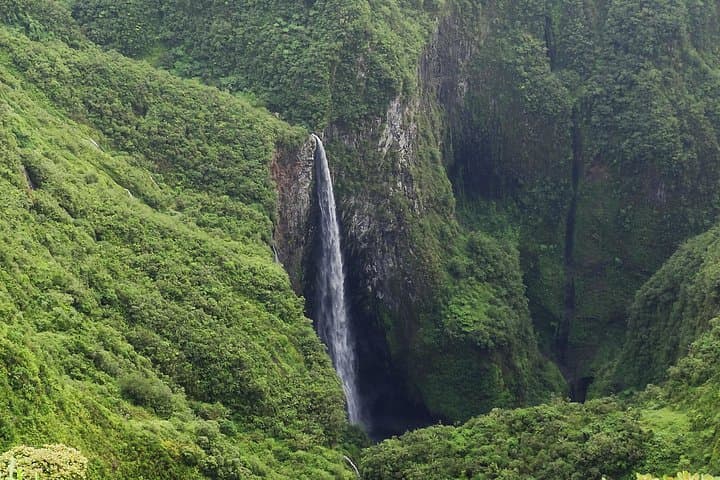
A damp canopy opens above the trail as the group slips from the gîte car park into the Bébour-Bélouve forest. Fern fronds brush shoulders; orchids cling to trunks; birds—zosterops and Réunion bulbuls—call from the shadows. The path winds across a high-elevation rainforest, the air heavy with mist that seems to push walkers forward toward the rim where Trou de Fer drops in stepped curtains.
A damp canopy opens above the trail as the group slips from the gîte car park into the Bébour-Bélouve forest. Fern fronds brush shoulders; orchids cling to trunks; birds—zosterops and Réunion bulbuls—call from the shadows. The path winds across a high-elevation rainforest, the air heavy with mist that seems to push walkers forward toward the rim where Trou de Fer drops in stepped curtains.
Geology here is volcanic and recent in geological terms: older lava flows erode into deep cirques and narrow canyons, and Trou de Fer pours through a collapsed caldera system that shaped the island’s interior. Culturally, the Salazie region grew around small Creole farming communities and mountain refuges; Hell-Bourg, the nearest village, preserves 19th-century houses and a slow pace that contrasts with the kinetic energy of the falls.
On this guided route expect soft, often muddy dirt tracks, wooden boardwalks across boggy patches, and occasional steep steps near viewpoints. The guide points out endemic plants—tree ferns, Takamaka—and explains local use of forest resources. Wildlife is discreet; listen for calls rather than expect close encounters.
Practical notes: plan for five hours door-to-door from the Bélouve parking area, wear grippy boots and a lightweight rain layer, and bring 1–2 liters of water and high-energy snacks. Start earlier in the day to avoid low cloud on the rim and to give yourself time at viewpoints. The trail is suitable for reasonably mobile walkers but can be slippery after rain—respect trail closures and stick with your guide for the safest, most informative visit.