THE ADVENTURE COLLECTIVE® · Independent discovery and booking for outdoor travel

Set out from Marina de Lagos for a 2.5-hour blend of marine science and spectacle: marine biologists guide dolphin searches and the boat explores the limestone caves east of Lagos, including the famous Algar de Benagil. Practical, interpretive, and regulated—perfect for photographers and wildlife-minded travelers.
Set out from Marina de Lagos for a 2.5-hour blend of marine science and spectacle: marine biologists guide dolphin searches and the boat explores the limestone caves east of Lagos, including the famous Algar de Benagil. Practical, interpretive, and regulated—perfect for photographers and wildlife-minded travelers.
The wake curves away from Marina de Lagos like a quick punctuation mark; gulls hold station above, watching the boats negotiate the surface. Within minutes the mainland falls behind and the Atlantic opens—wide, urgent, and patterned with wind-driven ripples. Marine biologists aboard scan the horizon, binoculars cocked, and the captain eases into the search: dolphins are not a promise but an invitation, and when they arrive they change the sea into choreography—arched backs breaking the glass of the water, calves riding the bow waves.
Verified experiences and guided adventures in the surrounding area.
The wake curves away from Marina de Lagos like a quick punctuation mark; gulls hold station above, watching the boats negotiate the surface. Within minutes the mainland falls behind and the Atlantic opens—wide, urgent, and patterned with wind-driven ripples. Marine biologists aboard scan the horizon, binoculars cocked, and the captain eases into the search: dolphins are not a promise but an invitation, and when they arrive they change the sea into choreography—arched backs breaking the glass of the water, calves riding the bow waves.
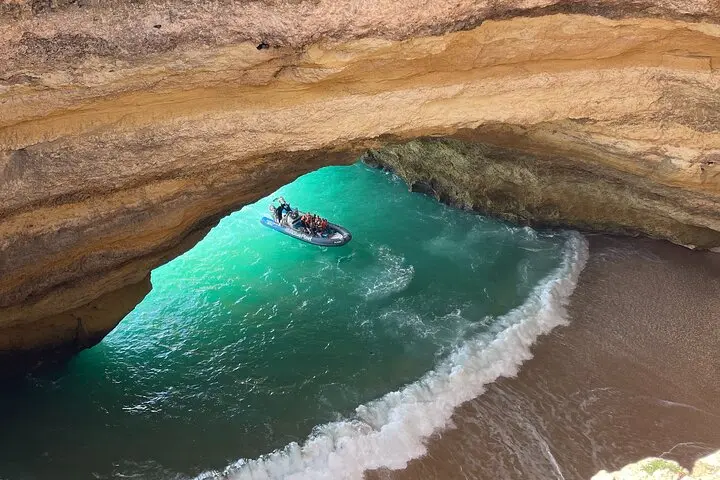
This 2.5-hour excursion threads science and spectacle. Starting in Lagos harbour, the route typically sweeps south of town for dolphin searching before turning east toward the sugar-colored cliffs of the central Algarve. Geology here is blunt and recent: soft Miocene limestone has been hollowed by tidal pressure and storms into the sea caves and arches that draw photographers to sites such as Algar de Benagil. The cave’s skylit chamber is a signature moment—approached under regulation and for only a few minutes at a time to protect both visitors and the fragile coastal environment.
There’s a cultural edge to the trip, too. Fishing villages along this stretch once depended on small open boats and local knowledge of hidden coves; today the same coves are read as ecosystems. The onboard marine biologists add context—identifying species, explaining local feeding patterns, and detailing the regulations that limit interactions with dolphins to short, non-intrusive observations.
Practicalities are straightforward. Tours last about 150 minutes and depart from Marina de Lagos; sea conditions dictate proximity to Benagil and time in cave approaches. Regulations allow a maximum 30 minutes of dolphin observation overall and brief entries near the Algar de Benagil so every minute counts—have your camera ready and set to continuous shooting. Bring motion-sickness medication if you’re sensitive, dress in layers (the wind off the Atlantic is a different temperature), and use non-slip shoes for boarding.
The trip is ideal for travelers who want a mix of natural history and concentrated coastal scenery without a long time commitment. Expect binocular views of dolphins, dramatic portraits of the cliffs and arches, and short windows inside the Benagil approach where light and limestone make the cliffs glow. Operators emphasize conservation: keep noise low around wildlife, follow crew instructions for photography, and avoid bringing single-use plastics aboard.
For photographers, golden-hour light and a calm sea give the best colors; for wildlife lovers, ask the biologist about seasonal feeding shifts. Whether you’re after a close encounter with dolphins or a quick but rich tour of the Algarve’s karst coastline, this outing delivers a compact, interpretive taste of Portugal’s southern shore.
Departures are from Marina de Lagos; check in at the operator’s desk in the marina at least 20 minutes before departure.
The tour runs about 150 minutes (approximately 2.5 hours), though exact timing can vary with sea conditions.
Dolphin sightings are common but never guaranteed; the crew spends time searching, and interactions follow strict limits to avoid disturbing animals.
Boats may approach Benagil and pause briefly at the cave entrance according to regulations and sea conditions, but long interior visits are not permitted by water-based operators.
Yes—children are welcome but should be supervised and wear life jackets when required by the crew.
A small telephoto or zoom lens, waterproof protection, and a charged battery; set cameras to continuous mode for wildlife moments.
The wake curves away from Marina de Lagos like a quick punctuation mark; gulls hold station above, watching the boats negotiate the surface. Within minutes the mainland falls behind and the Atlantic opens—wide, urgent, and patterned with wind-driven ripples. Marine biologists aboard scan the horizon, binoculars cocked, and the captain eases into the search: dolphins are not a promise but an invitation, and when they arrive they change the sea into choreography—arched backs breaking the glass of the water, calves riding the bow waves.
The wake curves away from Marina de Lagos like a quick punctuation mark; gulls hold station above, watching the boats negotiate the surface. Within minutes the mainland falls behind and the Atlantic opens—wide, urgent, and patterned with wind-driven ripples. Marine biologists aboard scan the horizon, binoculars cocked, and the captain eases into the search: dolphins are not a promise but an invitation, and when they arrive they change the sea into choreography—arched backs breaking the glass of the water, calves riding the bow waves.
This 2.5-hour excursion threads science and spectacle. Starting in Lagos harbour, the route typically sweeps south of town for dolphin searching before turning east toward the sugar-colored cliffs of the central Algarve. Geology here is blunt and recent: soft Miocene limestone has been hollowed by tidal pressure and storms into the sea caves and arches that draw photographers to sites such as Algar de Benagil. The cave’s skylit chamber is a signature moment—approached under regulation and for only a few minutes at a time to protect both visitors and the fragile coastal environment.
There’s a cultural edge to the trip, too. Fishing villages along this stretch once depended on small open boats and local knowledge of hidden coves; today the same coves are read as ecosystems. The onboard marine biologists add context—identifying species, explaining local feeding patterns, and detailing the regulations that limit interactions with dolphins to short, non-intrusive observations.
Practicalities are straightforward. Tours last about 150 minutes and depart from Marina de Lagos; sea conditions dictate proximity to Benagil and time in cave approaches. Regulations allow a maximum 30 minutes of dolphin observation overall and brief entries near the Algar de Benagil so every minute counts—have your camera ready and set to continuous shooting. Bring motion-sickness medication if you’re sensitive, dress in layers (the wind off the Atlantic is a different temperature), and use non-slip shoes for boarding.
The trip is ideal for travelers who want a mix of natural history and concentrated coastal scenery without a long time commitment. Expect binocular views of dolphins, dramatic portraits of the cliffs and arches, and short windows inside the Benagil approach where light and limestone make the cliffs glow. Operators emphasize conservation: keep noise low around wildlife, follow crew instructions for photography, and avoid bringing single-use plastics aboard.
For photographers, golden-hour light and a calm sea give the best colors; for wildlife lovers, ask the biologist about seasonal feeding shifts. Whether you’re after a close encounter with dolphins or a quick but rich tour of the Algarve’s karst coastline, this outing delivers a compact, interpretive taste of Portugal’s southern shore.