THE ADVENTURE COLLECTIVE® · Independent discovery and booking for outdoor travel

A focused 90-minute skiff trip that brings you into the light-washed belly of Algar de Benagil and along the dramatic cliffs of Praia da Marinha. Local guides narrate geology, fishing lore, and safe routes while you watch the Atlantic reshape the coast.
A focused 90-minute skiff trip that brings you into the light-washed belly of Algar de Benagil and along the dramatic cliffs of Praia da Marinha. Local guides narrate geology, fishing lore, and safe routes while you watch the Atlantic reshape the coast.
You push off from a small jetty and the coast of the Algarve immediately rearranges itself: limestone cliffs step back into the surf, gulls argue over a drifting piece of seaweed, and the sky opens into the round mouth of a cave. The guide eases the skiff toward a low arch and the engine drops to an obliging purr—the water pulls the boat under light-filtered columns while the Benagil cave yawns above, a natural amphitheater with a sunlit skylight that has drawn photographers and daydreamers for decades.
Verified experiences and guided adventures in the surrounding area.
You push off from a small jetty and the coast of the Algarve immediately rearranges itself: limestone cliffs step back into the surf, gulls argue over a drifting piece of seaweed, and the sky opens into the round mouth of a cave. The guide eases the skiff toward a low arch and the engine drops to an obliging purr—the water pulls the boat under light-filtered columns while the Benagil cave yawns above, a natural amphitheater with a sunlit skylight that has drawn photographers and daydreamers for decades.
This is the point of the 90-minute guided Benagil boat tour: close, deliberate observation of coastal geology and the human history that follows it. The Algarve’s cliffs are marine limestone, carved over millennia by wind, rain and waves into arches, stacks and bell-shaped caves like Algar de Benagil. Once a fishing coastline, the area around Carvoeiro and Praia da Marinha has become a living classroom—local skippers combine seamanship with stories about fishermen’s routes, World War II lookouts, and the small fishing communities that still land nets on sheltered beaches.
The region’s culture is salt-hardened and straightforward: villages lean toward the sea for their economy and toward hospitality for their reputation. On a clear day the boat route reveals hidden coves, honeycombed cliffs, and patches of Posidonia seagrass below—habitat that supports fish, octopus, and the occasional dolphin.
Practical guidance is simple and essential. The tour runs about 90 minutes and operates from small harbors near Benagil and Carvoeiro; boats are typically rigid-inflatable or small motor skiffs that require stepping up and down into the craft. Expect gentle rolls; if the Atlantic is lively, the captain will choose a safer, more sheltered route. Bring sunscreen, a light wind layer, and shoes with good grip for moving on and off the dock.
Timing matters: mornings often deliver calmer seas and softer light inside the cave; late afternoon gives warm tones on the cliffs but can mean stronger sea states. Photography is best when the sun is high enough to penetrate the cave’s skylight—arrive early in high season to avoid crowding at the cave entrance. If you plan to swim or land on rock beaches, check with your skipper—conditions change quickly and safety comes first.
This short cruise is an accessible way to encounter one of Europe’s most photographed sea caves while learning from a guide who knows the coast’s currents and stories. It’s not just a photo stop; it’s a close-read of a coastline still being written by wind and water.
Yes—most small-boat tours approach the cave closely and time the entrance for safe access; entry depends on sea conditions and the captain’s judgment.
Generally yes—many participants include children and older adults, but passengers must be able to step into and out of a small boat and follow safety directions.
Bring sun protection, a water bottle, a waterproof bag for valuables, and a light jacket for wind and spray.
Some operators allow short swims in sheltered coves if conditions permit—always check with the guide and prioritize safety.
Benagil is popular; boat tours sequence visits to minimize congestion, but the cave’s mouth can be busy during peak season and midday.
If sea conditions are unsafe, the skipper will change course to sheltered sights or cancel for safety; check the tour’s cancellation policy when booking.
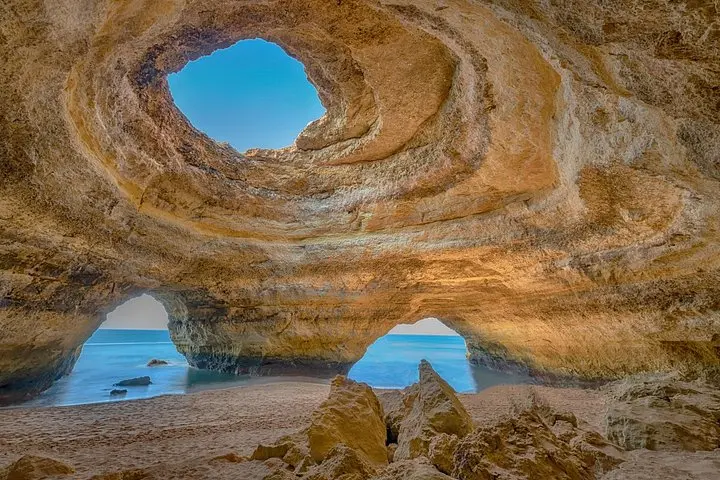
You push off from a small jetty and the coast of the Algarve immediately rearranges itself: limestone cliffs step back into the surf, gulls argue over a drifting piece of seaweed, and the sky opens into the round mouth of a cave. The guide eases the skiff toward a low arch and the engine drops to an obliging purr—the water pulls the boat under light-filtered columns while the Benagil cave yawns above, a natural amphitheater with a sunlit skylight that has drawn photographers and daydreamers for decades.
You push off from a small jetty and the coast of the Algarve immediately rearranges itself: limestone cliffs step back into the surf, gulls argue over a drifting piece of seaweed, and the sky opens into the round mouth of a cave. The guide eases the skiff toward a low arch and the engine drops to an obliging purr—the water pulls the boat under light-filtered columns while the Benagil cave yawns above, a natural amphitheater with a sunlit skylight that has drawn photographers and daydreamers for decades.
This is the point of the 90-minute guided Benagil boat tour: close, deliberate observation of coastal geology and the human history that follows it. The Algarve’s cliffs are marine limestone, carved over millennia by wind, rain and waves into arches, stacks and bell-shaped caves like Algar de Benagil. Once a fishing coastline, the area around Carvoeiro and Praia da Marinha has become a living classroom—local skippers combine seamanship with stories about fishermen’s routes, World War II lookouts, and the small fishing communities that still land nets on sheltered beaches.
The region’s culture is salt-hardened and straightforward: villages lean toward the sea for their economy and toward hospitality for their reputation. On a clear day the boat route reveals hidden coves, honeycombed cliffs, and patches of Posidonia seagrass below—habitat that supports fish, octopus, and the occasional dolphin.
Practical guidance is simple and essential. The tour runs about 90 minutes and operates from small harbors near Benagil and Carvoeiro; boats are typically rigid-inflatable or small motor skiffs that require stepping up and down into the craft. Expect gentle rolls; if the Atlantic is lively, the captain will choose a safer, more sheltered route. Bring sunscreen, a light wind layer, and shoes with good grip for moving on and off the dock.
Timing matters: mornings often deliver calmer seas and softer light inside the cave; late afternoon gives warm tones on the cliffs but can mean stronger sea states. Photography is best when the sun is high enough to penetrate the cave’s skylight—arrive early in high season to avoid crowding at the cave entrance. If you plan to swim or land on rock beaches, check with your skipper—conditions change quickly and safety comes first.
This short cruise is an accessible way to encounter one of Europe’s most photographed sea caves while learning from a guide who knows the coast’s currents and stories. It’s not just a photo stop; it’s a close-read of a coastline still being written by wind and water.