THE ADVENTURE COLLECTIVE® · Independent discovery and booking for outdoor travel

A 2.5-hour trip from Marina de Lagos pairs expert-led dolphin watching with a photo-ready approach to Benagil Cave. Onboard a hydrojet Hurricane with a marine biologist, learn about local dolphin species, coastal geology, and how to observe wildlife responsibly.
A 2.5-hour trip from Marina de Lagos pairs expert-led dolphin watching with a photo-ready approach to Benagil Cave. Onboard a hydrojet Hurricane with a marine biologist, learn about local dolphin species, coastal geology, and how to observe wildlife responsibly.
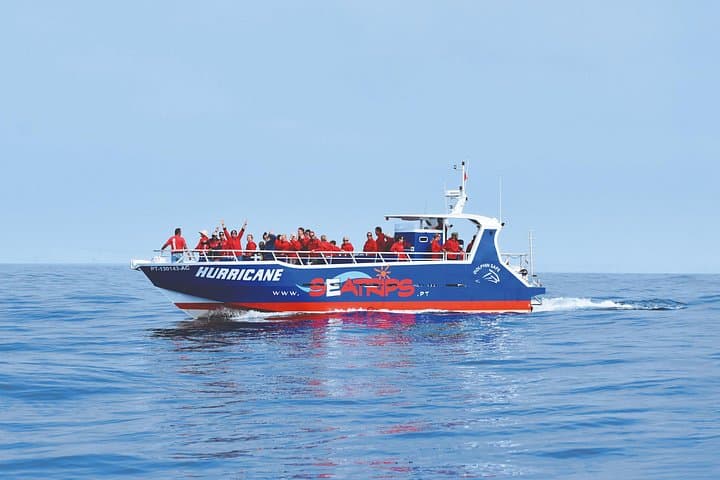
The Hurricane slips away from Marina de Lagos just after the town exhales its morning quiet—cafés polishing chairs, fishermen sorting nets—and the Atlantic leans in. Salt sprays the deck as the skipper points the bow east, and within minutes the coastline begins to change: low limestone cliffs turn into raw orange faces, narrow sea arches gesture like fingers, and the swell seems intent on showing you the coastline’s secrets.
Verified experiences and guided adventures in the surrounding area.
Operated by SeaTrips · Lagos, Faro
The Hurricane slips away from Marina de Lagos just after the town exhales its morning quiet—cafés polishing chairs, fishermen sorting nets—and the Atlantic leans in. Salt sprays the deck as the skipper points the bow east, and within minutes the coastline begins to change: low limestone cliffs turn into raw orange faces, narrow sea arches gesture like fingers, and the swell seems intent on showing you the coastline’s secrets.
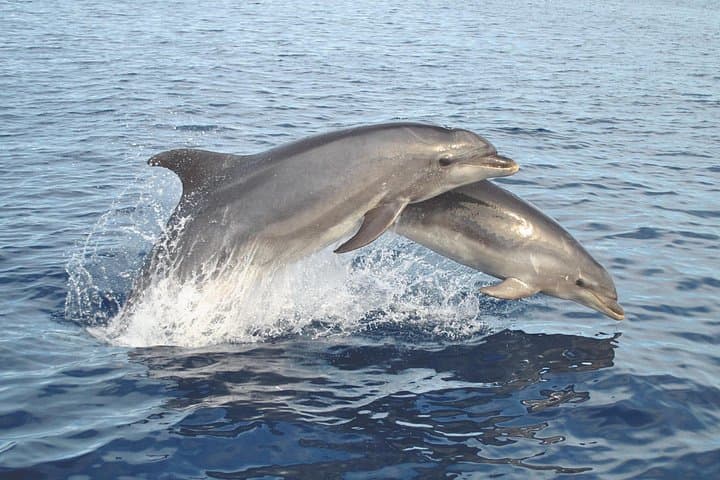
This is a combined outing: dolphin watching and a close approach to Algar de Benagil, the most photographed sea cave on the Algarve. The trip is run by a three-person team—a skipper, a sailor and a marine biologist—so narration is equal parts seamanship and field notes. Expect commentary about identification (bottlenose and common dolphins are frequent, striped and Risso’s appear seasonally), alongside geology: the caves are carved from Miocene-age limestones, their roofs collapsing over millennia to forge the dramatic skylight that draws photographers.
The route traces centuries of maritime history. Lagos was once a staging point for exploration and fishing, and these same waters supported local communities that read tides and shoals as livelihood. Today, tourism and conservation co-exist; the biologist aboard emphasizes respectful observation—no chase, minimal noise—and explains how hydrojet propulsion on the Hurricane reduces risk to wildlife.
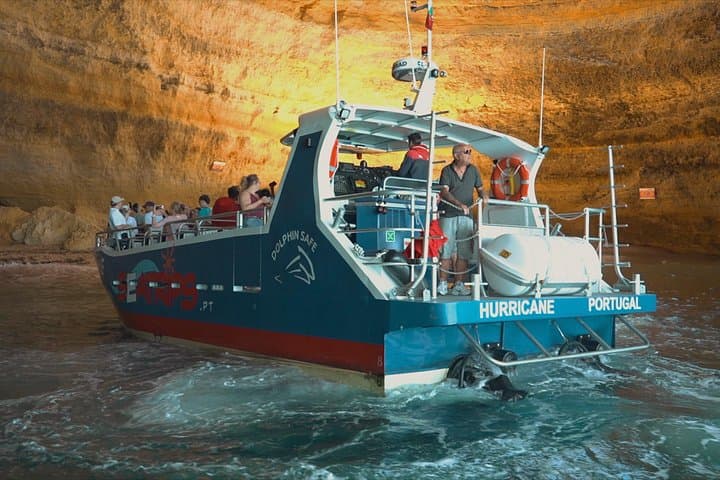
On arrival at Benagil the boat remains outside the cave mouth to protect the fragile interior, so your camera frames a high-arched aperture, the beach splashed with sun, and light that seems to come from below. The entire outing is about 2.5 hours, a compact window that packs accessible wildlife viewing, coastal geology, and plain, marine wonder.
Practicalities: check-in at Marina de Lagos (Loja nr10) 15 minutes prior. The boat is wheelchair-accessible and includes a toilet, but the sea can be choppy—bring motion sickness prevention if you’re sensitive. Dress in layers, use sun protection, and bring a small waterproof bag for electronics. The biologist’s commentary makes this more than a photo-op; it’s also a short field course on local species and responsible viewing.
For photographers, golden-hour departures sharpen color against the orange cliffs, while mid-morning light reveals cave interiors without harsh contrast. If you want dolphins, keep your eyes on the horizon and stay quiet—these animals choose whether to approach. Whether you’re after the geological arc of Benagil or the sudden joy of a dolphin bow ride, the trip offers a clear, educated path to both—efficient, engaging, and anchored in best-practice wildlife viewing.
The boat approaches the mouth of Algar de Benagil for photos, but for safety and preservation you will not disembark onto the cave’s beach during this tour.
Dolphins are commonly sighted in Algarve waters; the biologist-led approach increases the chance of sightings, though wildlife sightings cannot be guaranteed.
Yes—infants may ride on laps and the vessel is stroller-accessible, but families should follow crew guidance for safety on deck.
Yes—the operator lists wheelchair-accessible boarding and surfaces, but check specific needs with the provider before booking.
Wear layered clothing, a windproof jacket, non-slip shoes, and sun protection; bring a small waterproof bag for valuables.
Yes—operators may cancel for unsafe sea conditions; you’ll receive full refund if cancellation is 24+ hours before departure or if the operator cancels due to weather.
SeaTrips operates guided outdoor trips and adventures with an emphasis on safety, stewardship, and memorable experiences.
The Hurricane slips away from Marina de Lagos just after the town exhales its morning quiet—cafés polishing chairs, fishermen sorting nets—and the Atlantic leans in. Salt sprays the deck as the skipper points the bow east, and within minutes the coastline begins to change: low limestone cliffs turn into raw orange faces, narrow sea arches gesture like fingers, and the swell seems intent on showing you the coastline’s secrets.
The Hurricane slips away from Marina de Lagos just after the town exhales its morning quiet—cafés polishing chairs, fishermen sorting nets—and the Atlantic leans in. Salt sprays the deck as the skipper points the bow east, and within minutes the coastline begins to change: low limestone cliffs turn into raw orange faces, narrow sea arches gesture like fingers, and the swell seems intent on showing you the coastline’s secrets.
This is a combined outing: dolphin watching and a close approach to Algar de Benagil, the most photographed sea cave on the Algarve. The trip is run by a three-person team—a skipper, a sailor and a marine biologist—so narration is equal parts seamanship and field notes. Expect commentary about identification (bottlenose and common dolphins are frequent, striped and Risso’s appear seasonally), alongside geology: the caves are carved from Miocene-age limestones, their roofs collapsing over millennia to forge the dramatic skylight that draws photographers.
The route traces centuries of maritime history. Lagos was once a staging point for exploration and fishing, and these same waters supported local communities that read tides and shoals as livelihood. Today, tourism and conservation co-exist; the biologist aboard emphasizes respectful observation—no chase, minimal noise—and explains how hydrojet propulsion on the Hurricane reduces risk to wildlife.
On arrival at Benagil the boat remains outside the cave mouth to protect the fragile interior, so your camera frames a high-arched aperture, the beach splashed with sun, and light that seems to come from below. The entire outing is about 2.5 hours, a compact window that packs accessible wildlife viewing, coastal geology, and plain, marine wonder.
Practicalities: check-in at Marina de Lagos (Loja nr10) 15 minutes prior. The boat is wheelchair-accessible and includes a toilet, but the sea can be choppy—bring motion sickness prevention if you’re sensitive. Dress in layers, use sun protection, and bring a small waterproof bag for electronics. The biologist’s commentary makes this more than a photo-op; it’s also a short field course on local species and responsible viewing.
For photographers, golden-hour departures sharpen color against the orange cliffs, while mid-morning light reveals cave interiors without harsh contrast. If you want dolphins, keep your eyes on the horizon and stay quiet—these animals choose whether to approach. Whether you’re after the geological arc of Benagil or the sudden joy of a dolphin bow ride, the trip offers a clear, educated path to both—efficient, engaging, and anchored in best-practice wildlife viewing.