THE ADVENTURE COLLECTIVE® · Independent discovery and booking for outdoor travel

Paddle under sunlit arches and into the famed Algar de Benagil on a guided 90‑minute sea kayak tour. This concise guide covers what to expect on the water, local geology and culture, and practical tips to prepare.
Paddle under sunlit arches and into the famed Algar de Benagil on a guided 90‑minute sea kayak tour. This concise guide covers what to expect on the water, local geology and culture, and practical tips to prepare.
Morning light slices across limestone as the group slips from sand into glassy Atlantic water. Paddles whisper; the guide reads currents and steers toward a seam in the cliff where arches and holes have been hollowed by centuries of sea. Inside the Algarve’s caves, beams of sun make salt water glow gold and river-sculpted columns stand like sculpted ribs.
Verified experiences and guided adventures in the surrounding area.
Morning light slices across limestone as the group slips from sand into glassy Atlantic water. Paddles whisper; the guide reads currents and steers toward a seam in the cliff where arches and holes have been hollowed by centuries of sea. Inside the Algarve’s caves, beams of sun make salt water glow gold and river-sculpted columns stand like sculpted ribs.
The Benagil coast is a geological classroom — soft Miocene limestones carved by wave action, creating the cave known locally as Algar de Benagil and a string of smaller grottoes. Historically this stretch supported a small-scale fishing culture; fishermen used natural alcoves for shelter and storage before tourism reoriented the shoreline economy. The character of the place is maritime and pragmatic: fishermen, sea stacks, and viewpoints carved into cliff-top scrub.
On a guided 90-minute kayak tour you cover short coastal hops (roughly 3–5 km depending on route) with no elevation gain but variable sea state. Guides time entries around tides and swell and brief paddlers on buddy systems and cave etiquette — in many seasons you’ll enter the main cave on a calm window of sea. Expect a mix of sheltered paddling and open-water transits of a few hundred meters; wind and swell can push you off-line quickly, which is why a guide matters.
Practical: wear quick-dry layers, water shoes, sunscreen and a lightweight wind shell. Bring a waterproof bag for keys and a camera. Aim for morning light to avoid crowds and onshore afternoon breezes. Listen to your guide, keep distance from cliff faces, and carry a little patience — this coastline rewards quiet observation more than speed.
No advanced experience is required—guides teach basic strokes and safety, but participants should be comfortable paddling for about 90 minutes and able to follow instructions.
Access depends on sea state and tides; guides choose entry based on safety—there are days when conditions prevent entering the main cave.
Bring a towel, water bottle, sun protection, water shoes, and a small waterproof bag for valuables; operators typically supply kayaks, paddles and life jackets.
Many operators accept children with parental supervision; age and weight minimums vary, so check the operator’s policy when booking.
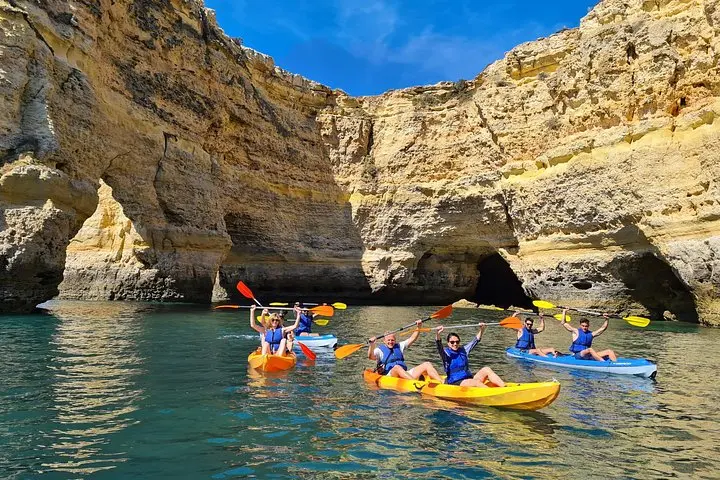
Morning light slices across limestone as the group slips from sand into glassy Atlantic water. Paddles whisper; the guide reads currents and steers toward a seam in the cliff where arches and holes have been hollowed by centuries of sea. Inside the Algarve’s caves, beams of sun make salt water glow gold and river-sculpted columns stand like sculpted ribs.
Morning light slices across limestone as the group slips from sand into glassy Atlantic water. Paddles whisper; the guide reads currents and steers toward a seam in the cliff where arches and holes have been hollowed by centuries of sea. Inside the Algarve’s caves, beams of sun make salt water glow gold and river-sculpted columns stand like sculpted ribs.
The Benagil coast is a geological classroom — soft Miocene limestones carved by wave action, creating the cave known locally as Algar de Benagil and a string of smaller grottoes. Historically this stretch supported a small-scale fishing culture; fishermen used natural alcoves for shelter and storage before tourism reoriented the shoreline economy. The character of the place is maritime and pragmatic: fishermen, sea stacks, and viewpoints carved into cliff-top scrub.
On a guided 90-minute kayak tour you cover short coastal hops (roughly 3–5 km depending on route) with no elevation gain but variable sea state. Guides time entries around tides and swell and brief paddlers on buddy systems and cave etiquette — in many seasons you’ll enter the main cave on a calm window of sea. Expect a mix of sheltered paddling and open-water transits of a few hundred meters; wind and swell can push you off-line quickly, which is why a guide matters.
Practical: wear quick-dry layers, water shoes, sunscreen and a lightweight wind shell. Bring a waterproof bag for keys and a camera. Aim for morning light to avoid crowds and onshore afternoon breezes. Listen to your guide, keep distance from cliff faces, and carry a little patience — this coastline rewards quiet observation more than speed.