THE ADVENTURE COLLECTIVE® · Independent discovery and booking for outdoor travel

Explore Beng Mealea’s collapsed sandstone corridors and then glide through Kompong Kleang’s pole village on Tonle Sap. This full-day tour pairs a rugged temple visit with an immersive lake-side community experience.
Explore Beng Mealea’s collapsed sandstone corridors and then glide through Kompong Kleang’s pole village on Tonle Sap. This full-day tour pairs a rugged temple visit with an immersive lake-side community experience.
You step out of the van onto cracked sandstone, and the jungle answers: lianas weaving through lintels, birds calling from the roof. Beng Mealea sits off the usual Angkor loop—an expansive, semi-collapsed temple where stone blocks slump into earth and roots push like fingers through carved bas-reliefs. There’s a disordered grandeur here that invites slow exploration and a little imagination.
Verified experiences and guided adventures in the surrounding area.
Operated by ANGKOR CAB-OFF BEATEN TRUCK · Siem Reap, Siem Reap Province
You step out of the van onto cracked sandstone, and the jungle answers: lianas weaving through lintels, birds calling from the roof. Beng Mealea sits off the usual Angkor loop—an expansive, semi-collapsed temple where stone blocks slump into earth and roots push like fingers through carved bas-reliefs. There’s a disordered grandeur here that invites slow exploration and a little imagination.
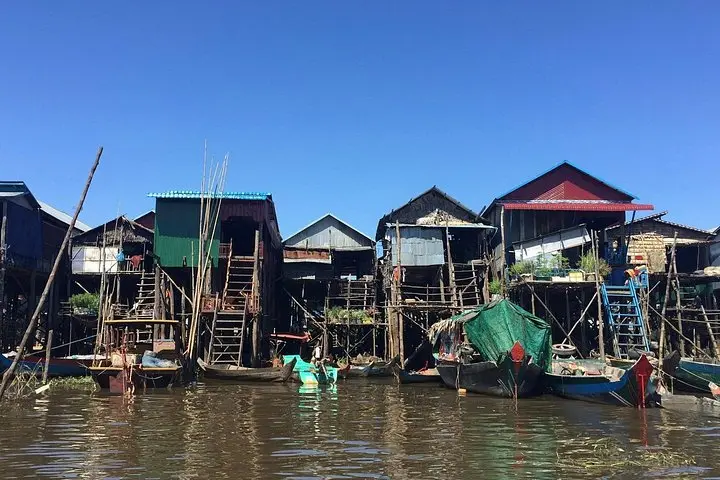
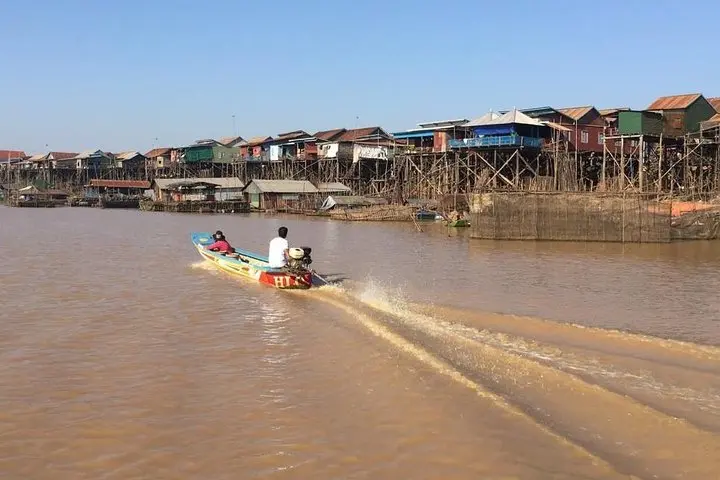
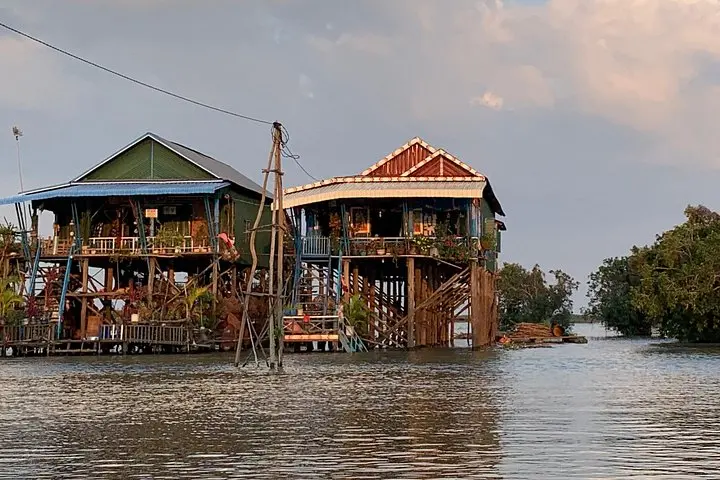
Built in the 12th century on a plan that echoes Angkor Wat, Beng Mealea uses laterite foundations and sandstone blocks that weather into soft edges. The site shows Khmer masonry techniques and the quiet erosion of time; trees—both fig and dipterocarp—are agents in the ruin’s slow reclamation. After lunch, the tour crosses to Tonle Sap’s Kompong Kleang, a pole-and-boat village that floats and rises with the lake’s seasonal pulse, where stilt houses, floating schools, and fishing farms reveal a way of life tuned to water.
Expect a roughly 6–8 hour day including 65 km of driving each way from Siem Reap and a 30–60 minute boat ride through the village channels. Wear sturdy shoes for uneven temple stones, bring sun protection and mosquito repellent for the boat, and carry cash for local purchases. Mornings are cooler for temple photography; late afternoon gives better light on the lake and bird activity. Respect private spaces in Kompong Kleang—ask before photographing households—and choose an operator that supports fair wages for boat crews. This combo tour pairs archaeology with living landscape, practical rhythms with vivid scenes you can touch and photograph.
The tour runs about 6–8 hours from Siem Reap and covers roughly 65 km each way to Beng Mealea, plus local transfers to the Tonle Sap launch point.
Policies vary; Beng Mealea sits outside the main Angkor core—confirm with your operator about entrance fees, but expect a modest temple admission or local site fee.
Local boats are stable for short crossings; children and less mobile travelers should wear life vests and avoid standing during rough patches—inform the operator of mobility needs in advance.
Dry season (November–April) is cooler and easier for driving and photography; the wet season (May–October) transforms Kompong Kleang into its full floating state but may bring heavier rain.
ANGKOR CAB-OFF BEATEN TRUCK operates guided outdoor trips and adventures with an emphasis on safety, stewardship, and memorable experiences.
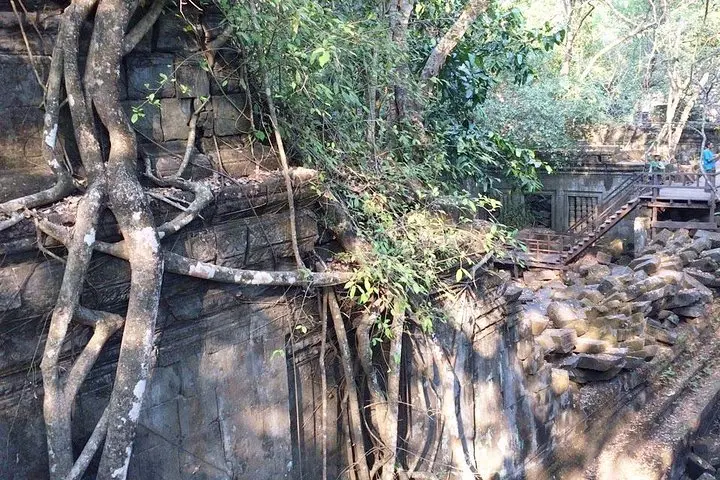
You step out of the van onto cracked sandstone, and the jungle answers: lianas weaving through lintels, birds calling from the roof. Beng Mealea sits off the usual Angkor loop—an expansive, semi-collapsed temple where stone blocks slump into earth and roots push like fingers through carved bas-reliefs. There’s a disordered grandeur here that invites slow exploration and a little imagination.
You step out of the van onto cracked sandstone, and the jungle answers: lianas weaving through lintels, birds calling from the roof. Beng Mealea sits off the usual Angkor loop—an expansive, semi-collapsed temple where stone blocks slump into earth and roots push like fingers through carved bas-reliefs. There’s a disordered grandeur here that invites slow exploration and a little imagination.
Built in the 12th century on a plan that echoes Angkor Wat, Beng Mealea uses laterite foundations and sandstone blocks that weather into soft edges. The site shows Khmer masonry techniques and the quiet erosion of time; trees—both fig and dipterocarp—are agents in the ruin’s slow reclamation. After lunch, the tour crosses to Tonle Sap’s Kompong Kleang, a pole-and-boat village that floats and rises with the lake’s seasonal pulse, where stilt houses, floating schools, and fishing farms reveal a way of life tuned to water.
Expect a roughly 6–8 hour day including 65 km of driving each way from Siem Reap and a 30–60 minute boat ride through the village channels. Wear sturdy shoes for uneven temple stones, bring sun protection and mosquito repellent for the boat, and carry cash for local purchases. Mornings are cooler for temple photography; late afternoon gives better light on the lake and bird activity. Respect private spaces in Kompong Kleang—ask before photographing households—and choose an operator that supports fair wages for boat crews. This combo tour pairs archaeology with living landscape, practical rhythms with vivid scenes you can touch and photograph.