THE ADVENTURE COLLECTIVE® · Independent discovery and booking for outdoor travel

Combine a boat ride through Tonle Sap’s largest stilt village with an exploratory visit to Beng Mealea, a jungle-reclaimed 12th‑century temple. This one-day tour pairs local culture and dramatic temple ruins with manageable walking and an experienced guide.
Combine a boat ride through Tonle Sap’s largest stilt village with an exploratory visit to Beng Mealea, a jungle-reclaimed 12th‑century temple. This one-day tour pairs local culture and dramatic temple ruins with manageable walking and an experienced guide.
Morning light breaks across flat water as the boat pushes away from the stilted houses of Kampong Khleang. Rice paddies give way to broad lake channels; wooden poles and house stilts rise like a village skyline. The boat threads narrow backchannels while local life — fishermen, children, market stalls — moves around visitors with practiced calm.
Verified experiences and guided adventures in the surrounding area.
Operated by Sightseeing Cambodia · Siem Reap, Siem Reap Province
Morning light breaks across flat water as the boat pushes away from the stilted houses of Kampong Khleang. Rice paddies give way to broad lake channels; wooden poles and house stilts rise like a village skyline. The boat threads narrow backchannels while local life — fishermen, children, market stalls — moves around visitors with practiced calm.
The tour pairs two contrasting landscapes: Tonle Sap’s seasonal lake and Beng Mealea, a largely unrestored 12th‑century temple built in the Suryavarman II era. Beng Mealea’s stone galleries have been loosened and pried open by tropical growth; roots and vines tug at lintels and courtyards, and collapsed blocks form climbing routes that hint at the site’s original scale. Geologically, the lowland floodplain around Tonle Sap collects silt each wet season, feeding the lake’s dramatic rise and fall that shapes the lives of the stilt-house communities.
Culturally, Kampong Khleang demonstrates living adaptation: houses lift with floodwaters, markets float, and fishing techniques change with the waterline. A local guide explains household economies and points out birdlife and fishing gear while offering context on Khmer temple art and the temple’s Hindu origins.
Practical guidance: tours run 5–7 hours; expect humid conditions, uneven stone at the temple, and basic facilities in the village. Wear sturdy, closed shoes for temple scrambling and sun protection for the open lake. Bring cash for food and small purchases — the lunch stop in Angkor Park is convenient but pricier than downtown. Listen to your guide around village homes: photography and respectful behavior are part of the visit.
Yes — the tour includes a boat ride to view Kampong Khleang’s stilt houses; the ride is on small, local boats with a guide or driver.
This specific tour description notes that admissions are not included; check with the operator for any entry fees to Beng Mealea or Angkor-area sites.
The tour is described as suitable for all fitness levels, but children and older travelers should be prepared for boat motion, uneven temple terrain and limited facilities in the village.
Yes — the itinerary includes a lunch break in Angkor Park (pay per person). Restroom facilities are basic at village stops and better at the lunch location.
Sightseeing Cambodia operates guided outdoor trips and adventures with an emphasis on safety, stewardship, and memorable experiences.
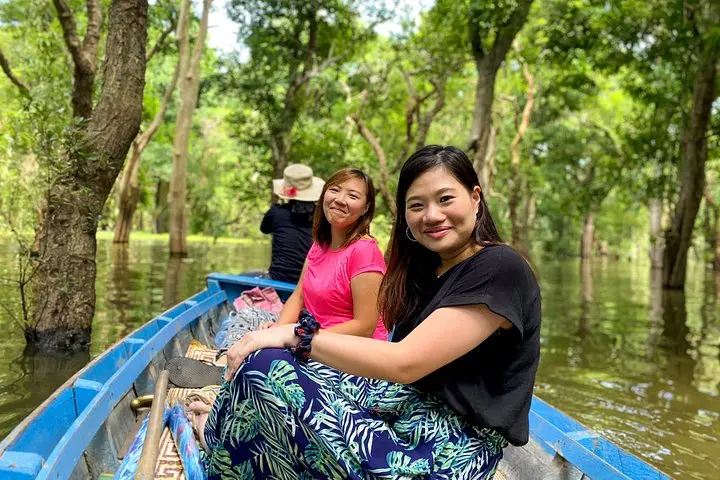
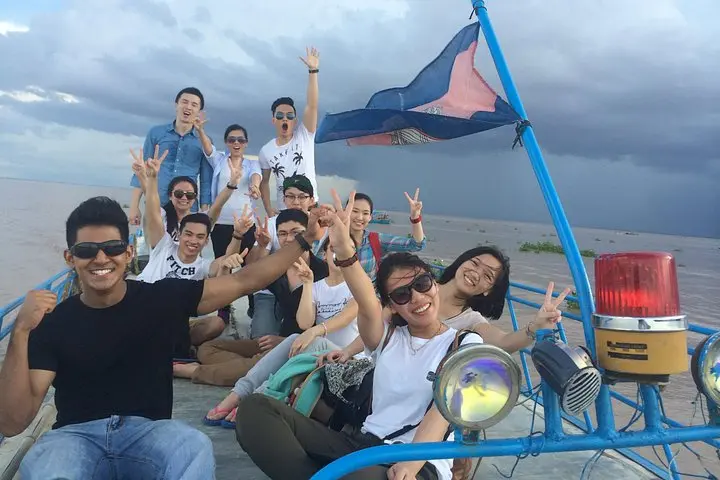
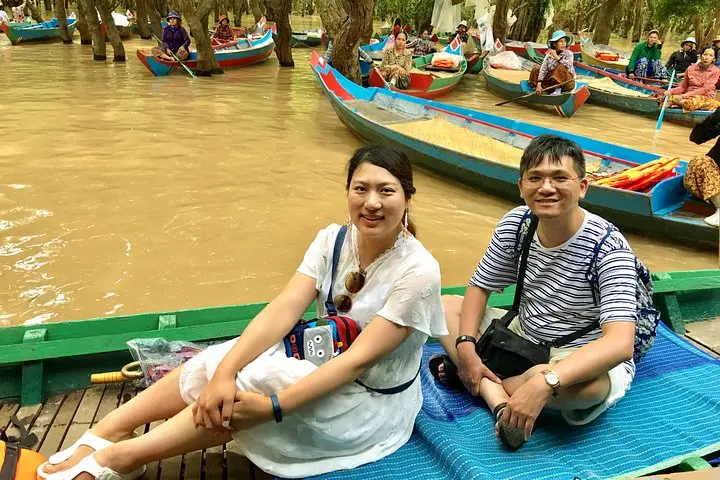
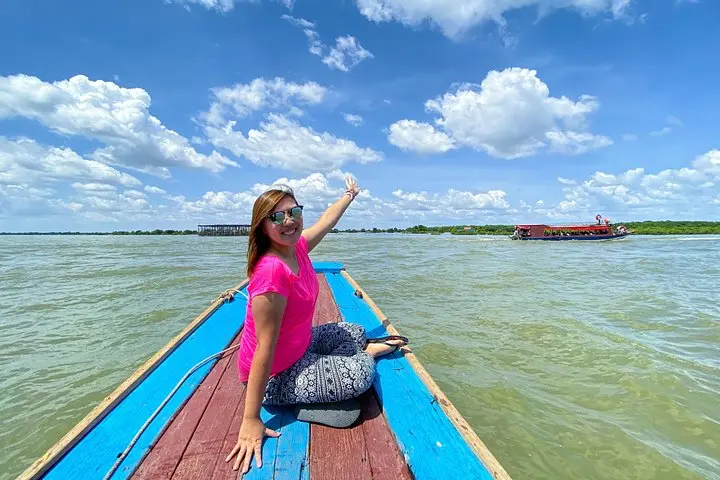
Morning light breaks across flat water as the boat pushes away from the stilted houses of Kampong Khleang. Rice paddies give way to broad lake channels; wooden poles and house stilts rise like a village skyline. The boat threads narrow backchannels while local life — fishermen, children, market stalls — moves around visitors with practiced calm.
Morning light breaks across flat water as the boat pushes away from the stilted houses of Kampong Khleang. Rice paddies give way to broad lake channels; wooden poles and house stilts rise like a village skyline. The boat threads narrow backchannels while local life — fishermen, children, market stalls — moves around visitors with practiced calm.
The tour pairs two contrasting landscapes: Tonle Sap’s seasonal lake and Beng Mealea, a largely unrestored 12th‑century temple built in the Suryavarman II era. Beng Mealea’s stone galleries have been loosened and pried open by tropical growth; roots and vines tug at lintels and courtyards, and collapsed blocks form climbing routes that hint at the site’s original scale. Geologically, the lowland floodplain around Tonle Sap collects silt each wet season, feeding the lake’s dramatic rise and fall that shapes the lives of the stilt-house communities.
Culturally, Kampong Khleang demonstrates living adaptation: houses lift with floodwaters, markets float, and fishing techniques change with the waterline. A local guide explains household economies and points out birdlife and fishing gear while offering context on Khmer temple art and the temple’s Hindu origins.
Practical guidance: tours run 5–7 hours; expect humid conditions, uneven stone at the temple, and basic facilities in the village. Wear sturdy, closed shoes for temple scrambling and sun protection for the open lake. Bring cash for food and small purchases — the lunch stop in Angkor Park is convenient but pricier than downtown. Listen to your guide around village homes: photography and respectful behavior are part of the visit.