THE ADVENTURE COLLECTIVE® · Independent discovery and booking for outdoor travel

Spend a full day exploring two of Cambodia’s least restored Angkor-period sites: the overgrown, cinematic galleries of Beng Mealea and the pyramidal ruins of Koh Ker (Linga Pura). This private tour pairs dramatic ruins with countryside scenery and practical local access.
Spend a full day exploring two of Cambodia’s least restored Angkor-period sites: the overgrown, cinematic galleries of Beng Mealea and the pyramidal ruins of Koh Ker (Linga Pura). This private tour pairs dramatic ruins with countryside scenery and practical local access.
You step out of the minivan and the air changes—rice paddies open like pages, and the jungle seems to lean closer, daring you to enter. Beng Mealea’s collapsed galleries and toppled stones read like a slow-motion story; sunlight threads through cracks and lights up moss and carved lintels. Later, Koh Ker rises differently: a stepped pyramid jutting above scrub, its terraces raw and less-restored, the work of a short-lived capital where history still feels immediate.
Verified experiences and guided adventures in the surrounding area.
Operated by Siem Reap Locals · Siem Reap, Siem Reap Province
You step out of the minivan and the air changes—rice paddies open like pages, and the jungle seems to lean closer, daring you to enter. Beng Mealea’s collapsed galleries and toppled stones read like a slow-motion story; sunlight threads through cracks and lights up moss and carved lintels. Later, Koh Ker rises differently: a stepped pyramid jutting above scrub, its terraces raw and less-restored, the work of a short-lived capital where history still feels immediate.
These sites bookend two Angkorian chapters. Beng Mealea dates to the 12th century, carved in sandstone with the same architectural language as Angkor Wat but left to the forest; Koh Ker—known historically as Linga Pura—was briefly the Khmer capital in the 10th century under Jayavarman IV, a different ambition visible in its pyramid and solitary prasats.
Geology here is soft sandstone and laterite; heavy rains accelerate collapse and make footing uneven. Local communities in Siem Reap and nearby villages still farm these lands and offer simple roadside snacks and crafts, so your visit has cultural and economic ripple effects.
Practical guidance: plan a full day—expect 9–10 hours including transfers—wear sturdy shoes for uneven stone and roots, carry 2 liters of water and sun protection, and bring cash for temple entrance fees and local vendors. Your guide handles logistics and history, but be ready to walk, climb modest steps, and move slowly through shadowed corridors. Leave carved surfaces untouched and follow marked paths—this keeps the temples standing for the next traveler.
Beng Mealea is roughly 1–1.25 hours east of Siem Reap by car; Koh Ker is farther northeast and can add another 1–1.5 hours depending on traffic and road conditions.
Not usually. Many operators exclude national park or temple fees—bring US dollars in small bills for on-site payments unless the booking confirms inclusion.
Yes—it's private and can be paced to suit stamina—but expect uneven steps and walking; consider mobility limits and sun exposure when deciding.
Basic restrooms and snack vendors are available near both sites, but options are limited—pack snacks and expect simple facilities.
Siem Reap Locals operates guided outdoor trips and adventures with an emphasis on safety, stewardship, and memorable experiences.
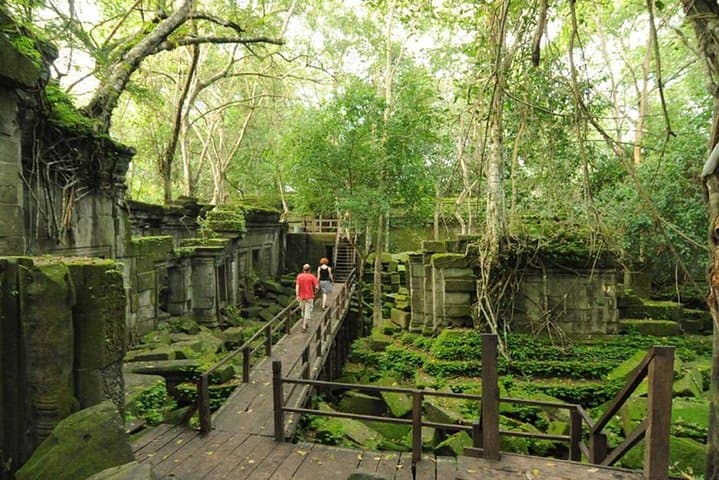
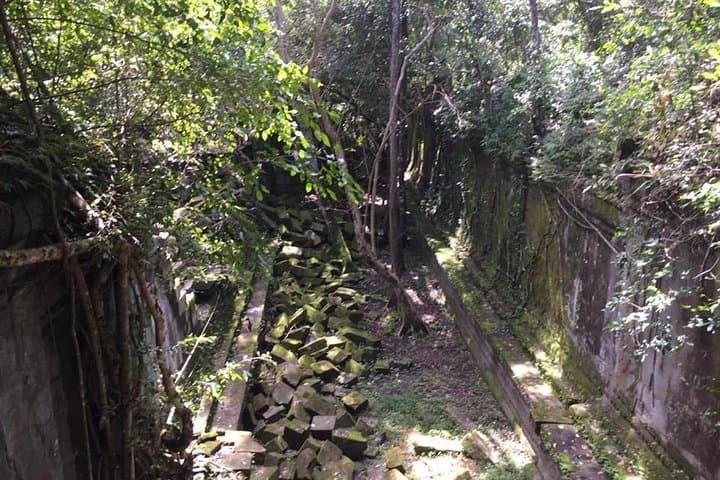
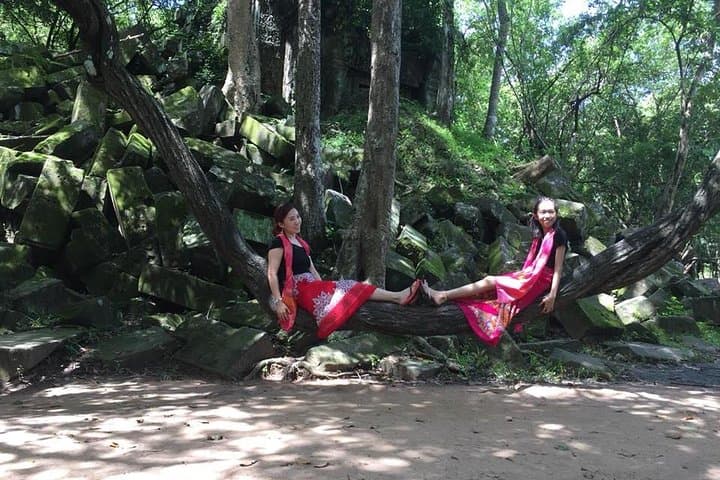
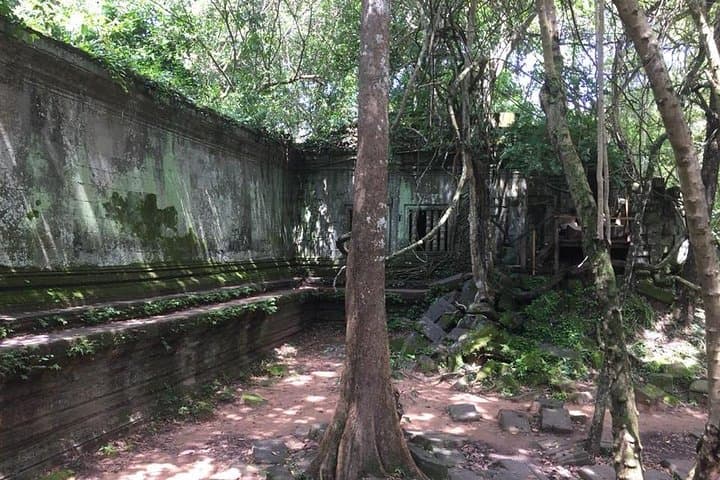
You step out of the minivan and the air changes—rice paddies open like pages, and the jungle seems to lean closer, daring you to enter. Beng Mealea’s collapsed galleries and toppled stones read like a slow-motion story; sunlight threads through cracks and lights up moss and carved lintels. Later, Koh Ker rises differently: a stepped pyramid jutting above scrub, its terraces raw and less-restored, the work of a short-lived capital where history still feels immediate.
You step out of the minivan and the air changes—rice paddies open like pages, and the jungle seems to lean closer, daring you to enter. Beng Mealea’s collapsed galleries and toppled stones read like a slow-motion story; sunlight threads through cracks and lights up moss and carved lintels. Later, Koh Ker rises differently: a stepped pyramid jutting above scrub, its terraces raw and less-restored, the work of a short-lived capital where history still feels immediate.
These sites bookend two Angkorian chapters. Beng Mealea dates to the 12th century, carved in sandstone with the same architectural language as Angkor Wat but left to the forest; Koh Ker—known historically as Linga Pura—was briefly the Khmer capital in the 10th century under Jayavarman IV, a different ambition visible in its pyramid and solitary prasats.
Geology here is soft sandstone and laterite; heavy rains accelerate collapse and make footing uneven. Local communities in Siem Reap and nearby villages still farm these lands and offer simple roadside snacks and crafts, so your visit has cultural and economic ripple effects.
Practical guidance: plan a full day—expect 9–10 hours including transfers—wear sturdy shoes for uneven stone and roots, carry 2 liters of water and sun protection, and bring cash for temple entrance fees and local vendors. Your guide handles logistics and history, but be ready to walk, climb modest steps, and move slowly through shadowed corridors. Leave carved surfaces untouched and follow marked paths—this keeps the temples standing for the next traveler.