THE ADVENTURE COLLECTIVE® · Independent discovery and booking for outdoor travel

Venture east of Siem Reap to explore Beng Mealea’s vine-strangled architecture and the stilted life of Kompong Khleang. This full-day trip mixes hidden jungle temples, river travel on Tonlé Sap, and hands-on local culture.
Venture east of Siem Reap to explore Beng Mealea’s vine-strangled architecture and the stilted life of Kompong Khleang. This full-day trip mixes hidden jungle temples, river travel on Tonlé Sap, and hands-on local culture.
You arrive before the heat climbs and the road narrows into red-dust tracks, the bus dropping you at a scrub-fringed clearing where the jungle seems to be reclaiming stone. Beng Mealea opens like a ruined city — collapsed galleries, root-pulled blocks and corridors that dare you to explore. The guide, raised nearby, points out mason marks and explains how 12th‑century Suryavarman II planning echoes Angkor Wat in scale and style.
Verified experiences and guided adventures in the surrounding area.
Operated by Khmer Detours · Siem Reap, Siem Reap Province
You arrive before the heat climbs and the road narrows into red-dust tracks, the bus dropping you at a scrub-fringed clearing where the jungle seems to be reclaiming stone. Beng Mealea opens like a ruined city — collapsed galleries, root-pulled blocks and corridors that dare you to explore. The guide, raised nearby, points out mason marks and explains how 12th‑century Suryavarman II planning echoes Angkor Wat in scale and style.
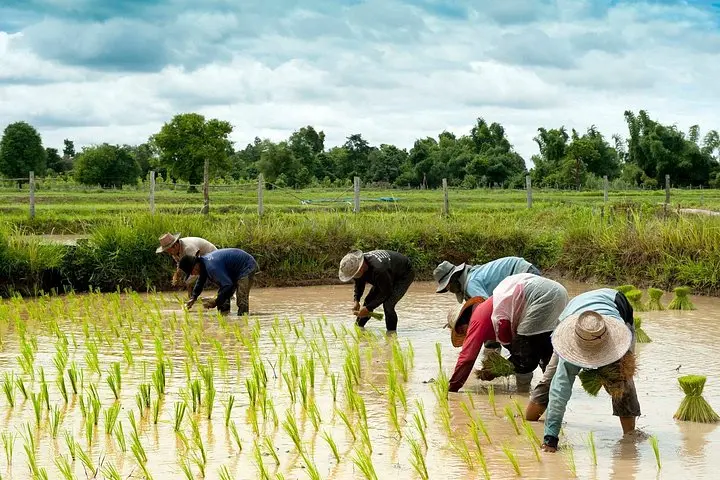
Geologically, the temple is sandstone worn by monsoon and time; stones sit askew where laterite foundations sank. Culture here is immediate: brick kilns warm the roadside, vendors load rice onto bikes, and Kompong Khleang’s stilted houses rise and fall with Tonlé Sap’s pulse. The river pushes you toward the lake, where boats plough through reeded channels and floating hamlets cluster when water permits.
Practical guidance: this is a full, roughly 9‑hour day with vehicle and boat transfers — bring sun protection, a firm pair of shoes for uneven stone, and a modest dress to enter religious sites (shoulders and knees covered). Carry cash for small purchases; many remote sellers don’t take cards. Expect dirt roads and basic toilet facilities; boats vary with the season, so water levels dictate how far inland you go. Hydrate early and often — humidity arrives fast — and give yourself time to walk slowly through ruins to avoid loose masonry.
This trip balances archaeology, rural life and lake ecology: you’ll leave with a clearer sense of how Angkorian ambitions met Cambodian rivers and how local communities still work with the seasons.
Yes — the tour description indicates admissions and boat transfers are included as part of the full-day package.
Children are welcome, but the route involves uneven terrain and boat access; travelers with limited mobility should check specific transfer details with the operator.
Meals are included, but carry a refillable water bottle for the day; bottled drinks are available in villages but bring cash.
Water levels on Tonlé Sap change with the monsoon; in low water months boat routes are shorter and some floating villages may be less accessible.
Khmer Detours operates guided outdoor trips and adventures with an emphasis on safety, stewardship, and memorable experiences.
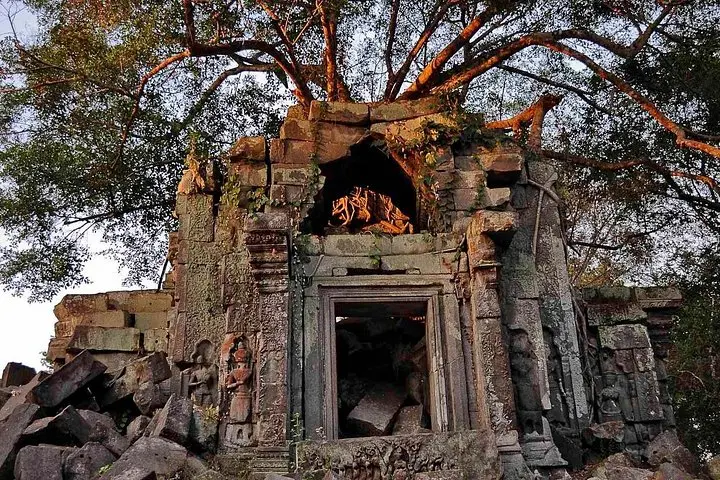
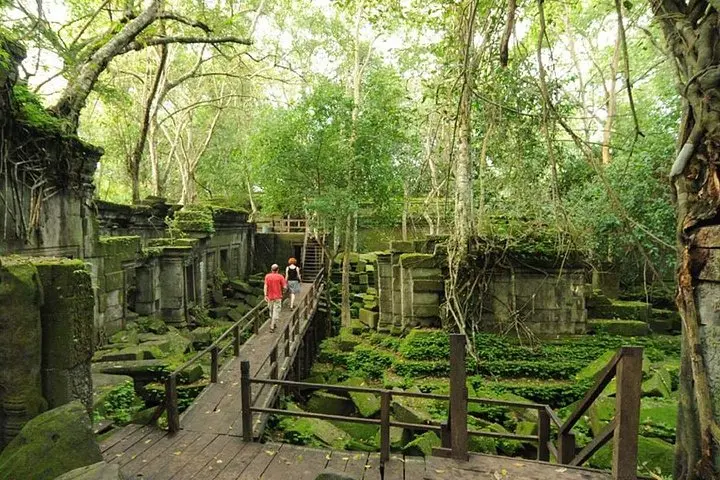
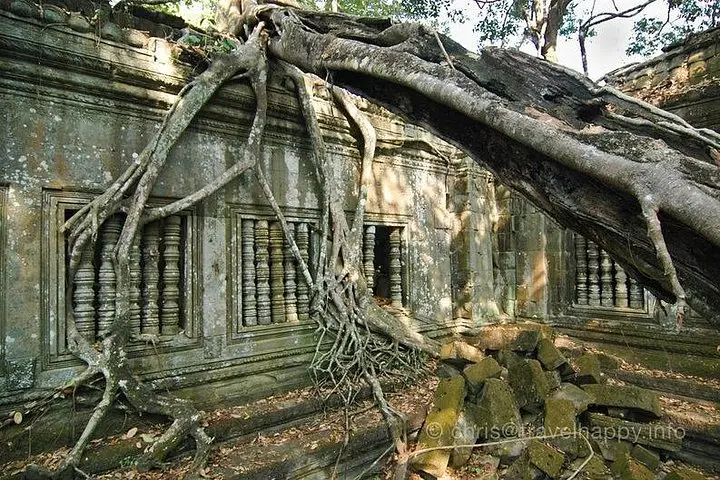
You arrive before the heat climbs and the road narrows into red-dust tracks, the bus dropping you at a scrub-fringed clearing where the jungle seems to be reclaiming stone. Beng Mealea opens like a ruined city — collapsed galleries, root-pulled blocks and corridors that dare you to explore. The guide, raised nearby, points out mason marks and explains how 12th‑century Suryavarman II planning echoes Angkor Wat in scale and style.
You arrive before the heat climbs and the road narrows into red-dust tracks, the bus dropping you at a scrub-fringed clearing where the jungle seems to be reclaiming stone. Beng Mealea opens like a ruined city — collapsed galleries, root-pulled blocks and corridors that dare you to explore. The guide, raised nearby, points out mason marks and explains how 12th‑century Suryavarman II planning echoes Angkor Wat in scale and style.
Geologically, the temple is sandstone worn by monsoon and time; stones sit askew where laterite foundations sank. Culture here is immediate: brick kilns warm the roadside, vendors load rice onto bikes, and Kompong Khleang’s stilted houses rise and fall with Tonlé Sap’s pulse. The river pushes you toward the lake, where boats plough through reeded channels and floating hamlets cluster when water permits.
Practical guidance: this is a full, roughly 9‑hour day with vehicle and boat transfers — bring sun protection, a firm pair of shoes for uneven stone, and a modest dress to enter religious sites (shoulders and knees covered). Carry cash for small purchases; many remote sellers don’t take cards. Expect dirt roads and basic toilet facilities; boats vary with the season, so water levels dictate how far inland you go. Hydrate early and often — humidity arrives fast — and give yourself time to walk slowly through ruins to avoid loose masonry.
This trip balances archaeology, rural life and lake ecology: you’ll leave with a clearer sense of how Angkorian ambitions met Cambodian rivers and how local communities still work with the seasons.