THE ADVENTURE COLLECTIVE® · Independent discovery and booking for outdoor travel

Explore a collapsing 12th‑century jungle temple and an authentic stilt village on Tonle Sap in one day. This wet‑season route pairs rugged archaeology at Beng Mealea with a boat ride through Kompong Phluk’s flooded forest.
Explore a collapsing 12th‑century jungle temple and an authentic stilt village on Tonle Sap in one day. This wet‑season route pairs rugged archaeology at Beng Mealea with a boat ride through Kompong Phluk’s flooded forest.
You arrive before the midday heat, stepping off the private vehicle into a clearing where stones and vines argue for dominance. A wooden walkway threads through Beng Mealea’s collapsed corridors — walk carefully and the temple opens like a half-remembered ruin: crumbling sandstone, sticky humidity, tree roots that have turned blocks into ladders. Later the road eases to lowland water and a motorized skiff slips under stilted houses at Kompong Phluk, where channels replace streets and the flooded forest pushes branches across the boat’s bow.
Verified experiences and guided adventures in the surrounding area.
Operated by Private Tour Guide-Cambodia · Beng Mealea, Siem Reap Province
You arrive before the midday heat, stepping off the private vehicle into a clearing where stones and vines argue for dominance. A wooden walkway threads through Beng Mealea’s collapsed corridors — walk carefully and the temple opens like a half-remembered ruin: crumbling sandstone, sticky humidity, tree roots that have turned blocks into ladders. Later the road eases to lowland water and a motorized skiff slips under stilted houses at Kompong Phluk, where channels replace streets and the flooded forest pushes branches across the boat’s bow.
Beng Mealea dates to the mid-12th century, contemporary with the architects of Angkor Wat, and its plan and carvings echo Hindu and Buddhist iconography. Geologically the temple is sandstone — soft, eroded and hungry for vines — which is why wooden walkways now protect both visitors and the fragile fabric. Kompong Phluk sits at the edge of Tonle Sap, a dynamic lake whose seasonal pulse defines local life: the village rises on stilts through monsoon months, and boats become front porches.
Expect uneven stone underfoot at Beng Mealea, brief stair sections, and boat travel through narrow, shallow channels at Kompong Phluk. The full day covers roughly 60 km from Siem Reap and runs about 5–6 hours. Practical notes: wear sturdy shoes, carry insect repellent and quick-dry layers, bring small-denomination cash for entrance or local purchases, and time visits to avoid midday glare. Respect private homes in the stilt villages and listen to guides when boarding boats — currents and submerged obstacles can be deceptive. This trip blends archaeological wonder with living, water-shaped culture.
The trip is roughly 60 km northeast of Siem Reap; expect about 1–1.5 hours drive depending on traffic and road conditions.
This tour commonly includes transport and guide but not necessarily temple entrance or local boat fees—bring small cash for admissions and optional local payments.
The tour is family-friendly but involves uneven surfaces and boat boarding; some providers note wheelchair-accessible transport but access inside the temple and stilt village is limited.
Wet season (May–October) offers flooded forests and high water at Kompong Phluk; the cooler, drier months (Nov–Apr) have easier walking but lower water levels.
Private Tour Guide-Cambodia operates guided outdoor trips and adventures with an emphasis on safety, stewardship, and memorable experiences.
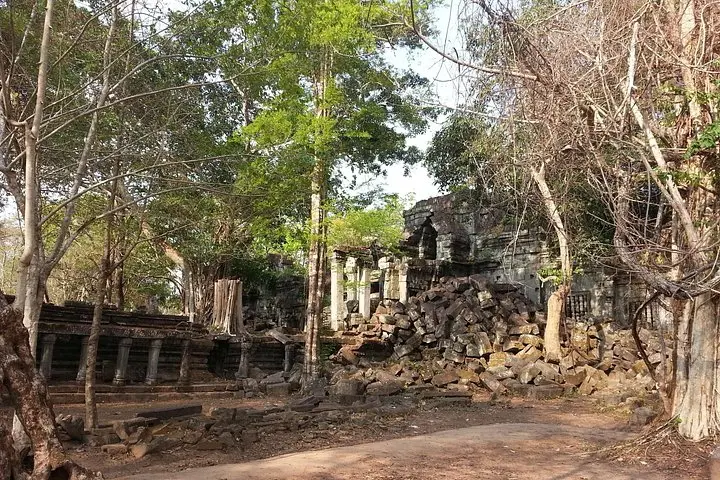
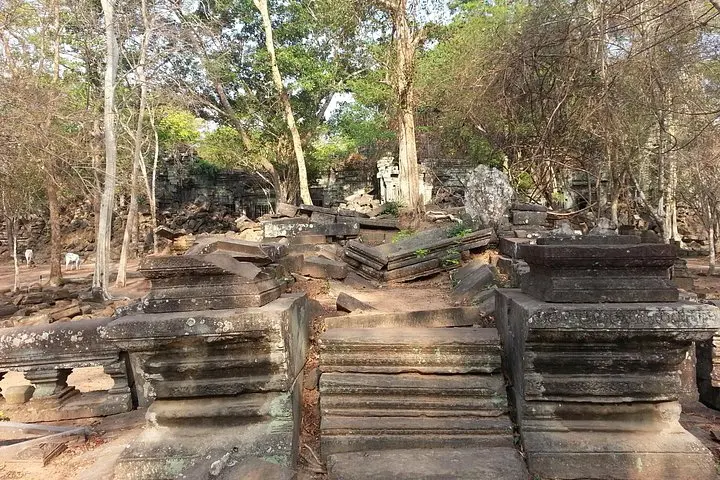
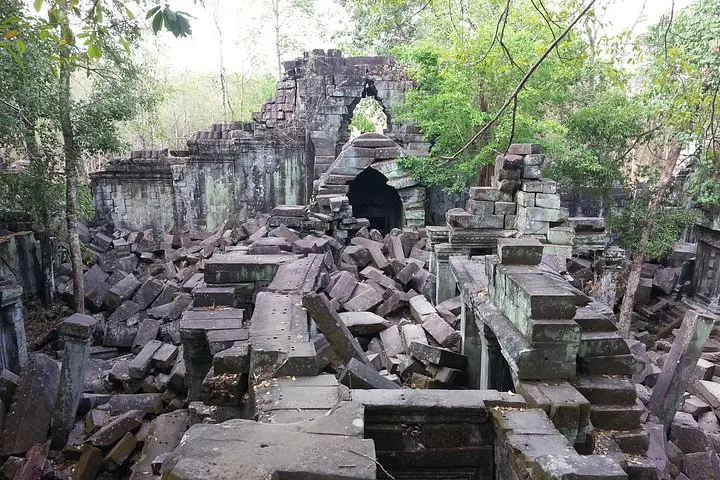
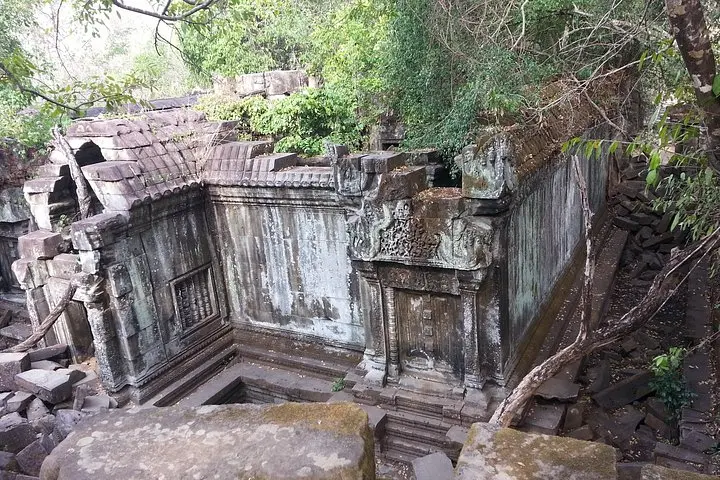
You arrive before the midday heat, stepping off the private vehicle into a clearing where stones and vines argue for dominance. A wooden walkway threads through Beng Mealea’s collapsed corridors — walk carefully and the temple opens like a half-remembered ruin: crumbling sandstone, sticky humidity, tree roots that have turned blocks into ladders. Later the road eases to lowland water and a motorized skiff slips under stilted houses at Kompong Phluk, where channels replace streets and the flooded forest pushes branches across the boat’s bow.
You arrive before the midday heat, stepping off the private vehicle into a clearing where stones and vines argue for dominance. A wooden walkway threads through Beng Mealea’s collapsed corridors — walk carefully and the temple opens like a half-remembered ruin: crumbling sandstone, sticky humidity, tree roots that have turned blocks into ladders. Later the road eases to lowland water and a motorized skiff slips under stilted houses at Kompong Phluk, where channels replace streets and the flooded forest pushes branches across the boat’s bow.
Beng Mealea dates to the mid-12th century, contemporary with the architects of Angkor Wat, and its plan and carvings echo Hindu and Buddhist iconography. Geologically the temple is sandstone — soft, eroded and hungry for vines — which is why wooden walkways now protect both visitors and the fragile fabric. Kompong Phluk sits at the edge of Tonle Sap, a dynamic lake whose seasonal pulse defines local life: the village rises on stilts through monsoon months, and boats become front porches.
Expect uneven stone underfoot at Beng Mealea, brief stair sections, and boat travel through narrow, shallow channels at Kompong Phluk. The full day covers roughly 60 km from Siem Reap and runs about 5–6 hours. Practical notes: wear sturdy shoes, carry insect repellent and quick-dry layers, bring small-denomination cash for entrance or local purchases, and time visits to avoid midday glare. Respect private homes in the stilt villages and listen to guides when boarding boats — currents and submerged obstacles can be deceptive. This trip blends archaeological wonder with living, water-shaped culture.