THE ADVENTURE COLLECTIVE® · Independent discovery and booking for outdoor travel

Travel a seldom-seen route across low jungle and rice plains to two powerful pre-Angkor sites. This private full-day tour links Beng Mealea’s ruin-strewn galleries with Koh Ker’s remote sanctuaries—expect long drives, uneven footing, and close encounters with Khmer history.
Travel a seldom-seen route across low jungle and rice plains to two powerful pre-Angkor sites. This private full-day tour links Beng Mealea’s ruin-strewn galleries with Koh Ker’s remote sanctuaries—expect long drives, uneven footing, and close encounters with Khmer history.
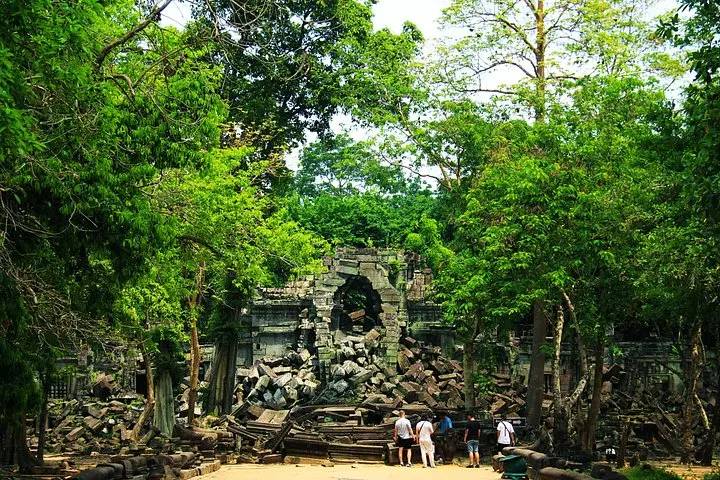
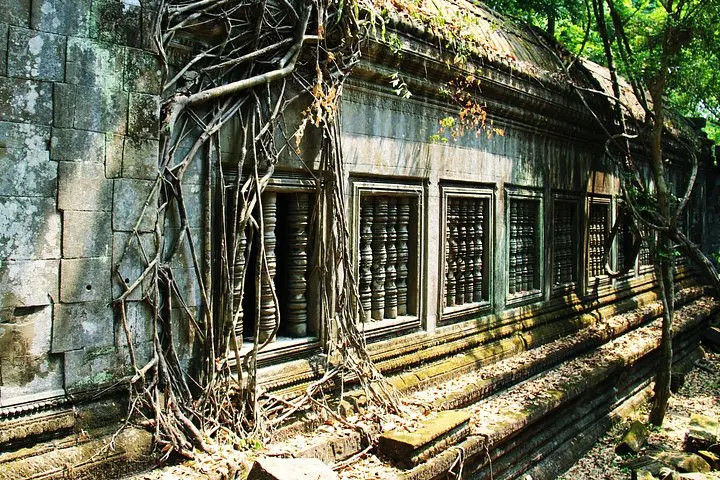
The day begins before heat peaks: an air-conditioned van eases out of Siem Reap and the rice plains thin into low jungle. By mid-morning the road narrows and a stone silhouette appears—Beng Mealea’s shattered galleries, slabs toppled like the bones of a sleeping giant, vines and strangler figs tugging at corners of its architecture.
Verified experiences and guided adventures in the surrounding area.
Operated by Khmer Temples & Nature · Siem Reap, Siem Reap Province
The day begins before heat peaks: an air-conditioned van eases out of Siem Reap and the rice plains thin into low jungle. By mid-morning the road narrows and a stone silhouette appears—Beng Mealea’s shattered galleries, slabs toppled like the bones of a sleeping giant, vines and strangler figs tugging at corners of its architecture.
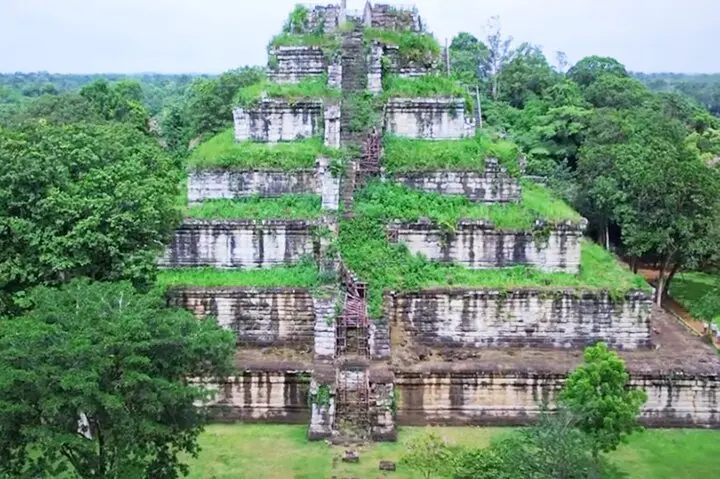
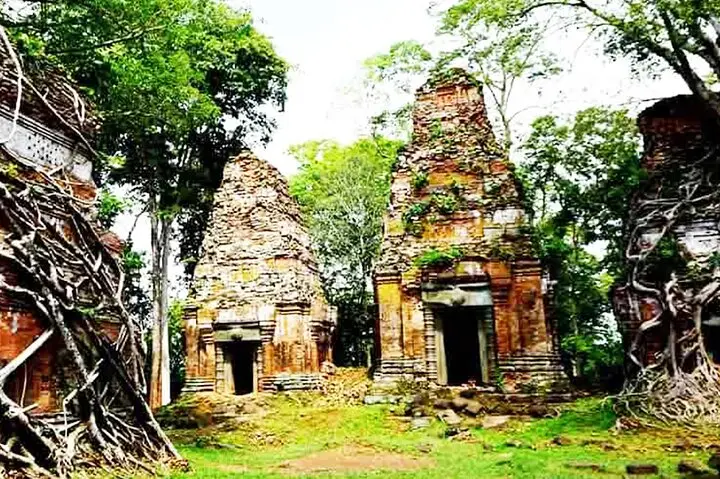
Beng Mealea, raised in the early 12th century under King Suryavarman II, is a raw, half-reclaimed ruin—sandstone blocks and laterite foundations weathered into rough relief. Farther north, Koh Ker was once Lingapura, a transient Khmer capital dotted with more than 180 sanctuaries; its stepped pyramid, Prasat Thom, still thrusts skyward from the canopy like a geometric mountain.
Geology here is visible in every block: compacted riverine sandstones carved by chisels and centuries of monsoon, laterite cores darkened by iron and humidity. Local villages live close to the stones; farmers still mark rice seasons by temple festivals, and drivers often stop for roadside snacks and cold water.
Practical edge: this private, full-day loop is long—expect up to 10 hours with several hours of driving and three-plus hours of on-foot exploration across uneven stone, roots, and loose gravel. Admission is typically not included; carry Cambodian riel or card where accepted, and verify entry fees in advance.
Pack sun protection, sturdy closed shoes, at least 2 liters of water, and a light, quick-dry layer. Move deliberately through collapsed galleries—stones can shift and niches are often steep. With planning, the trip is a rare blend of off-the-beaten-path archaeology, humid jungle atmosphere, and direct contact with Khmer landscape and village life.
Not always—this specific private tour notes admission is not included, so confirm with the operator and bring cash or card for site fees.
Expect roughly 1–2 hours to Beng Mealea and up to 2–3 hours to Koh Ker depending on road conditions; the full loop is a long-day drive.
Infants can ride in strollers in vehicles, but on-site terrain is uneven and not recommended for pregnant travelers or those with serious cardiovascular issues.
Private tours typically include a driver; ask to include a licensed guide if you want in-depth archaeological and historical interpretation.
Khmer Temples & Nature operates guided outdoor trips and adventures with an emphasis on safety, stewardship, and memorable experiences.
The day begins before heat peaks: an air-conditioned van eases out of Siem Reap and the rice plains thin into low jungle. By mid-morning the road narrows and a stone silhouette appears—Beng Mealea’s shattered galleries, slabs toppled like the bones of a sleeping giant, vines and strangler figs tugging at corners of its architecture.
The day begins before heat peaks: an air-conditioned van eases out of Siem Reap and the rice plains thin into low jungle. By mid-morning the road narrows and a stone silhouette appears—Beng Mealea’s shattered galleries, slabs toppled like the bones of a sleeping giant, vines and strangler figs tugging at corners of its architecture.
Beng Mealea, raised in the early 12th century under King Suryavarman II, is a raw, half-reclaimed ruin—sandstone blocks and laterite foundations weathered into rough relief. Farther north, Koh Ker was once Lingapura, a transient Khmer capital dotted with more than 180 sanctuaries; its stepped pyramid, Prasat Thom, still thrusts skyward from the canopy like a geometric mountain.
Geology here is visible in every block: compacted riverine sandstones carved by chisels and centuries of monsoon, laterite cores darkened by iron and humidity. Local villages live close to the stones; farmers still mark rice seasons by temple festivals, and drivers often stop for roadside snacks and cold water.
Practical edge: this private, full-day loop is long—expect up to 10 hours with several hours of driving and three-plus hours of on-foot exploration across uneven stone, roots, and loose gravel. Admission is typically not included; carry Cambodian riel or card where accepted, and verify entry fees in advance.
Pack sun protection, sturdy closed shoes, at least 2 liters of water, and a light, quick-dry layer. Move deliberately through collapsed galleries—stones can shift and niches are often steep. With planning, the trip is a rare blend of off-the-beaten-path archaeology, humid jungle atmosphere, and direct contact with Khmer landscape and village life.