THE ADVENTURE COLLECTIVE® · Independent discovery and booking for outdoor travel

Explore lesser‑visited Khmer ruins on a full‑day loop from Siem Reap to Beng Melea and Koh Ker. This tour blends jungle-wrapped ruins, a rare Khmer capital, and hands‑on history away from the busiest Angkor sites.
Explore lesser‑visited Khmer ruins on a full‑day loop from Siem Reap to Beng Melea and Koh Ker. This tour blends jungle-wrapped ruins, a rare Khmer capital, and hands‑on history away from the busiest Angkor sites.
You step out of the air‑conditioned van into a place where stone and forest argue for dominance. At Beng Melea, cracked bas-reliefs and fallen lintels lie half-swallowed by fig roots; sunlight slices through the canopy and paints the corridors in shifting bands. The site moves at its own pace—slow, patient, and a little unruly.
Verified experiences and guided adventures in the surrounding area.
Operated by Chuop Tour Guide & Travel · Siem Reap, Siem Reap Province
You step out of the air‑conditioned van into a place where stone and forest argue for dominance. At Beng Melea, cracked bas-reliefs and fallen lintels lie half-swallowed by fig roots; sunlight slices through the canopy and paints the corridors in shifting bands. The site moves at its own pace—slow, patient, and a little unruly.
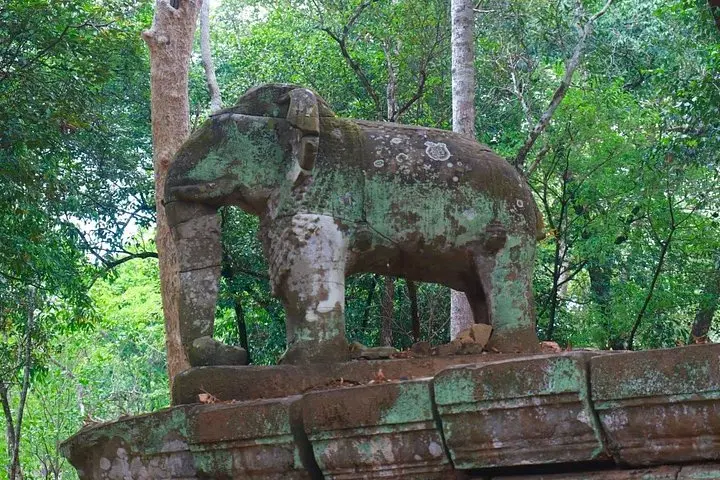
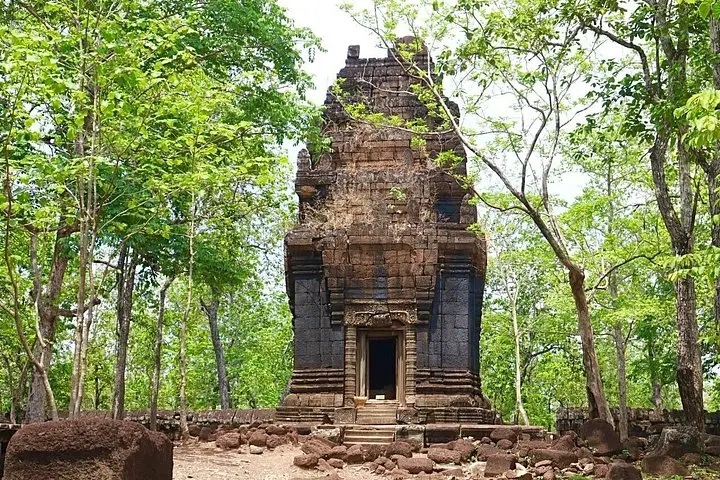
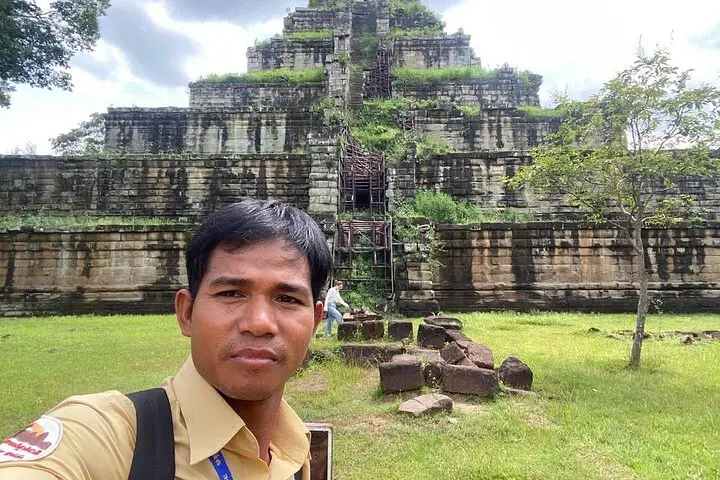
Both sites date to the height and upheaval of the Khmer Empire. Beng Melea is a 12th‑century complex that was largely left intact by modern restoration, so the ruins feel raw and exploratory. Koh Ker, briefly the Khmer capital under Jayavarman IV (928–944), is dominated by Prasat Thom’s stepped pyramid and the red‑brick Prasat Krahom—evidence of a capital born from political rupture and bold architectural ambition.
Geology here is simple: sandstone and laterite carved into lintels and towers, now bleached and weathered by tropical cycles. Local villages still practice rice agriculture and offer a direct cultural contrast to the silent temples; vendors and monks appear at different points of the day.
Practical guidance: expect a full 8–10 hour day with 2–4 miles of mostly flat to uneven walking. Wear grippy shoes for loose stones and roots, carry 2–3 liters of water, and plan visits early or late in the day to avoid peak sun and the largest tour groups. Respect temple boundaries and avoid climbing on fragile carvings. Photography rewards patience—look for small, hidden reliefs and the view from Koh Ker’s Prasat Thom. The experience is part jungle hike, part archaeological observation: bring insect repellent, a hat, and a readiness to move slowly through both history and heat.
Expect an 8–10 hour day with hotel pickup around 8:00 am; exact pickup location/time is confirmed at booking.
Tour descriptions often exclude national park or temple entrance fees—confirm with the operator and bring cash for tickets if needed.
The tour involves uneven terrain and some steps; it's generally suitable for families but not recommended for travelers with serious mobility or spinal issues.
Cool, dry months (November–February) offer the most comfortable conditions; avoid peak monsoon rains from June to October if you want less mud.
Chuop Tour Guide & Travel operates guided outdoor trips and adventures with an emphasis on safety, stewardship, and memorable experiences.
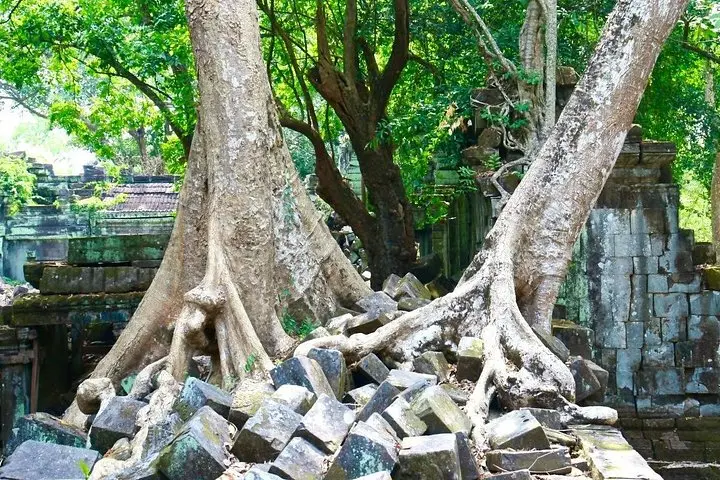
You step out of the air‑conditioned van into a place where stone and forest argue for dominance. At Beng Melea, cracked bas-reliefs and fallen lintels lie half-swallowed by fig roots; sunlight slices through the canopy and paints the corridors in shifting bands. The site moves at its own pace—slow, patient, and a little unruly.
You step out of the air‑conditioned van into a place where stone and forest argue for dominance. At Beng Melea, cracked bas-reliefs and fallen lintels lie half-swallowed by fig roots; sunlight slices through the canopy and paints the corridors in shifting bands. The site moves at its own pace—slow, patient, and a little unruly.
Both sites date to the height and upheaval of the Khmer Empire. Beng Melea is a 12th‑century complex that was largely left intact by modern restoration, so the ruins feel raw and exploratory. Koh Ker, briefly the Khmer capital under Jayavarman IV (928–944), is dominated by Prasat Thom’s stepped pyramid and the red‑brick Prasat Krahom—evidence of a capital born from political rupture and bold architectural ambition.
Geology here is simple: sandstone and laterite carved into lintels and towers, now bleached and weathered by tropical cycles. Local villages still practice rice agriculture and offer a direct cultural contrast to the silent temples; vendors and monks appear at different points of the day.
Practical guidance: expect a full 8–10 hour day with 2–4 miles of mostly flat to uneven walking. Wear grippy shoes for loose stones and roots, carry 2–3 liters of water, and plan visits early or late in the day to avoid peak sun and the largest tour groups. Respect temple boundaries and avoid climbing on fragile carvings. Photography rewards patience—look for small, hidden reliefs and the view from Koh Ker’s Prasat Thom. The experience is part jungle hike, part archaeological observation: bring insect repellent, a hat, and a readiness to move slowly through both history and heat.