THE ADVENTURE COLLECTIVE® · Independent discovery and booking for outdoor travel

Explore Berat’s hilltop fortress, the Onufri Iconographic Museum and the storied quarters of Mangalem and Gorica on a private walking tour. This full-day route combines UNESCO-listed architecture, riverside walking and compact viewpoints.
Explore Berat’s hilltop fortress, the Onufri Iconographic Museum and the storied quarters of Mangalem and Gorica on a private walking tour. This full-day route combines UNESCO-listed architecture, riverside walking and compact viewpoints.
You step out of the minivan onto sun-warmed cobbles and the Osumi River immediately asserts itself, a low, steady voice guiding your path toward the hill that holds Berat Castle. The fortress sits about 190 m above the river; its stones keep the memory of Byzantine and Ottoman days and the narrow lanes inside smell faintly of wood smoke and fresh bread.
Verified experiences and guided adventures in the surrounding area.
Operated by Check IN Albania · Berat, Berat County
You step out of the minivan onto sun-warmed cobbles and the Osumi River immediately asserts itself, a low, steady voice guiding your path toward the hill that holds Berat Castle. The fortress sits about 190 m above the river; its stones keep the memory of Byzantine and Ottoman days and the narrow lanes inside smell faintly of wood smoke and fresh bread.
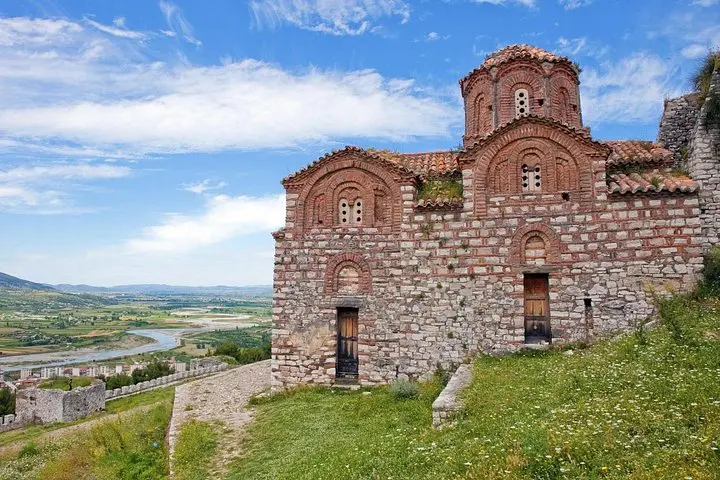
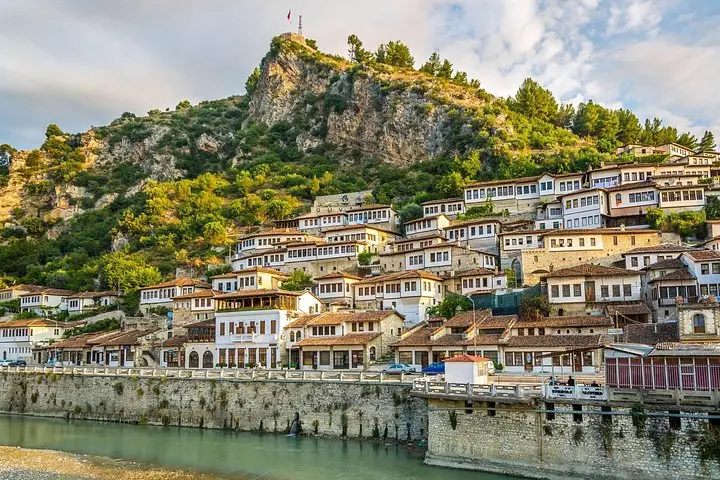
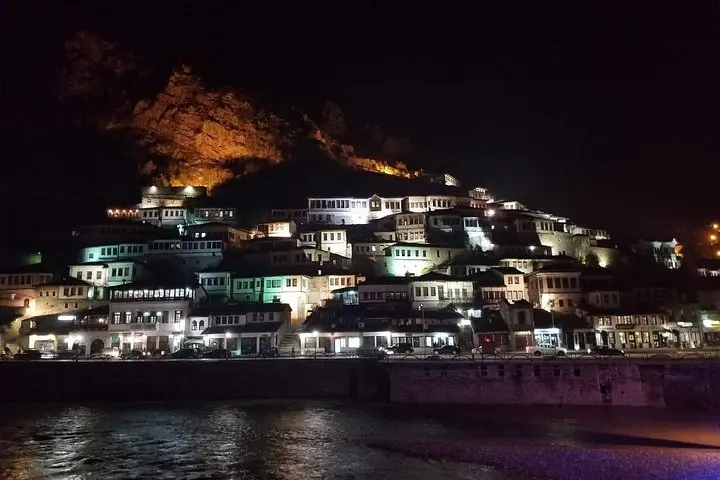
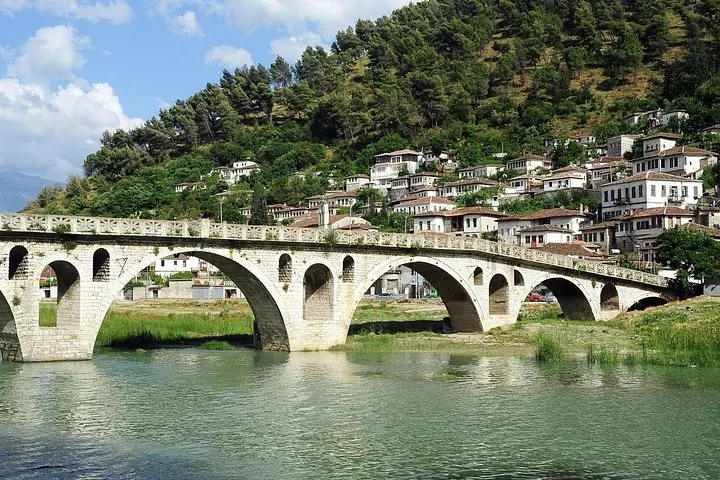
Inside the castle walls, the Onufri Iconographic Museum displays 18th-century ecclesiastical art—bright pigments and gilt that survived Ottoman rule. Below, Mangalem’s stacked white houses with their rows of tall windows recall the town’s Ottoman-era prosperity; cross the Gorica Bridge to reach Gorica’s quieter lanes and Spyrodonit Church. Berat’s geology is limestone cut by the Osumi; terraces and cliffs create compact viewpoints rather than wide alpine panoramas, so every rooftop offers a new angle on the valley.
Culturally, Berat is a living UNESCO site where Orthodox churches and Ottoman mosques coexist, and craftsmen still work wooden shutters and iron grilles. Locals favor slow mornings: cafés by the river, bakers pulling pide from hot ovens, and fishermen at dawn.
Practical guidance: this private, mostly flat walking tour runs about 6–8 hours—expect significant walking on uneven cobbles and short stair climbs inside the castle. Wear sturdy walking shoes, carry water and sun protection, and plan visits to the Onufri Museum early in the day when light best reveals the icons. Respect active religious sites: modest dress and quiet behavior are required. Public transport connections to Berat exist but private pickup is available for convenience.
Admission to the Onufri Iconographic Museum is included on the itinerary as noted, but confirm at booking whether any seasonal closures apply.
The tour includes cobbled streets and castle staircases and is not fully wheelchair accessible; contact the operator to discuss specific needs.
Private tours are typically offered in English and may be arranged in other languages on request—confirm when booking.
Private transportation is listed as included; pickup locations and transfer times are requested during booking.
Check IN Albania operates guided outdoor trips and adventures with an emphasis on safety, stewardship, and memorable experiences.
You step out of the minivan onto sun-warmed cobbles and the Osumi River immediately asserts itself, a low, steady voice guiding your path toward the hill that holds Berat Castle. The fortress sits about 190 m above the river; its stones keep the memory of Byzantine and Ottoman days and the narrow lanes inside smell faintly of wood smoke and fresh bread.
You step out of the minivan onto sun-warmed cobbles and the Osumi River immediately asserts itself, a low, steady voice guiding your path toward the hill that holds Berat Castle. The fortress sits about 190 m above the river; its stones keep the memory of Byzantine and Ottoman days and the narrow lanes inside smell faintly of wood smoke and fresh bread.
Inside the castle walls, the Onufri Iconographic Museum displays 18th-century ecclesiastical art—bright pigments and gilt that survived Ottoman rule. Below, Mangalem’s stacked white houses with their rows of tall windows recall the town’s Ottoman-era prosperity; cross the Gorica Bridge to reach Gorica’s quieter lanes and Spyrodonit Church. Berat’s geology is limestone cut by the Osumi; terraces and cliffs create compact viewpoints rather than wide alpine panoramas, so every rooftop offers a new angle on the valley.
Culturally, Berat is a living UNESCO site where Orthodox churches and Ottoman mosques coexist, and craftsmen still work wooden shutters and iron grilles. Locals favor slow mornings: cafés by the river, bakers pulling pide from hot ovens, and fishermen at dawn.
Practical guidance: this private, mostly flat walking tour runs about 6–8 hours—expect significant walking on uneven cobbles and short stair climbs inside the castle. Wear sturdy walking shoes, carry water and sun protection, and plan visits to the Onufri Museum early in the day when light best reveals the icons. Respect active religious sites: modest dress and quiet behavior are required. Public transport connections to Berat exist but private pickup is available for convenience.