THE ADVENTURE COLLECTIVE® · Independent discovery and booking for outdoor travel

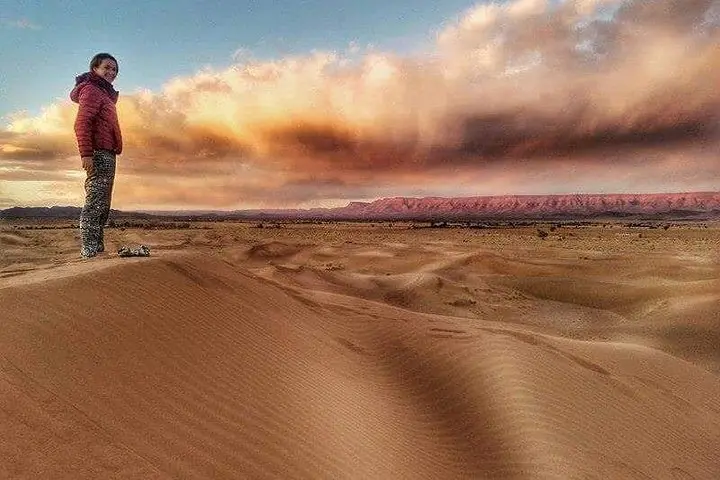
Leave Marrakech at dawn and cross the Atlas, visit ancient kasbahs and end the second day watching sunrise over Sahara dunes. This compact overland tour pairs cinematic landscapes with Berber hospitality and a night in a tented desert camp.
Leave Marrakech at dawn and cross the Atlas, visit ancient kasbahs and end the second day watching sunrise over Sahara dunes. This compact overland tour pairs cinematic landscapes with Berber hospitality and a night in a tented desert camp.
Morning light splits the Atlas ridgeline as a convoy leaves Marrakech, windows down and air conditioning cutting the dust-laced heat. The road climbs Tizi n’Tichka, hairpin after hairpin, and by midmorning the landscape has already changed: terraced villages give way to sun-browned kasbahs and the Draa Valley’s long palm lines.
Verified experiences and guided adventures in the surrounding area.
Operated by Travel Tamegroute · Marrakech, Marrakech-Safi
Morning light splits the Atlas ridgeline as a convoy leaves Marrakech, windows down and air conditioning cutting the dust-laced heat. The road climbs Tizi n’Tichka, hairpin after hairpin, and by midmorning the landscape has already changed: terraced villages give way to sun-browned kasbahs and the Draa Valley’s long palm lines.
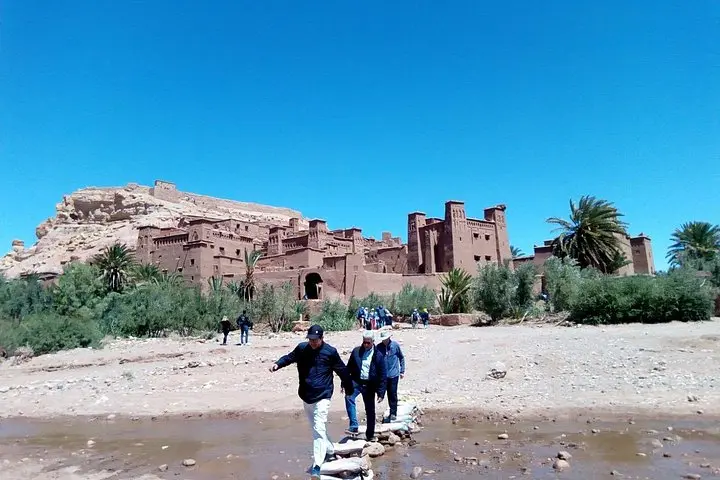
This two-day itinerary threads through southern Morocco’s living history — 17th-century kasbahs at Telouet, the mud-brick fortress of Ait Ben Haddou (UNESCO) and the cinematic sets of Ouarzazate — before desert dunes reshape the world into sand, sky and silence. Geologically, you pass uplifted Atlas ranges and alluvial plains carved by seasonal rivers; culturally, Berber (Amazigh) hospitality anchors the trip: family tea, pottery kilns at Tamegroute, and nomad campfire music.
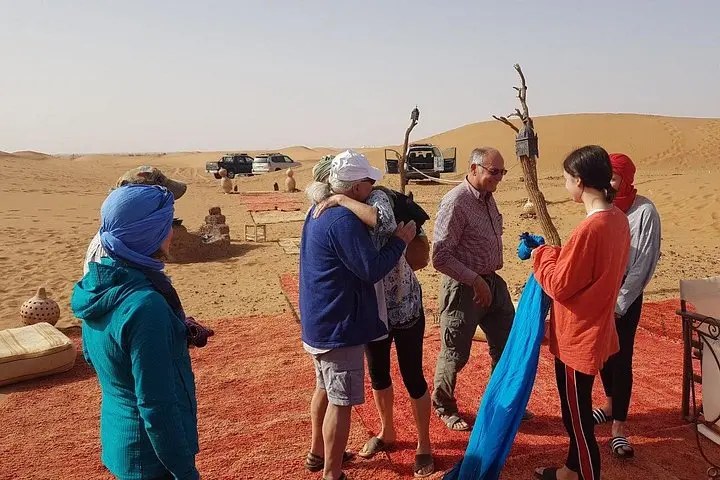
Practical details matter: expect roughly 4–6 hours of driving each day, short village walks, a 90-minute camel transfer into a private tented camp, and an early-sunrise return. Accommodations range from basic nomad-style luxury tents with showers to traditional guesthouses in kasbah towns. Bring layered clothing for sharp temperature swings, sun protection, and sturdy footwear for uneven paths.
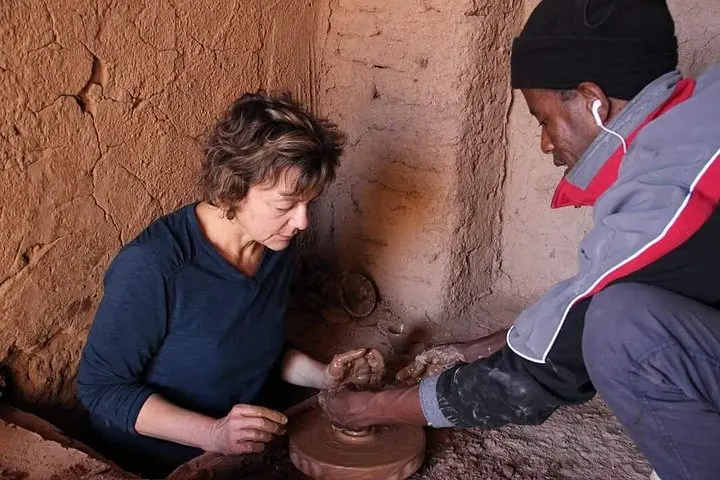
Timing—avoid mid-summer heat; spring and fall yield the most comfortable conditions. The experience balances cinematic landscapes with hands-on cultural moments: watching sunrise over dunes, visiting a Koranic library, and learning pottery techniques.
Book with attention to pickup logistics and passport info; mobility-friendly transport is often provided, but camel travel and dune walking require basic balance. For travelers who want concentrated terrain variety, this two-day Atlas-to-Sahara route delivers a compact, sensory-rich introduction to southern Morocco.
The camel transfer is approximately 90 minutes from the village to the tented camp, timed to arrive before sunset.
Vehicles and many meeting points are wheelchair accessible, but the camel ride and dune camp access involve uneven sand and may not be suitable for all mobility levels.
Dinner and two breakfasts are included; the menu typically features Berber dishes with vegetarian options available on request.
Cell coverage is limited in remote dune areas; some camps offer basic Wi‑Fi but plan for offline navigation and communication.
Travel Tamegroute operates guided outdoor trips and adventures with an emphasis on safety, stewardship, and memorable experiences.
Morning light splits the Atlas ridgeline as a convoy leaves Marrakech, windows down and air conditioning cutting the dust-laced heat. The road climbs Tizi n’Tichka, hairpin after hairpin, and by midmorning the landscape has already changed: terraced villages give way to sun-browned kasbahs and the Draa Valley’s long palm lines.
Morning light splits the Atlas ridgeline as a convoy leaves Marrakech, windows down and air conditioning cutting the dust-laced heat. The road climbs Tizi n’Tichka, hairpin after hairpin, and by midmorning the landscape has already changed: terraced villages give way to sun-browned kasbahs and the Draa Valley’s long palm lines.
This two-day itinerary threads through southern Morocco’s living history — 17th-century kasbahs at Telouet, the mud-brick fortress of Ait Ben Haddou (UNESCO) and the cinematic sets of Ouarzazate — before desert dunes reshape the world into sand, sky and silence. Geologically, you pass uplifted Atlas ranges and alluvial plains carved by seasonal rivers; culturally, Berber (Amazigh) hospitality anchors the trip: family tea, pottery kilns at Tamegroute, and nomad campfire music.
Practical details matter: expect roughly 4–6 hours of driving each day, short village walks, a 90-minute camel transfer into a private tented camp, and an early-sunrise return. Accommodations range from basic nomad-style luxury tents with showers to traditional guesthouses in kasbah towns. Bring layered clothing for sharp temperature swings, sun protection, and sturdy footwear for uneven paths.
Timing—avoid mid-summer heat; spring and fall yield the most comfortable conditions. The experience balances cinematic landscapes with hands-on cultural moments: watching sunrise over dunes, visiting a Koranic library, and learning pottery techniques.
Book with attention to pickup logistics and passport info; mobility-friendly transport is often provided, but camel travel and dune walking require basic balance. For travelers who want concentrated terrain variety, this two-day Atlas-to-Sahara route delivers a compact, sensory-rich introduction to southern Morocco.