THE ADVENTURE COLLECTIVE® · Independent discovery and booking for outdoor travel

Depart Milan for a full-day rail adventure that links the Albula and Bernina lines — two UNESCO World Heritage corridors — with sweeping alpine vistas, the iconic Landwasser Viaduct and a stop in Sankt Moritz. Expect a long but accessible day of panoramic trains, short walks and dramatic mountain scenery.
Depart Milan for a full-day rail adventure that links the Albula and Bernina lines — two UNESCO World Heritage corridors — with sweeping alpine vistas, the iconic Landwasser Viaduct and a stop in Sankt Moritz. Expect a long but accessible day of panoramic trains, short walks and dramatic mountain scenery.
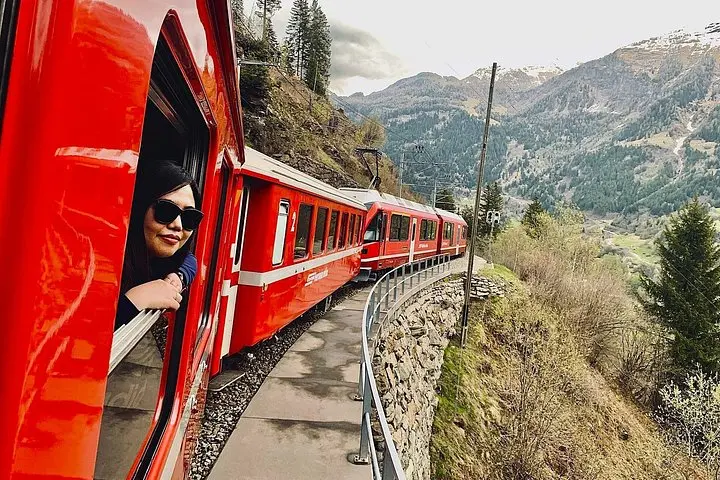
The whistle sounds in the Milan morning and the carriage slides away from the city, windows framing farmland that gives way to folded gray ridgelines. Travelers trade urban rhythm for the slow logic of the rails: viaducts, tunnels and alpine breathing space. The Albula Line climbs, rivers daring you to follow their tracks, and soon the Landwasser Viaduct appears — a curved vault over a deep gorge that makes the valley feel alive beneath your feet.
Verified experiences and guided adventures in the surrounding area.
Operated by Zani Viaggi · Milan, Lombardy
The whistle sounds in the Milan morning and the carriage slides away from the city, windows framing farmland that gives way to folded gray ridgelines. Travelers trade urban rhythm for the slow logic of the rails: viaducts, tunnels and alpine breathing space. The Albula Line climbs, rivers daring you to follow their tracks, and soon the Landwasser Viaduct appears — a curved vault over a deep gorge that makes the valley feel alive beneath your feet.
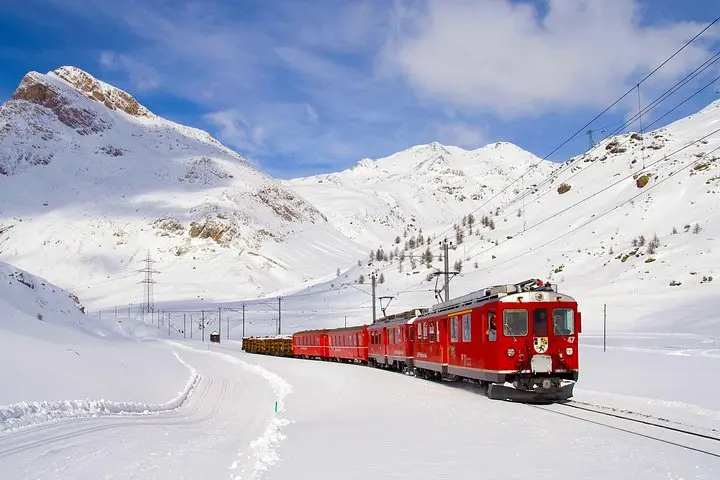
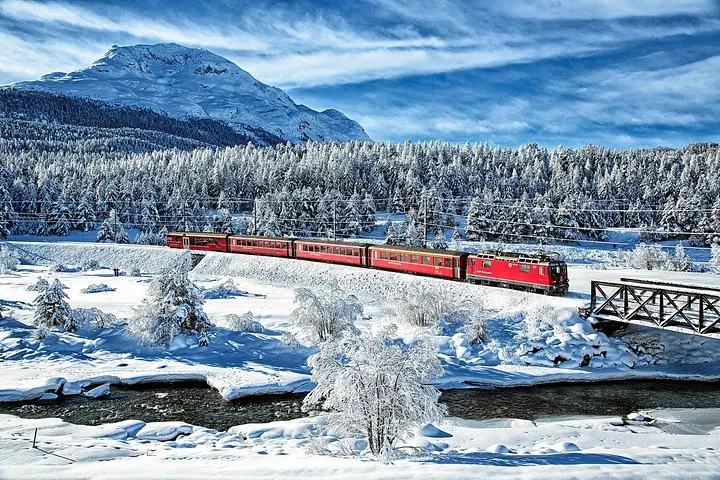
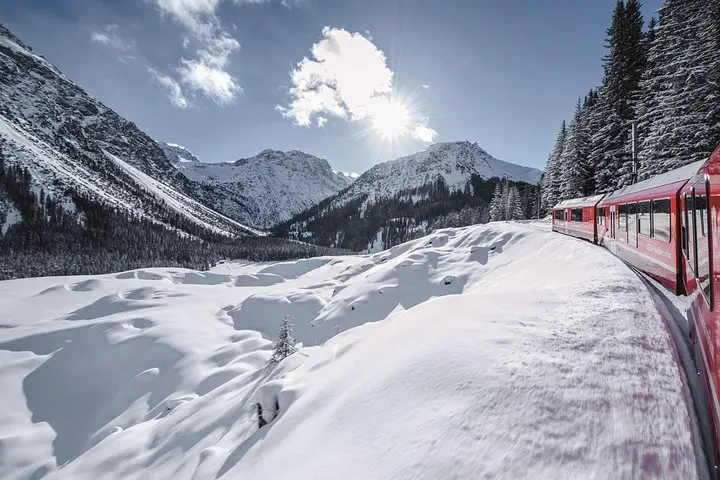
Built in the early 20th century, the Albula and Bernina lines are UNESCO-recognized feats of engineering that threaded remote valleys with stone, steel and exacting gradients. Geologically, the route crosses metamorphic rocks of the Central Alps and the silvery moraine traces left by glaciers; Preda marks one of the highest watershed moments before the descent into the Engadin and Sankt Moritz, a resort town with a long winter sports culture and a distinct Romansh influence.
Onboard, expect panoramic windows and steady commentary; off the train you’ll glimpse timber chalets, terraced hayfields and streams that push the landscape toward the valley floor. Practicalities matter: it’s a long day (about 13 hours), passports are required, and weather on the passes changes quickly — sun one hour, wind and chill the next. Dress in layers, reserve a window seat if possible, bring motion-sickness remedies and a charged camera battery. Guides handle tickets and coach transfers back to Milan, making the route an accessible way to sample high-Alpine scenery in a single, full day.
Yes — the tour crosses from Italy into Switzerland; a valid passport is required on the day of travel.
Meals are not included; the tour provides coach and second-class train tickets but you should bring snacks or purchase food during the stop in Sankt Moritz.
Infants may ride but are required to sit on an adult’s lap; the itinerary is generally suitable for all fitness levels but long for very young children.
Second-class tickets are included; seat allocation varies — arriving early or requesting a window seat where possible improves chances of scenic views.
Zani Viaggi operates guided outdoor trips and adventures with an emphasis on safety, stewardship, and memorable experiences.
The whistle sounds in the Milan morning and the carriage slides away from the city, windows framing farmland that gives way to folded gray ridgelines. Travelers trade urban rhythm for the slow logic of the rails: viaducts, tunnels and alpine breathing space. The Albula Line climbs, rivers daring you to follow their tracks, and soon the Landwasser Viaduct appears — a curved vault over a deep gorge that makes the valley feel alive beneath your feet.
The whistle sounds in the Milan morning and the carriage slides away from the city, windows framing farmland that gives way to folded gray ridgelines. Travelers trade urban rhythm for the slow logic of the rails: viaducts, tunnels and alpine breathing space. The Albula Line climbs, rivers daring you to follow their tracks, and soon the Landwasser Viaduct appears — a curved vault over a deep gorge that makes the valley feel alive beneath your feet.
Built in the early 20th century, the Albula and Bernina lines are UNESCO-recognized feats of engineering that threaded remote valleys with stone, steel and exacting gradients. Geologically, the route crosses metamorphic rocks of the Central Alps and the silvery moraine traces left by glaciers; Preda marks one of the highest watershed moments before the descent into the Engadin and Sankt Moritz, a resort town with a long winter sports culture and a distinct Romansh influence.
Onboard, expect panoramic windows and steady commentary; off the train you’ll glimpse timber chalets, terraced hayfields and streams that push the landscape toward the valley floor. Practicalities matter: it’s a long day (about 13 hours), passports are required, and weather on the passes changes quickly — sun one hour, wind and chill the next. Dress in layers, reserve a window seat if possible, bring motion-sickness remedies and a charged camera battery. Guides handle tickets and coach transfers back to Milan, making the route an accessible way to sample high-Alpine scenery in a single, full day.