THE ADVENTURE COLLECTIVE® · Independent discovery and booking for outdoor travel

Board the Bernina Red Train in Tirano for a one-day ascent into the Engadin—glaciers and viaducts unfold on a UNESCO railway that reaches 2,253 m. Finish with lakeside St. Moritz, windy Silvaplana, and a panoramic drive over the Maloja Pass.
Board the Bernina Red Train in Tirano for a one-day ascent into the Engadin—glaciers and viaducts unfold on a UNESCO railway that reaches 2,253 m. Finish with lakeside St. Moritz, windy Silvaplana, and a panoramic drive over the Maloja Pass.
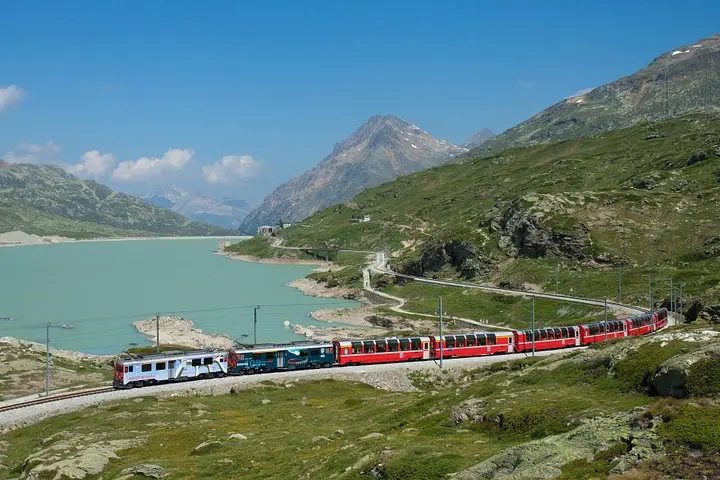
The day begins at Tirano station with a hiss of brakes and a promise: a rail corridor that climbs from vine-clad slopes into an alpine arena. Passengers settle into first-class seats as the Bernina Red Train slips out of the valley. Windows frame a moving postcard—the Adda River threading past stone villages, kilometers of terraced vineyards giving way to pine stands and sudden glacial blue.
Verified experiences and guided adventures in the surrounding area.
Operated by Lake Como Tourism · Tirano, Lombardy
The day begins at Tirano station with a hiss of brakes and a promise: a rail corridor that climbs from vine-clad slopes into an alpine arena. Passengers settle into first-class seats as the Bernina Red Train slips out of the valley. Windows frame a moving postcard—the Adda River threading past stone villages, kilometers of terraced vineyards giving way to pine stands and sudden glacial blue.
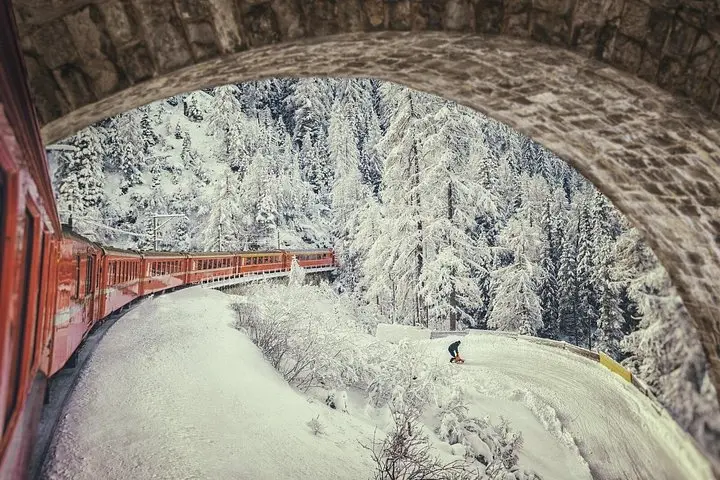
Engineers once pushed rails into this landscape where rock and ice refuse easy compromise. The Bernina line—61 km between Tirano and Pontresina, rising to the Ospizio Bernina at 2,253 m—is a UNESCO-listed feat of early 20th-century alpine railcraft. The route negotiates dramatic viaducts, including the spiral viaduct at Brusio, and crosses moraine-sculpted basins that still feed the glaciers glimpsed on the journey. Locals in the Engadin speak of the line as both connector and guardian: it has knit remote villages to markets while limiting road traffic through fragile high-alpine zones.
St. Moritz arrives like a different country—sunlit promenades, Art Nouveau façades, and the chromium-blue lake where the town’s alpine glamour is on quiet display. Travelers can take an hour to walk the lakeshore, sample an Engadin walnut cake in a café, and read the contours of winter and summer sport in the same square. A short drive brings you to Lake Silvaplana, where the wind treats the water like a playground—kitesurfers and windsurfers carve dramatic arcs on blustery days; in winter the frozen surface becomes an athletic plain.
The return via Maloja Pass is cinematic: a narrow ribbon of road threaded through larch and fir, ridges opening to reveal the Engadin plateau. On the way back there’s a brief stop at Acquafraggia Falls—water finding the easiest route down ancient granite, daring you to step closer and feel the spray. The private transfer included in the tour smooths logistics, and one-way first-class Bernina tickets make the high-altitude stretch a highlight rather than a hassle.
Practical edge: this is a full-day outing—plan 7–10 hours. A passport is required at Swiss border crossings; bring a layered system (temperatures can swing 10–15°C between Tirano and Ospizio Bernina). Comfortable walking shoes suffice for short walks; trails around lakes are compact but can be wet. Credit cards are widely accepted in Swiss towns, but small euro/CHF cash helps at mountain kiosks. For photographers, early morning departures maximize low-angle light on glaciated ridges; reserve your window seat on the outbound Bernina leg for unobstructed views. Finally, respect alpine etiquette—stay on trails, carry out litter, and keep a safe distance from wildlife. The route rewards attentive travel: it’s scenery that moves with you, not a backdrop you pass by.
The tour typically begins at Tirano railway station; pickup and drop-off from Lake Como accommodations are included—Milan pickups are available if selected at booking.
Yes—travelers will cross into Switzerland, so a valid passport is required for all nationalities that need one for entry.
One-way first-class Bernina Red Train tickets (Tirano→St. Moritz) are included; return overland is by private transfer via Maloja Pass.
Yes—infants and small children may ride in strollers and specialized infant seats are available; infants must sit on an adult’s lap on the train.
Yes, regional trains on the Bernina line have restrooms; coaches used for transfers also have basic facilities.
The tour may be adjusted or cancelled in case of heavy snow or unsafe road conditions; cancellations made at least 24 hours in advance are fully refundable.
Lake Como Tourism operates guided outdoor trips and adventures with an emphasis on safety, stewardship, and memorable experiences.

The day begins at Tirano station with a hiss of brakes and a promise: a rail corridor that climbs from vine-clad slopes into an alpine arena. Passengers settle into first-class seats as the Bernina Red Train slips out of the valley. Windows frame a moving postcard—the Adda River threading past stone villages, kilometers of terraced vineyards giving way to pine stands and sudden glacial blue.
The day begins at Tirano station with a hiss of brakes and a promise: a rail corridor that climbs from vine-clad slopes into an alpine arena. Passengers settle into first-class seats as the Bernina Red Train slips out of the valley. Windows frame a moving postcard—the Adda River threading past stone villages, kilometers of terraced vineyards giving way to pine stands and sudden glacial blue.
Engineers once pushed rails into this landscape where rock and ice refuse easy compromise. The Bernina line—61 km between Tirano and Pontresina, rising to the Ospizio Bernina at 2,253 m—is a UNESCO-listed feat of early 20th-century alpine railcraft. The route negotiates dramatic viaducts, including the spiral viaduct at Brusio, and crosses moraine-sculpted basins that still feed the glaciers glimpsed on the journey. Locals in the Engadin speak of the line as both connector and guardian: it has knit remote villages to markets while limiting road traffic through fragile high-alpine zones.
St. Moritz arrives like a different country—sunlit promenades, Art Nouveau façades, and the chromium-blue lake where the town’s alpine glamour is on quiet display. Travelers can take an hour to walk the lakeshore, sample an Engadin walnut cake in a café, and read the contours of winter and summer sport in the same square. A short drive brings you to Lake Silvaplana, where the wind treats the water like a playground—kitesurfers and windsurfers carve dramatic arcs on blustery days; in winter the frozen surface becomes an athletic plain.
The return via Maloja Pass is cinematic: a narrow ribbon of road threaded through larch and fir, ridges opening to reveal the Engadin plateau. On the way back there’s a brief stop at Acquafraggia Falls—water finding the easiest route down ancient granite, daring you to step closer and feel the spray. The private transfer included in the tour smooths logistics, and one-way first-class Bernina tickets make the high-altitude stretch a highlight rather than a hassle.
Practical edge: this is a full-day outing—plan 7–10 hours. A passport is required at Swiss border crossings; bring a layered system (temperatures can swing 10–15°C between Tirano and Ospizio Bernina). Comfortable walking shoes suffice for short walks; trails around lakes are compact but can be wet. Credit cards are widely accepted in Swiss towns, but small euro/CHF cash helps at mountain kiosks. For photographers, early morning departures maximize low-angle light on glaciated ridges; reserve your window seat on the outbound Bernina leg for unobstructed views. Finally, respect alpine etiquette—stay on trails, carry out litter, and keep a safe distance from wildlife. The route rewards attentive travel: it’s scenery that moves with you, not a backdrop you pass by.