THE ADVENTURE COLLECTIVE® · Independent discovery and booking for outdoor travel

Spend a half-day on East Falkland watching gentoo penguins at Bertha's Beach and exploring Gypsy Cove’s tidal pools and shoreline. Small-group 4x4 transport, a guide, lunch and bottled water are included for an intimate wildlife encounter near Stanley.
Spend a half-day on East Falkland watching gentoo penguins at Bertha's Beach and exploring Gypsy Cove’s tidal pools and shoreline. Small-group 4x4 transport, a guide, lunch and bottled water are included for an intimate wildlife encounter near Stanley.
A wind-stung shore greets the vehicle as it pulls off the single-track road: low dunes, flattened tussac grass, and a scatter of pale sand that leads to a colony of gentoo penguins. The birds cluster at the waterline, waddling with purpose while breakers push and wait; the sea seems to test your patience before it lets you watch.
Verified experiences and guided adventures in the surrounding area.
Operated by Rob · Stanley, East Falkland
A wind-stung shore greets the vehicle as it pulls off the single-track road: low dunes, flattened tussac grass, and a scatter of pale sand that leads to a colony of gentoo penguins. The birds cluster at the waterline, waddling with purpose while breakers push and wait; the sea seems to test your patience before it lets you watch.
East Falkland’s coastline records a human and natural history in compact form. These beaches and coves were shaped by glacial scouring and post-Ice Age sea-level shifts; the islands then drew sealers and shepherds whose tracks are still visible in stone walls and farm roads around Stanley. Gypsy Cove bears relics of maritime life and is also a good place for coastal geology—sandstone benches, pebbled spits, and tidal pools harboring invertebrates.
Expect short, level walks across sand and firm gravel—most stops involve 20–60 minute shoreline visits with minimal elevation gain but uneven footing. Guides working from small 4x4s keep groups intimate (minimum four per vehicle) so wildlife encounters stay calm and regulated. Practical notes: keep at least 5 meters from penguins, wear windproof and waterproof layers, bring binoculars and a camera with a zoom, and allow the guide to dictate approach angles to avoid disturbing nesting birds.
The tour runs roughly five to six hours including vehicle transfers and a provided sandwich lunch and bottled water. Spring and summer bring longer daylight and breeding activity; shoulder seasons are quieter but colder. This is a gentle, wildlife-focused outing that pairs coastal scenery with reliable penguin viewing—straightforward to prepare for, and unexpectedly moving in the quiet between sea and sky.
Guides enforce a safe viewing distance—typically at least 5 meters—to protect birds and visitors; use zoom lenses or binoculars for close views.
Yes—small-group 4x4 transport, a sandwich lunch, snacks, and bottled water are included in the tour price.
No—stops involve short, mostly level walks across sand or gravel; some uneven surfaces exist but no sustained climbs.
Families with children can usually participate, but the tour is not recommended for guests with serious spinal, heart, or pregnancy-related concerns; inform the operator about mobility needs when booking.
Rob operates guided outdoor trips and adventures with an emphasis on safety, stewardship, and memorable experiences.
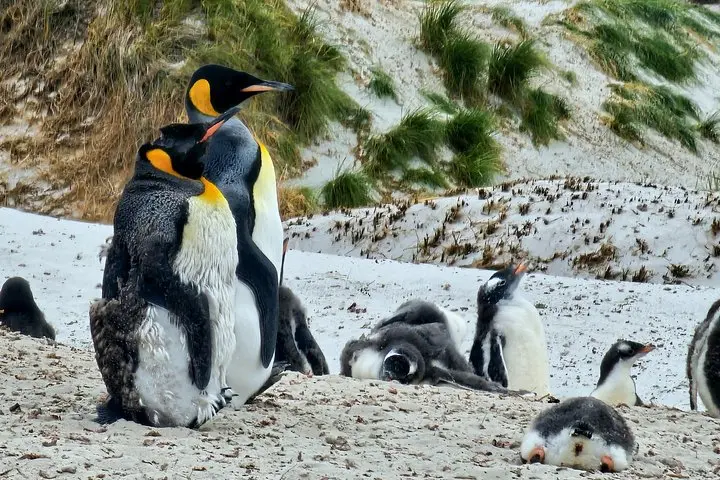
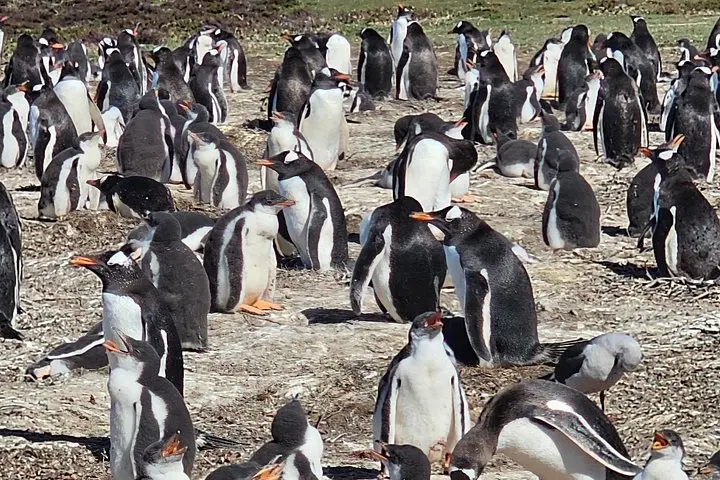

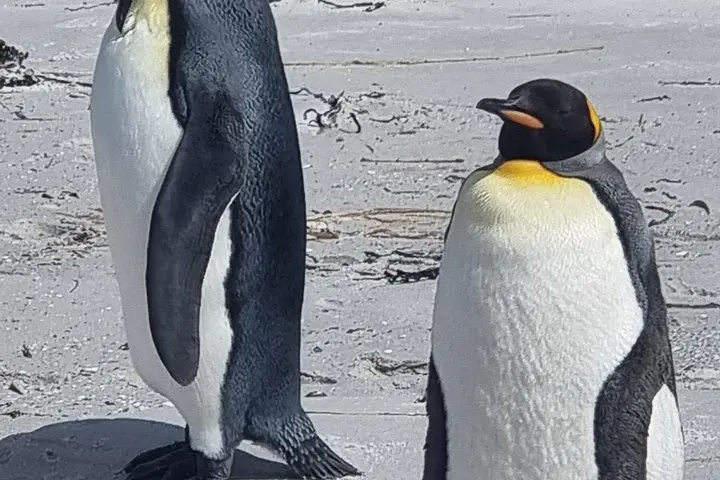
A wind-stung shore greets the vehicle as it pulls off the single-track road: low dunes, flattened tussac grass, and a scatter of pale sand that leads to a colony of gentoo penguins. The birds cluster at the waterline, waddling with purpose while breakers push and wait; the sea seems to test your patience before it lets you watch.
A wind-stung shore greets the vehicle as it pulls off the single-track road: low dunes, flattened tussac grass, and a scatter of pale sand that leads to a colony of gentoo penguins. The birds cluster at the waterline, waddling with purpose while breakers push and wait; the sea seems to test your patience before it lets you watch.
East Falkland’s coastline records a human and natural history in compact form. These beaches and coves were shaped by glacial scouring and post-Ice Age sea-level shifts; the islands then drew sealers and shepherds whose tracks are still visible in stone walls and farm roads around Stanley. Gypsy Cove bears relics of maritime life and is also a good place for coastal geology—sandstone benches, pebbled spits, and tidal pools harboring invertebrates.
Expect short, level walks across sand and firm gravel—most stops involve 20–60 minute shoreline visits with minimal elevation gain but uneven footing. Guides working from small 4x4s keep groups intimate (minimum four per vehicle) so wildlife encounters stay calm and regulated. Practical notes: keep at least 5 meters from penguins, wear windproof and waterproof layers, bring binoculars and a camera with a zoom, and allow the guide to dictate approach angles to avoid disturbing nesting birds.
The tour runs roughly five to six hours including vehicle transfers and a provided sandwich lunch and bottled water. Spring and summer bring longer daylight and breeding activity; shoulder seasons are quieter but colder. This is a gentle, wildlife-focused outing that pairs coastal scenery with reliable penguin viewing—straightforward to prepare for, and unexpectedly moving in the quiet between sea and sky.