THE ADVENTURE COLLECTIVE® · Independent discovery and booking for outdoor travel

Spend a day on the slopes of Mount Agung visiting Pura Besakih, traditional batik workshops, rice-terraced viewpoints and salt-making villages. This full‑day cultural tour blends geology, ritual life and artisanal craft with practical tips for respectful travel.
Spend a day on the slopes of Mount Agung visiting Pura Besakih, traditional batik workshops, rice-terraced viewpoints and salt-making villages. This full‑day cultural tour blends geology, ritual life and artisanal craft with practical tips for respectful travel.
You step off an air-conditioned van onto a stone forecourt that smells faintly of incense and wet earth, the slope of Mount Agung rising behind the temple like an argument that never ends. Morning light picks out carved gateways and clustered shrines; pilgrims move with purpose, and the sea of terraced fields below seems to slope toward the horizon.
Verified experiences and guided adventures in the surrounding area.
Operated by Gading Bali Tour · Rendang, Bali
You step off an air-conditioned van onto a stone forecourt that smells faintly of incense and wet earth, the slope of Mount Agung rising behind the temple like an argument that never ends. Morning light picks out carved gateways and clustered shrines; pilgrims move with purpose, and the sea of terraced fields below seems to slope toward the horizon.
Besakih is Bali’s largest Hindu temple complex, a network of shrines and courtyards built into the volcano’s lower flank. Geologically, it sits on fertile volcanic soils from Mount Agung’s eruptions; the stonework and staircases trace centuries of local craft and ritual. Culturally, it functions as the “mother” temple—the island’s spiritual hub—where festivals and offerings tie present life to ancestral cycles.
The broader tour visits Tohpati’s batik ateliers, Bukit Jambul’s rice-terraced viewpoints, Kerta Gosa’s historical courthouse pavilions in Semarapura, and Kusamba’s salt-flaking coastline. Each stop exposes a practical layer: how local artisans dye cloth, how longhouses and courts managed community law, and how coastal salt pans still use ancient methods.
Practical guidance: the day runs 8–10 hours with moderate walking across uneven stone steps and terraces—expect sun, incense, and quick altitude gain to roughly 1,000 m. Dress respectfully (shoulders and knees covered) and bring cash for small donations or local purchases. Footwear should handle rocky paths and occasional wet sections near caves or coastal stops.
Timing matters: mornings are cooler and coincide with local offerings; afternoons bring haze but richer late light for photos. Respect temple etiquette, carry water, and allow time at batik workshops—skill demonstrations are brief but revealing.
Expect an 8–10 hour private tour with air‑conditioned transport, bottled water and parking fees included; admissions may be extra depending on site rules.
Yes—physical demands are low, but there are many steps and uneven surfaces; bring a walking aid if mobility is limited and plan for regular rests.
General entry is handled on site; organized tours often arrange timing to avoid crowds but check whether any special ceremonies affect access on your travel date.
Most local guides speak English and will explain temple etiquette, history and rituals; ask ahead if you need another language or specific cultural context.
Gading Bali Tour operates guided outdoor trips and adventures with an emphasis on safety, stewardship, and memorable experiences.

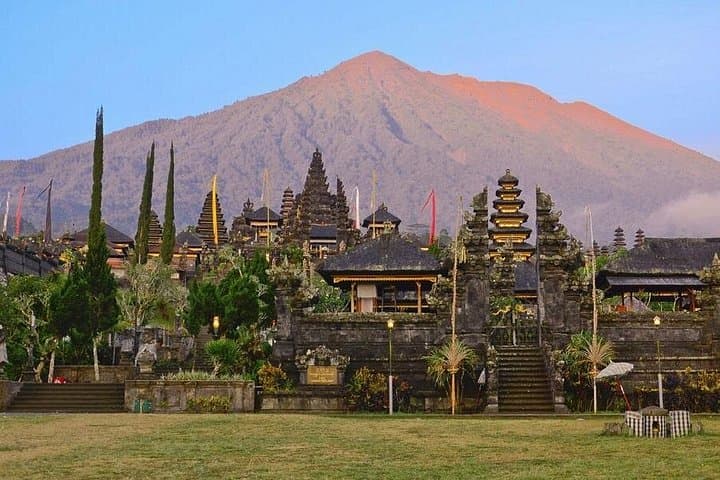
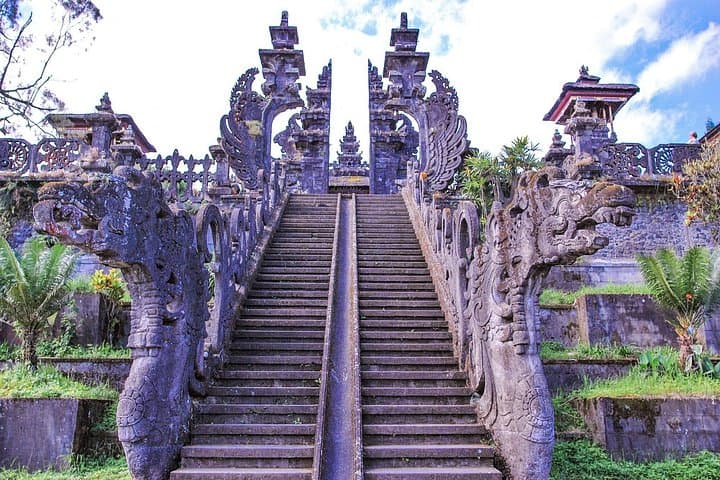

You step off an air-conditioned van onto a stone forecourt that smells faintly of incense and wet earth, the slope of Mount Agung rising behind the temple like an argument that never ends. Morning light picks out carved gateways and clustered shrines; pilgrims move with purpose, and the sea of terraced fields below seems to slope toward the horizon.
You step off an air-conditioned van onto a stone forecourt that smells faintly of incense and wet earth, the slope of Mount Agung rising behind the temple like an argument that never ends. Morning light picks out carved gateways and clustered shrines; pilgrims move with purpose, and the sea of terraced fields below seems to slope toward the horizon.
Besakih is Bali’s largest Hindu temple complex, a network of shrines and courtyards built into the volcano’s lower flank. Geologically, it sits on fertile volcanic soils from Mount Agung’s eruptions; the stonework and staircases trace centuries of local craft and ritual. Culturally, it functions as the “mother” temple—the island’s spiritual hub—where festivals and offerings tie present life to ancestral cycles.
The broader tour visits Tohpati’s batik ateliers, Bukit Jambul’s rice-terraced viewpoints, Kerta Gosa’s historical courthouse pavilions in Semarapura, and Kusamba’s salt-flaking coastline. Each stop exposes a practical layer: how local artisans dye cloth, how longhouses and courts managed community law, and how coastal salt pans still use ancient methods.
Practical guidance: the day runs 8–10 hours with moderate walking across uneven stone steps and terraces—expect sun, incense, and quick altitude gain to roughly 1,000 m. Dress respectfully (shoulders and knees covered) and bring cash for small donations or local purchases. Footwear should handle rocky paths and occasional wet sections near caves or coastal stops.
Timing matters: mornings are cooler and coincide with local offerings; afternoons bring haze but richer late light for photos. Respect temple etiquette, carry water, and allow time at batik workshops—skill demonstrations are brief but revealing.