THE ADVENTURE COLLECTIVE® · Independent discovery and booking for outdoor travel

A half-day hike from Kathmandu to Champa Devi Hill rewards walkers with broad Himalayan panoramas, monastery views and a chance to escape the valley’s noise. This easy-to-moderate route combines brick paths and steps with tea stops at Hattiban Resort.
A half-day hike from Kathmandu to Champa Devi Hill rewards walkers with broad Himalayan panoramas, monastery views and a chance to escape the valley’s noise. This easy-to-moderate route combines brick paths and steps with tea stops at Hattiban Resort.
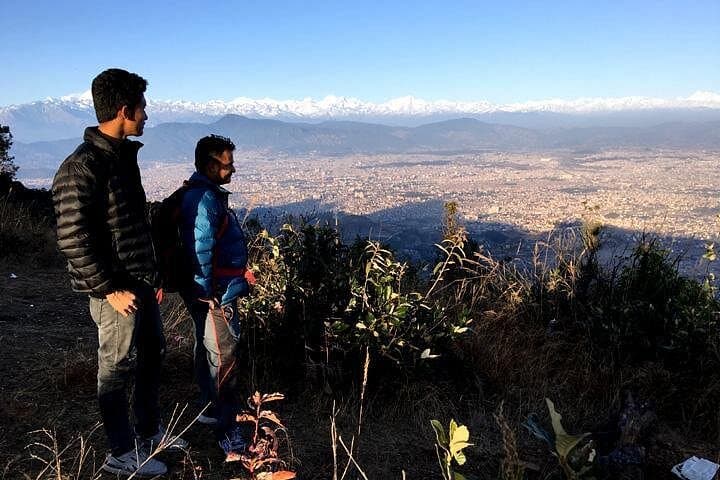
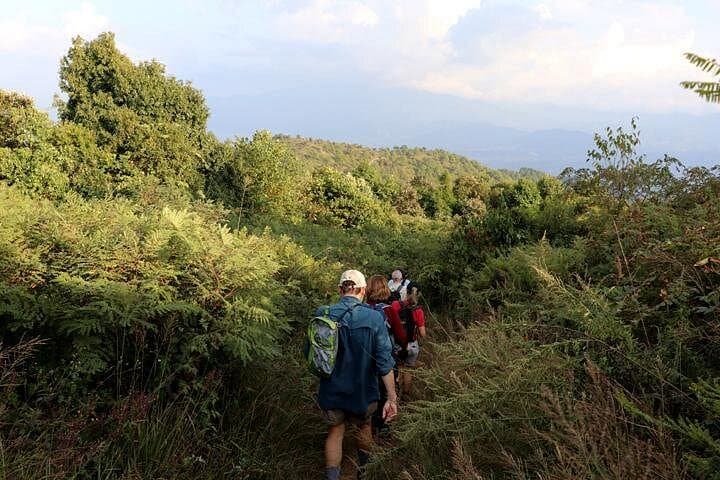
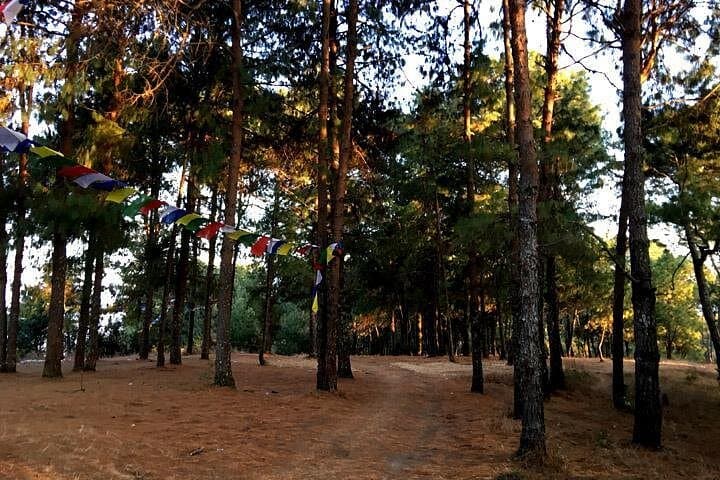
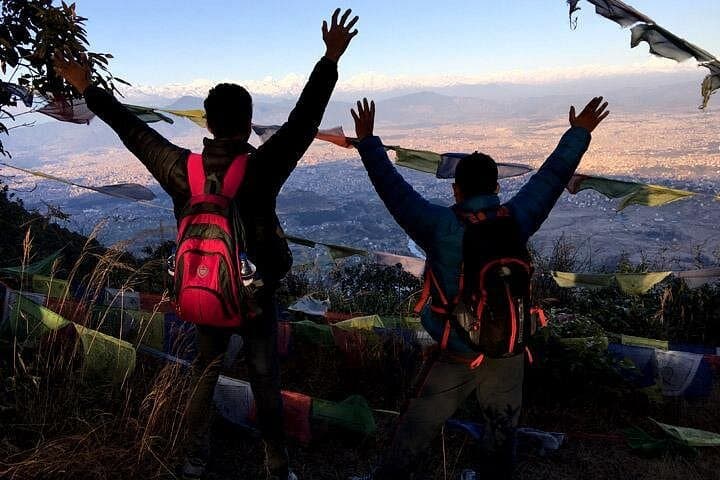
The trail opens with a drive out of central Kathmandu, through rice terraces and roadside shrines, and ends where the valley’s rim begins to breathe. From the trailhead at Hattiban Resort you step onto a brick path that climbs through fir and rhododendron, the city falling away below while the Himalayas assemble themselves along the skyline.
Verified experiences and guided adventures in the surrounding area.
Operated by Himalayan Planet Adventures · Kathmandu, Bagmati Province
The trail opens with a drive out of central Kathmandu, through rice terraces and roadside shrines, and ends where the valley’s rim begins to breathe. From the trailhead at Hattiban Resort you step onto a brick path that climbs through fir and rhododendron, the city falling away below while the Himalayas assemble themselves along the skyline.
Geology here tells of an old, shallow lake that once filled the Kathmandu Basin; the present ridges are its rims. Along the walk you’ll pass small monasteries and look down on the Bagmati River as it threads the valley—monastic bells and the distant hum of the city create a persistent, low counterpoint to the wind. Local culture is visible in roadside prayer wheels and simple tea stops; the 106-foot statue of a Buddhist saint punctuates the scene and offers a place to pause.
The ascent is straightforward—sections of brick walkway and stone steps, interspersed with short steeper pitches—making it ideal for travelers who want expansive Himalayan views without technical scrambling. Expect wildflowers in spring and crisp, clear air in the post-monsoon months.
Practical guidance: leave early for the best light and cooler temperatures, wear grippy hiking shoes for the stairs, and pack a light insulating layer because wind at the summit can cut through you. Hydrate before you start—the route takes roughly two hours up and two back with time for lunch at Hattiban. Respect monastery grounds, carry out waste, and consider a local guide to enrich the cultural and natural context of the hike.
Walking time is roughly 1.5–2 hours one way from Hattiban Resort, with the full trip (including hotel pickup, drive and lunch) taking about 6–7 hours.
Yes—trail surfaces are mostly maintained brick and steps; beginners with reasonable fitness can complete it, though there are some sustained uphill sections.
Typical inclusions are hotel pickup/drop-off (within Kathmandu ring road), bottled water, lunch, transport by private vehicle, and a professional hiking guide.
Post-monsoon months (October–November) and spring (March–May) usually offer the clearest views and comfortable temperatures.
Himalayan Planet Adventures operates guided outdoor trips and adventures with an emphasis on safety, stewardship, and memorable experiences.
The trail opens with a drive out of central Kathmandu, through rice terraces and roadside shrines, and ends where the valley’s rim begins to breathe. From the trailhead at Hattiban Resort you step onto a brick path that climbs through fir and rhododendron, the city falling away below while the Himalayas assemble themselves along the skyline.
The trail opens with a drive out of central Kathmandu, through rice terraces and roadside shrines, and ends where the valley’s rim begins to breathe. From the trailhead at Hattiban Resort you step onto a brick path that climbs through fir and rhododendron, the city falling away below while the Himalayas assemble themselves along the skyline.
Geology here tells of an old, shallow lake that once filled the Kathmandu Basin; the present ridges are its rims. Along the walk you’ll pass small monasteries and look down on the Bagmati River as it threads the valley—monastic bells and the distant hum of the city create a persistent, low counterpoint to the wind. Local culture is visible in roadside prayer wheels and simple tea stops; the 106-foot statue of a Buddhist saint punctuates the scene and offers a place to pause.
The ascent is straightforward—sections of brick walkway and stone steps, interspersed with short steeper pitches—making it ideal for travelers who want expansive Himalayan views without technical scrambling. Expect wildflowers in spring and crisp, clear air in the post-monsoon months.
Practical guidance: leave early for the best light and cooler temperatures, wear grippy hiking shoes for the stairs, and pack a light insulating layer because wind at the summit can cut through you. Hydrate before you start—the route takes roughly two hours up and two back with time for lunch at Hattiban. Respect monastery grounds, carry out waste, and consider a local guide to enrich the cultural and natural context of the hike.