THE ADVENTURE COLLECTIVE® · Independent discovery and booking for outdoor travel

Four days that pair Budapest’s grand boulevards and thermal baths with a full‑day Danube Bend loop to Esztergom, Visegrád and Szentendre. Expect castle terraces, river panoramas and a restorative boat ride back to the city.
Four days that pair Budapest’s grand boulevards and thermal baths with a full‑day Danube Bend loop to Esztergom, Visegrád and Szentendre. Expect castle terraces, river panoramas and a restorative boat ride back to the city.
You step off the shuttle onto a wide river that divides two personalities: a stone‑strewn Buda of castle roofs and green hills, and a flat, eclectic Pest of grand avenues and coffeehouses. The Danube threads the itinerary—its current daring you toward waterfront promenades, baroque churches and the steam of century‑old thermal baths.
Verified experiences and guided adventures in the surrounding area.
Operated by EUROLINKWORLDWIDE · Budapest, Central Hungary
You step off the shuttle onto a wide river that divides two personalities: a stone‑strewn Buda of castle roofs and green hills, and a flat, eclectic Pest of grand avenues and coffeehouses. The Danube threads the itinerary—its current daring you toward waterfront promenades, baroque churches and the steam of century‑old thermal baths.
This four‑day route moves from city landmarks to river‑bend landscapes. On day one, guests survey Parliament, St. Stephen’s Basilica and the Chain Bridge, learning how Roman, Ottoman and Austro‑Hungarian eras layered the streets. Geologically, the Danube Bend exposes folded limestone ridges north of the city and wide river terraces that shaped settlement patterns for centuries.
Culturally, Budapest’s cafés and ruin bars reflect a resilience born from 20th‑century upheaval; on the Danube Bend you’ll visit Esztergom’s basilica and Visegrád’s medieval citadel—places where history sits on the high ground and looks back down the river.
Practical guidance: plan mornings for the Castle District to avoid crowds, and book thermal‑bath sessions with swimsuit and towel rentals if needed. Wear sturdy walking shoes—cobblestones and castle steps are unforgiving—and pack a lightweight rain shell; summer storms pop up fast. Local transit is efficient: trams and metro get you between highlights, while the included boat ride offers restful river views and a different orientation to the landscape.
This itinerary balances paced city touring with a full‑day nature and history loop along the Danube, making it a good fit for travelers who want concentrated cultural context without long days of backcountry exertion.
The standard itinerary includes guided visits and some admissions, but many major sites (e.g., certain museums or thermal bath passes) may require separate tickets—check the tour inclusions before booking.
Yes—arrival/departure transfers and point‑to‑point transport for the Danube Bend day trip are included; in‑city movement is typically by coach and public transit as noted in the itinerary.
The tour is described as suitable for all fitness levels, but many historic sites involve stairs and uneven surfaces; contact the operator about specific accessibility needs and pickup options.
Hungary uses the forint (HUF); credit cards work widely, but carry some cash for markets and small vendors. Tipping 10–15% in restaurants and small amounts for guides/drivers is customary.
EUROLINKWORLDWIDE operates guided outdoor trips and adventures with an emphasis on safety, stewardship, and memorable experiences.


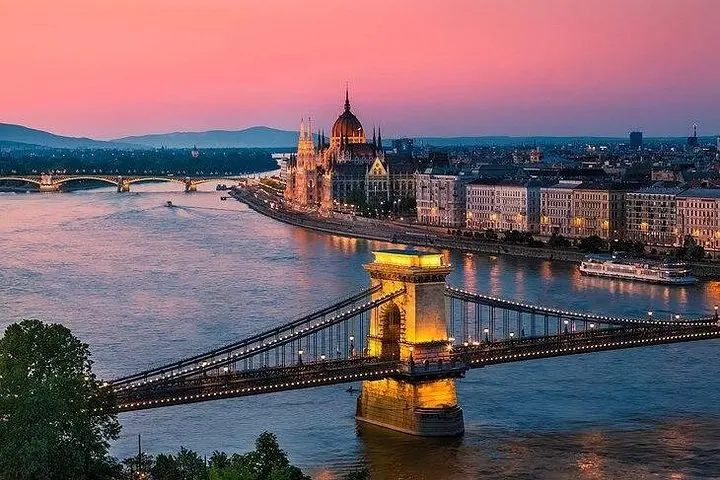

You step off the shuttle onto a wide river that divides two personalities: a stone‑strewn Buda of castle roofs and green hills, and a flat, eclectic Pest of grand avenues and coffeehouses. The Danube threads the itinerary—its current daring you toward waterfront promenades, baroque churches and the steam of century‑old thermal baths.
You step off the shuttle onto a wide river that divides two personalities: a stone‑strewn Buda of castle roofs and green hills, and a flat, eclectic Pest of grand avenues and coffeehouses. The Danube threads the itinerary—its current daring you toward waterfront promenades, baroque churches and the steam of century‑old thermal baths.
This four‑day route moves from city landmarks to river‑bend landscapes. On day one, guests survey Parliament, St. Stephen’s Basilica and the Chain Bridge, learning how Roman, Ottoman and Austro‑Hungarian eras layered the streets. Geologically, the Danube Bend exposes folded limestone ridges north of the city and wide river terraces that shaped settlement patterns for centuries.
Culturally, Budapest’s cafés and ruin bars reflect a resilience born from 20th‑century upheaval; on the Danube Bend you’ll visit Esztergom’s basilica and Visegrád’s medieval citadel—places where history sits on the high ground and looks back down the river.
Practical guidance: plan mornings for the Castle District to avoid crowds, and book thermal‑bath sessions with swimsuit and towel rentals if needed. Wear sturdy walking shoes—cobblestones and castle steps are unforgiving—and pack a lightweight rain shell; summer storms pop up fast. Local transit is efficient: trams and metro get you between highlights, while the included boat ride offers restful river views and a different orientation to the landscape.
This itinerary balances paced city touring with a full‑day nature and history loop along the Danube, making it a good fit for travelers who want concentrated cultural context without long days of backcountry exertion.