THE ADVENTURE COLLECTIVE® · Independent discovery and booking for outdoor travel

See Cairo’s headline sights in one day: the Giza pyramids, the Sphinx, the Egyptian Museum and Khan el-Khalili bazaar with a private Egyptologist guide. Practical tips on timing, what to pack, and how to move efficiently between sites.
See Cairo’s headline sights in one day: the Giza pyramids, the Sphinx, the Egyptian Museum and Khan el-Khalili bazaar with a private Egyptologist guide. Practical tips on timing, what to pack, and how to move efficiently between sites.
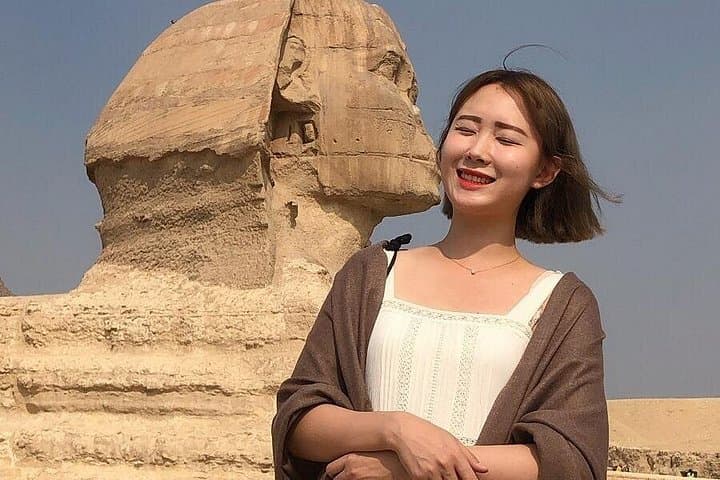
You step out of an air-conditioned car and the heat hits like a brass gate; ahead, the three great pyramids rise from the edge of the desert, geometric and unapologetic against a pale blue sky. The guide gestures to the scale—each stone an argument for patient engineering—and the Sphinx watches the procession of visitors with a stony, inscrutable patience.
Verified experiences and guided adventures in the surrounding area.
Operated by Egypt Super Tours · Giza, Cairo Governorate
You step out of an air-conditioned car and the heat hits like a brass gate; ahead, the three great pyramids rise from the edge of the desert, geometric and unapologetic against a pale blue sky. The guide gestures to the scale—each stone an argument for patient engineering—and the Sphinx watches the procession of visitors with a stony, inscrutable patience.
This full-day private tour threads together Egypt’s most arresting cultural sites: the Giza Plateau with the Great Pyramid (Khufu), Khafre’s shadowed causeway and Menkaure’s smaller stones; the nearby Sphinx and its temple of mummification; a lunch at a local restaurant; a deep-dive through five millennia at the Egyptian Museum; and the bustling alleys of Khan el-Khalili, Cairo’s oldest bazaar where bargaining is part ritual.
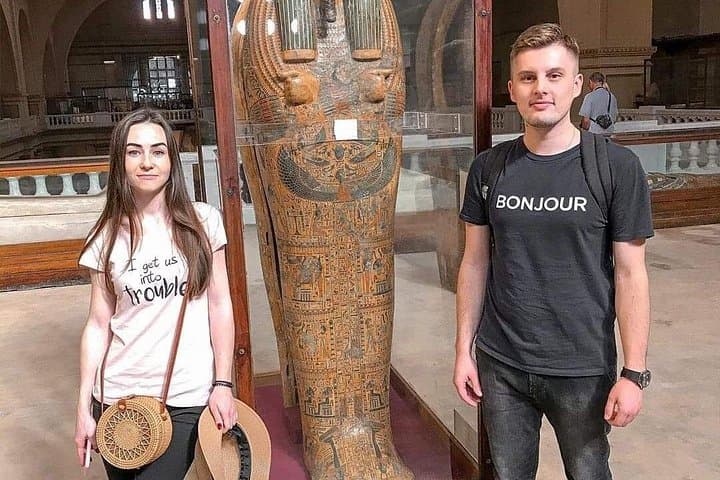
Geology here is blunt—limestone bedrock and wind-swept dunes—while history is dense: pharaonic tomb-builders, Greco-Roman interludes and modern Cairo layered into the city’s fabric. The museum holds artifacts ranging from monumental statuary to Tutankhamun’s gold, giving tangible weight to the stories told at Giza.
Practical note: wear sturdy, closed-toe shoes for uneven pathways, carry sun protection and at least 1–2 liters of water, and bring a means to pay entrance fees (cards accepted). The pace is moderate; expect roughly eight hours with hotel pickup and drop-off. Respect restricted areas, follow your Egyptologist’s route, and leave space to wander the bazaar’s side alleys for small discoveries.
No; entrance fees are not included—guests pay on site (cards accepted in many places, but carry some cash).
The tour listing notes wheelchair accessibility for parts of the itinerary, but access on the Giza Plateau can be limited; contact the operator to confirm needs.
Private door-to-door pickup and drop-off by A/C car from hotels in Cairo and Giza are included in the tour price.
Photography is allowed in many areas, but flash and tripod rules vary; check with your guide and at museum entrances for any restricted rooms.
Egypt Super Tours operates guided outdoor trips and adventures with an emphasis on safety, stewardship, and memorable experiences.


You step out of an air-conditioned car and the heat hits like a brass gate; ahead, the three great pyramids rise from the edge of the desert, geometric and unapologetic against a pale blue sky. The guide gestures to the scale—each stone an argument for patient engineering—and the Sphinx watches the procession of visitors with a stony, inscrutable patience.
You step out of an air-conditioned car and the heat hits like a brass gate; ahead, the three great pyramids rise from the edge of the desert, geometric and unapologetic against a pale blue sky. The guide gestures to the scale—each stone an argument for patient engineering—and the Sphinx watches the procession of visitors with a stony, inscrutable patience.
This full-day private tour threads together Egypt’s most arresting cultural sites: the Giza Plateau with the Great Pyramid (Khufu), Khafre’s shadowed causeway and Menkaure’s smaller stones; the nearby Sphinx and its temple of mummification; a lunch at a local restaurant; a deep-dive through five millennia at the Egyptian Museum; and the bustling alleys of Khan el-Khalili, Cairo’s oldest bazaar where bargaining is part ritual.
Geology here is blunt—limestone bedrock and wind-swept dunes—while history is dense: pharaonic tomb-builders, Greco-Roman interludes and modern Cairo layered into the city’s fabric. The museum holds artifacts ranging from monumental statuary to Tutankhamun’s gold, giving tangible weight to the stories told at Giza.
Practical note: wear sturdy, closed-toe shoes for uneven pathways, carry sun protection and at least 1–2 liters of water, and bring a means to pay entrance fees (cards accepted). The pace is moderate; expect roughly eight hours with hotel pickup and drop-off. Respect restricted areas, follow your Egyptologist’s route, and leave space to wander the bazaar’s side alleys for small discoveries.