THE ADVENTURE COLLECTIVE® · Independent discovery and booking for outdoor travel

A half‑day journey between brackish lagoons, clear spring pools and surf‑pounded beaches in the Dominican Republic’s southwest. Explore mangroves, watch flamingos, and learn about larimar craft with local guides.
A half‑day journey between brackish lagoons, clear spring pools and surf‑pounded beaches in the Dominican Republic’s southwest. Explore mangroves, watch flamingos, and learn about larimar craft with local guides.
You step out of the air‑conditioned vehicle and the coast speaks: brackish wells with glassy surfaces, mangroves crowding the lagoon edge, and the Atlantic beyond throwing rhythm at a stone beach. The guide points to a rose‑pink smear on the flats—flamingos feeding like punctuation marks—and the wind farm’s towers loom in the distance, rotating like a modern curiosity.
Verified experiences and guided adventures in the surrounding area.
Operated by Larimar Ecotour · Pedernales, Pedernales
You step out of the air‑conditioned vehicle and the coast speaks: brackish wells with glassy surfaces, mangroves crowding the lagoon edge, and the Atlantic beyond throwing rhythm at a stone beach. The guide points to a rose‑pink smear on the flats—flamingos feeding like punctuation marks—and the wind farm’s towers loom in the distance, rotating like a modern curiosity.
This route moves between ecological contrasts. Oviedo Lagoon is a shallow, saline‑influenced wetland that supports four species of mangrove and migratory birds, while inland springs such as Los Pozos de Romeo deliver clear fresh water through limestone karst that has carved pools and small rivers over millennia. The region’s geology is limestone and coastal sediments; culturally the southwest is shaped by fishing villages, larimar miners, and smallholder farms, with Larimar workshops offering a piece of local craft history.
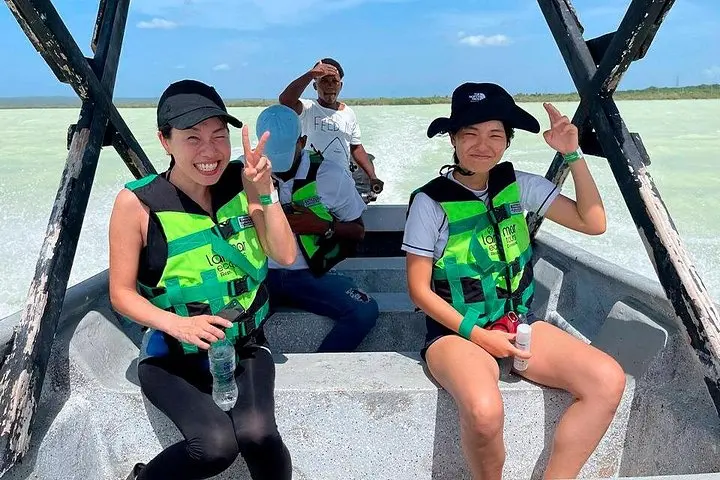
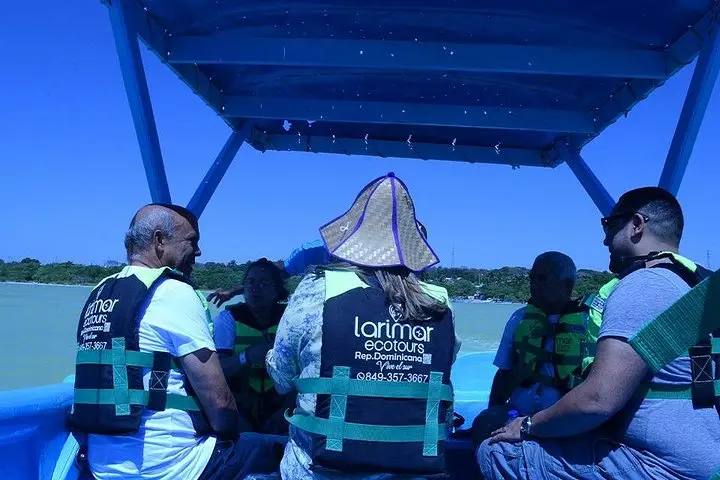
Expect a mix of short walks, boat or roadside viewing, and easy swims at protected pools and Piedras Blancas beach. Practical tips: wear reef or water shoes for stony beaches, bring sun protection and reusable water bottle (bottled water is provided), and a light rain layer for sudden tropical showers. Guides emphasize conservation—stay on paths, avoid disturbing bird flats, and pack out plastics.
The tour’s pace is gentle but varied: salt, fresh, sand, and mangrove. It suits travelers wanting a compact, interpretive look at southwestern Dominican ecosystems without strenuous hiking—just bring curiosity, sun care, and a camera for the flamingos.
Yes—private, air‑conditioned pickup and drop‑off from your accommodation is included in the tour.
The itinerary is rated easy with short, flat walks and vehicle access to viewpoints; it’s generally suitable for families and many mobility levels—confirm specific needs when booking.
Flamingos and rhinoceros iguanas are regular sightings at Oviedo Lagoon and mangroves, though wildlife can be seasonal and sightings aren’t guaranteed.
Bring a swimsuit, water shoes for rocky entries, a quick‑dry towel, and a dry bag for valuables; some stops are shallow and calm for swimming.
Larimar Ecotour operates guided outdoor trips and adventures with an emphasis on safety, stewardship, and memorable experiences.


You step out of the air‑conditioned vehicle and the coast speaks: brackish wells with glassy surfaces, mangroves crowding the lagoon edge, and the Atlantic beyond throwing rhythm at a stone beach. The guide points to a rose‑pink smear on the flats—flamingos feeding like punctuation marks—and the wind farm’s towers loom in the distance, rotating like a modern curiosity.
You step out of the air‑conditioned vehicle and the coast speaks: brackish wells with glassy surfaces, mangroves crowding the lagoon edge, and the Atlantic beyond throwing rhythm at a stone beach. The guide points to a rose‑pink smear on the flats—flamingos feeding like punctuation marks—and the wind farm’s towers loom in the distance, rotating like a modern curiosity.
This route moves between ecological contrasts. Oviedo Lagoon is a shallow, saline‑influenced wetland that supports four species of mangrove and migratory birds, while inland springs such as Los Pozos de Romeo deliver clear fresh water through limestone karst that has carved pools and small rivers over millennia. The region’s geology is limestone and coastal sediments; culturally the southwest is shaped by fishing villages, larimar miners, and smallholder farms, with Larimar workshops offering a piece of local craft history.
Expect a mix of short walks, boat or roadside viewing, and easy swims at protected pools and Piedras Blancas beach. Practical tips: wear reef or water shoes for stony beaches, bring sun protection and reusable water bottle (bottled water is provided), and a light rain layer for sudden tropical showers. Guides emphasize conservation—stay on paths, avoid disturbing bird flats, and pack out plastics.
The tour’s pace is gentle but varied: salt, fresh, sand, and mangrove. It suits travelers wanting a compact, interpretive look at southwestern Dominican ecosystems without strenuous hiking—just bring curiosity, sun care, and a camera for the flamingos.