THE ADVENTURE COLLECTIVE® · Independent discovery and booking for outdoor travel

Walk 3.5 miles between two of Manhattan’s major skyline clusters on a guided half-day tour that threads Hudson Yards, the High Line, Chelsea, Greenwich Village, SoHo, Little Italy and Chinatown—finishing with a ferry back to Midtown. Learn architecture, food history, and neighborhood lore while sampling standout bites.
Walk 3.5 miles between two of Manhattan’s major skyline clusters on a guided half-day tour that threads Hudson Yards, the High Line, Chelsea, Greenwich Village, SoHo, Little Italy and Chinatown—finishing with a ferry back to Midtown. Learn architecture, food history, and neighborhood lore while sampling standout bites.
You step off the subway and the city alters its scale. At Hudson Yards the Vessel's honeycomb steel frames cut a bright pattern against sky, and two blocks later the High Line lifts you above street chaos: freight rails turned park, a third-story promenade where magnolias and stainless steel planters elbow office towers for light.
Verified experiences and guided adventures in the surrounding area.
Operated by Manhattan Unlocked Historical and Architectural Walking Tours · New York, New York
You step off the subway and the city alters its scale. At Hudson Yards the Vessel's honeycomb steel frames cut a bright pattern against sky, and two blocks later the High Line lifts you above street chaos: freight rails turned park, a third-story promenade where magnolias and stainless steel planters elbow office towers for light.
This half-day walk threads 3.5 miles through neighborhoods that grew as different New Yorks: Chelsea's industrial warehouses, Greenwich Village's low-rise intimacy, SoHo's cast-iron galleries, the old-Italian storefronts of Mulberry Street, and the cramped streets of Chinatown. The route moves from post-industrial reinvention to immigrant tenement history and ends where commerce crowded in—below the Financial District's glass facades—before a short ferry trims the distance back to Midtown and a final view of the path you took.
The High Line is a story in urban geology and infrastructure: an elevated freight rail repurposed into a linear park that changed land values and architectural language. SoHo still bears cast-iron facades—iron columns left over from 19th-century factory construction—that make for dramatic window shadows. Little Italy and the Lower East Side are chapters of migration, where five-story walk-ups and narrow alleys record waves of arrival and industry; the Old Five Points neighborhood once mapped by tenements and crime is remembered in plaques and street shapes.
Food is part of the narrative. Chelsea Market occupies former Nabisco factory space; the legend that flour entered one side and Oreos left the other is a tidy way to read commodity flows as architecture. On Bleecker you’ll pass bakeries and coffee shops that anchor neighborhoods; tasting stops are allowed but not every sample is included in the ticket price.
Practical matters: the tour covers mostly flat, paved city streets with short sections of cobblestones in SoHo and occasional stair access for public transit. Expect 3.5–4 miles of walking over roughly six hours with multiple short stops for history talks and food sampling. Start options are Grand Central or Penn Station—pick whichever connects with your rail route. Footwear should prioritize comfort and traction; a small daypack for water, a light rain shell, and a power bank for photos are smart additions.
Timing matters: begin in the morning to avoid the thickest ferry queues and the hottest part of summer, and leave room to linger at Chelsea Market or a favorite bakery. The guide weaves history with neighborhood tips—where to find the best cannoli, which brownstone has the Sex and the City connection, and a little-known cloistered garden that offers a quiet city pause.
A city walking tour like this is equal parts architecture walk and food crawl, an urban education that rewards curiosity. Bring an appetite for snacks, good walking shoes, and an interest in how streets, buildings, and people layered together to make the Manhattan you see now.
The route is about 3.5 miles and the tour runs roughly 5–6 hours including stops for food, history talks, and the return ferry.
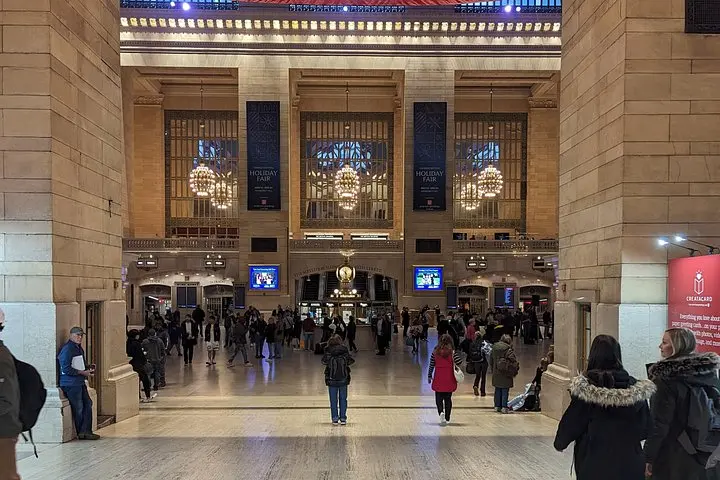
You can choose to start (and end) at Grand Central or Penn Station; the tour also includes a ferry ride back to Midtown from Brookfield Place.
The guide allows time for tastings at places like Chelsea Market, Magnolia Bakery, and local delis but not all samples are included in the ticket price—plan to buy individual items.
Much of the route is on paved surfaces, but cobblestones in SoHo and ferry/transfer logistics may limit full accessibility; contact the operator to discuss accommodations.
Three modes of public transit, including a short ferry ride, are factored into the tour logistics but personal metro fares may be required depending on your start point—confirm with the operator.
Older children who can walk several miles and handle city crowds are fine; the tour is not recommended for very young children who cannot sustain the distance.
Manhattan Unlocked Historical and Architectural Walking Tours operates guided outdoor trips and adventures with an emphasis on safety, stewardship, and memorable experiences.
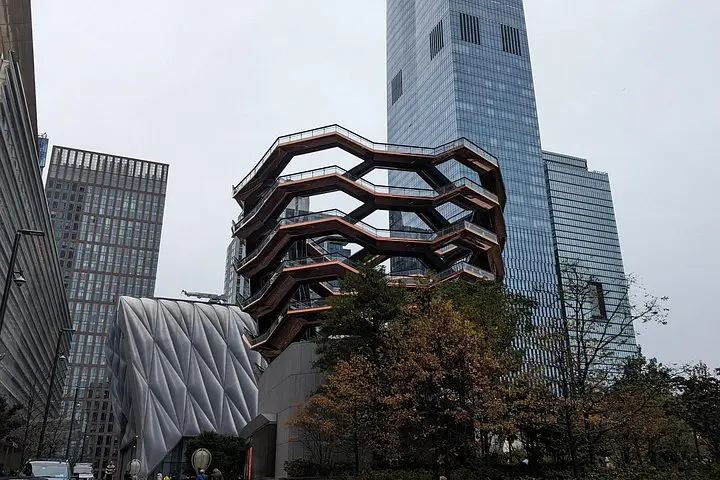
You step off the subway and the city alters its scale. At Hudson Yards the Vessel's honeycomb steel frames cut a bright pattern against sky, and two blocks later the High Line lifts you above street chaos: freight rails turned park, a third-story promenade where magnolias and stainless steel planters elbow office towers for light.
You step off the subway and the city alters its scale. At Hudson Yards the Vessel's honeycomb steel frames cut a bright pattern against sky, and two blocks later the High Line lifts you above street chaos: freight rails turned park, a third-story promenade where magnolias and stainless steel planters elbow office towers for light.
This half-day walk threads 3.5 miles through neighborhoods that grew as different New Yorks: Chelsea's industrial warehouses, Greenwich Village's low-rise intimacy, SoHo's cast-iron galleries, the old-Italian storefronts of Mulberry Street, and the cramped streets of Chinatown. The route moves from post-industrial reinvention to immigrant tenement history and ends where commerce crowded in—below the Financial District's glass facades—before a short ferry trims the distance back to Midtown and a final view of the path you took.
The High Line is a story in urban geology and infrastructure: an elevated freight rail repurposed into a linear park that changed land values and architectural language. SoHo still bears cast-iron facades—iron columns left over from 19th-century factory construction—that make for dramatic window shadows. Little Italy and the Lower East Side are chapters of migration, where five-story walk-ups and narrow alleys record waves of arrival and industry; the Old Five Points neighborhood once mapped by tenements and crime is remembered in plaques and street shapes.
Food is part of the narrative. Chelsea Market occupies former Nabisco factory space; the legend that flour entered one side and Oreos left the other is a tidy way to read commodity flows as architecture. On Bleecker you’ll pass bakeries and coffee shops that anchor neighborhoods; tasting stops are allowed but not every sample is included in the ticket price.
Practical matters: the tour covers mostly flat, paved city streets with short sections of cobblestones in SoHo and occasional stair access for public transit. Expect 3.5–4 miles of walking over roughly six hours with multiple short stops for history talks and food sampling. Start options are Grand Central or Penn Station—pick whichever connects with your rail route. Footwear should prioritize comfort and traction; a small daypack for water, a light rain shell, and a power bank for photos are smart additions.
Timing matters: begin in the morning to avoid the thickest ferry queues and the hottest part of summer, and leave room to linger at Chelsea Market or a favorite bakery. The guide weaves history with neighborhood tips—where to find the best cannoli, which brownstone has the Sex and the City connection, and a little-known cloistered garden that offers a quiet city pause.
A city walking tour like this is equal parts architecture walk and food crawl, an urban education that rewards curiosity. Bring an appetite for snacks, good walking shoes, and an interest in how streets, buildings, and people layered together to make the Manhattan you see now.