THE ADVENTURE COLLECTIVE® · Independent discovery and booking for outdoor travel

Four days across Paro, Thimphu and Punakha, capped by the cliffside Taktshang (Tiger’s Nest) hike. Expect high passes, fortress-monasteries, and a compact itinerary that balances culture, short hikes and valley views.
Four days across Paro, Thimphu and Punakha, capped by the cliffside Taktshang (Tiger’s Nest) hike. Expect high passes, fortress-monasteries, and a compact itinerary that balances culture, short hikes and valley views.
You step out of the valley mist into a narrow road that chisels itself between pine-scented slopes and terraced fields. The air has a thin brightness that makes bells and prayer flags sound clearer; the Paro Valley pushes you forward while the rivers below dare you to slow down and listen.
Verified experiences and guided adventures in the surrounding area.
Operated by Bhutan Best InBound Tour · Paro, Paro District
You step out of the valley mist into a narrow road that chisels itself between pine-scented slopes and terraced fields. The air has a thin brightness that makes bells and prayer flags sound clearer; the Paro Valley pushes you forward while the rivers below dare you to slow down and listen.
This compact 4-day loop threads together Bhutan’s political heart in Thimphu, the river-carved grace of Punakha and Paro’s cliff-hung wonder, Taktshang (Tiger’s Nest). The landscape is young Himalaya — folded schist and granite, high-altitude passes such as Dochula (≈3,100 m) opening panoramic ridgelines. Dzongs (fortress-monasteries) like Punakha and Tashichho reflect Bhutan’s theocratic-administrative history and house thangkas, chapels and annual rituals that still shape village life.
Culture here is tactile: monks walking the courtyards, farmers planting rice, and the curious humor of the Divine Madman at Chimi Lhakhang. Conservation is visible too — a government Sustainable Development Fee underwrites protected forests and community programs.
Practical side: plan for altitude shifts (Thimphu ~2,300 m; Tiger’s Nest ~3,100 m) and one full day for the Taktshang hike (3–5 hours round trip, steep stone steps and switchbacks). Expect variable weather — sun can turn to drizzle quickly — and bring layered clothing, sturdy footwear and water. Allow mornings for better visibility at Dochula and afternoons for valley light by Punakha’s rivers. Guides handle permits and logistics; you’re there to move between sites, feel the slope underfoot and return with a clear sense of Bhutan’s ritual landscape.
Yes—tour operators process the visa and the government Sustainable Development Fee (SDF) is part of the booking; submit passport copy and photo in advance.
Plan for 3–5 hours round trip with steep sections and many stairs; moderate fitness and steady pacing make it manageable for most travelers.
This itinerary includes internal transport and most meals listed (breakfast, lunch, dinner) and 3-star accommodations; confirm specifics with the operator.
Yes—bring some Bhutanese ngultrum or small USD for tips, temple donations and small purchases; cards are not accepted everywhere.
Bhutan Best InBound Tour operates guided outdoor trips and adventures with an emphasis on safety, stewardship, and memorable experiences.
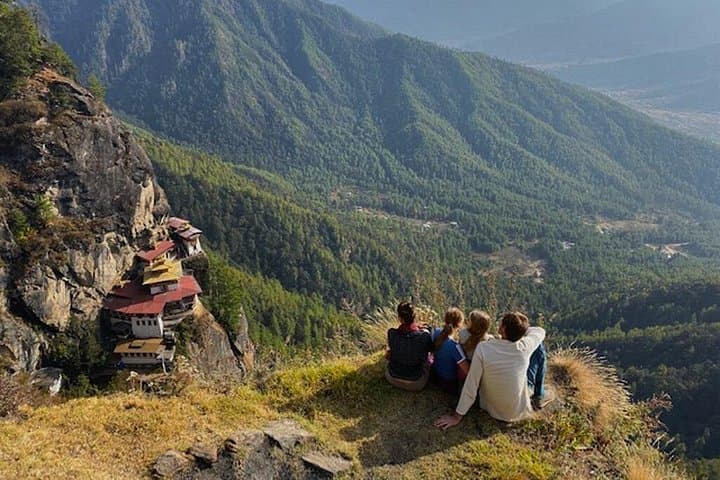


You step out of the valley mist into a narrow road that chisels itself between pine-scented slopes and terraced fields. The air has a thin brightness that makes bells and prayer flags sound clearer; the Paro Valley pushes you forward while the rivers below dare you to slow down and listen.
You step out of the valley mist into a narrow road that chisels itself between pine-scented slopes and terraced fields. The air has a thin brightness that makes bells and prayer flags sound clearer; the Paro Valley pushes you forward while the rivers below dare you to slow down and listen.
This compact 4-day loop threads together Bhutan’s political heart in Thimphu, the river-carved grace of Punakha and Paro’s cliff-hung wonder, Taktshang (Tiger’s Nest). The landscape is young Himalaya — folded schist and granite, high-altitude passes such as Dochula (≈3,100 m) opening panoramic ridgelines. Dzongs (fortress-monasteries) like Punakha and Tashichho reflect Bhutan’s theocratic-administrative history and house thangkas, chapels and annual rituals that still shape village life.
Culture here is tactile: monks walking the courtyards, farmers planting rice, and the curious humor of the Divine Madman at Chimi Lhakhang. Conservation is visible too — a government Sustainable Development Fee underwrites protected forests and community programs.
Practical side: plan for altitude shifts (Thimphu ~2,300 m; Tiger’s Nest ~3,100 m) and one full day for the Taktshang hike (3–5 hours round trip, steep stone steps and switchbacks). Expect variable weather — sun can turn to drizzle quickly — and bring layered clothing, sturdy footwear and water. Allow mornings for better visibility at Dochula and afternoons for valley light by Punakha’s rivers. Guides handle permits and logistics; you’re there to move between sites, feel the slope underfoot and return with a clear sense of Bhutan’s ritual landscape.