THE ADVENTURE COLLECTIVE® · Independent discovery and booking for outdoor travel

Walk the marble streets where St. Paul preached and stand in the Grand Theater that once held 20,000 spectators. This private Kusadasi departure focuses on Ephesus’ Christian sites—House of the Virgin Mary, Basilica of St John, and the Temple of Artemis ruins—paired with local insights and seamless port logistics.
Walk the marble streets where St. Paul preached and stand in the Grand Theater that once held 20,000 spectators. This private Kusadasi departure focuses on Ephesus’ Christian sites—House of the Virgin Mary, Basilica of St John, and the Temple of Artemis ruins—paired with local insights and seamless port logistics.
You step off the ship into Kusadasi’s sunlit port and the Aegean breeze tugs at your jacket, asking you to move inland toward a city that still speaks in marble and stone.
Verified experiences and guided adventures in the surrounding area.
Operated by Goodman Tours · Selçuk, Izmir
You step off the ship into Kusadasi’s sunlit port and the Aegean breeze tugs at your jacket, asking you to move inland toward a city that still speaks in marble and stone.
Within an hour you are walking Ephesus’ marble Cardo, the soles of your shoes tracing the same grooves carved by Roman carts. The Grand Theater sweeps up like an amphitheater of memory; imagine St. Paul addressing bands of listeners where echoes still gather. On Ayasoluk Hill, the Basilica of St. John marks the Byzantine devotion that followed the apostolic era, and farther up, pines and olives cradle the simple stone chapel known as the House of the Virgin Mary.
Geology here is plain and powerful: alluvial plains meet Aegean limestone, and quarry-cut marble from local slopes built the city’s colonnades. Culturally, this is a crossroads — Roman administration, Hellenistic learning, Byzantine Christianity and Ottoman commerce all left readable layers. Your guide will point to architectural details, ritual spaces, and where pagan rites gave way to Christian practice.
Practically, expect 4–5 hours with 2–3 km of walking on uneven ancient stone and a short hill climb to Ayasoluk. Tickets and skip-the-line access are handled by the guide, though local vendors and a countryside lunch require small cash. Mornings are cooler and quieter; midafternoon draws more cruise traffic. Wear sturdy shoes, bring water and sun protection, and leave time to browse Selçuk or the nearby village of Şirince for local wine and olive products. This is a private, guided encounter with one of antiquity’s most significant Christian landscapes — reverent, tactile, and remarkably intact.
Your guide arranges skip-the-line access and buys tickets during the tour; some guides ask for cash payment for entrance at the start of the visit.
Yes—this private tour guarantees on-time return to Kusadasi port and monitors ship schedules to ensure timely arrival before departure.
The tour is suitable for most fitness levels but includes uneven stone surfaces and a short climb to the Basilica of St John; travelers with serious mobility issues should consult the operator in advance.
Yes—both sites are included; the House of the Virgin Mary sits in a quiet hillside setting while the Temple of Artemis is an open ruin with a few remaining columns.
Goodman Tours operates guided outdoor trips and adventures with an emphasis on safety, stewardship, and memorable experiences.
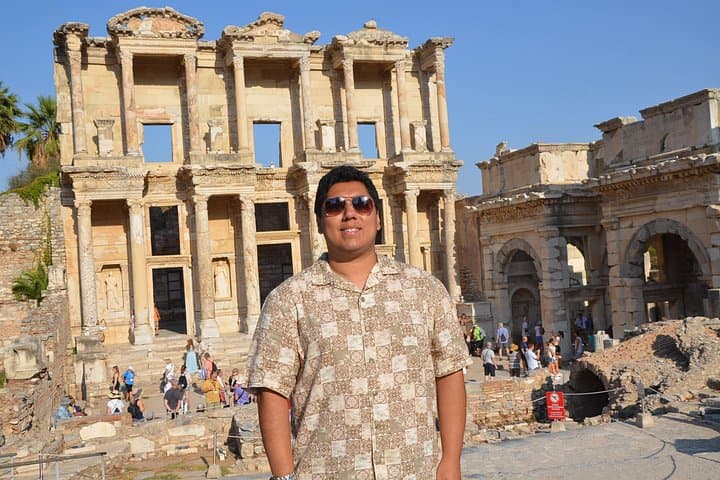
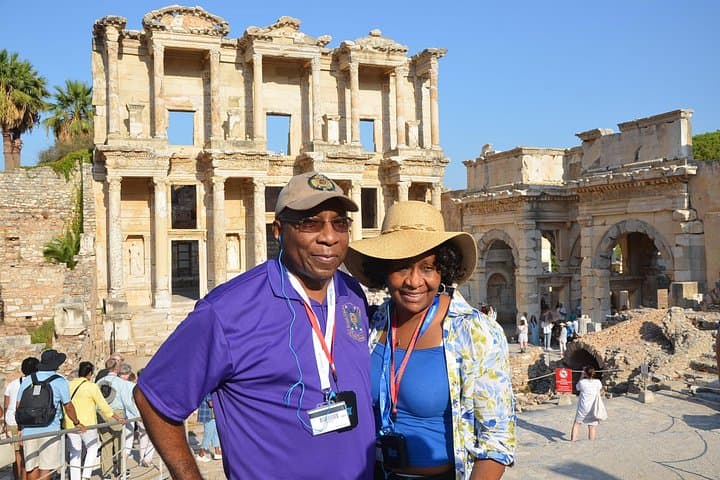
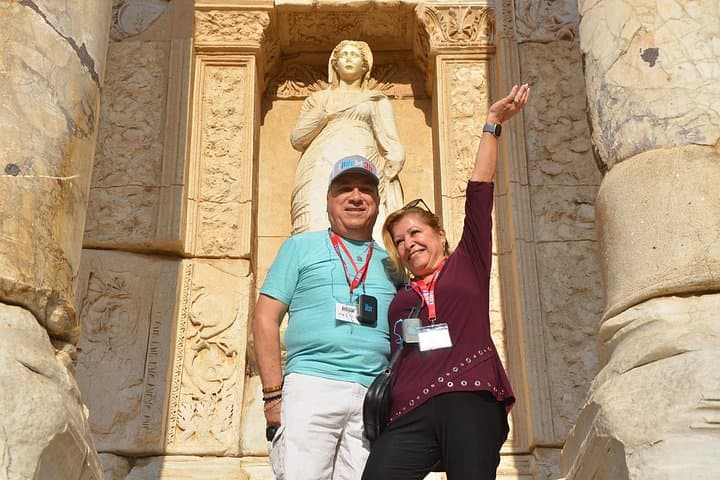
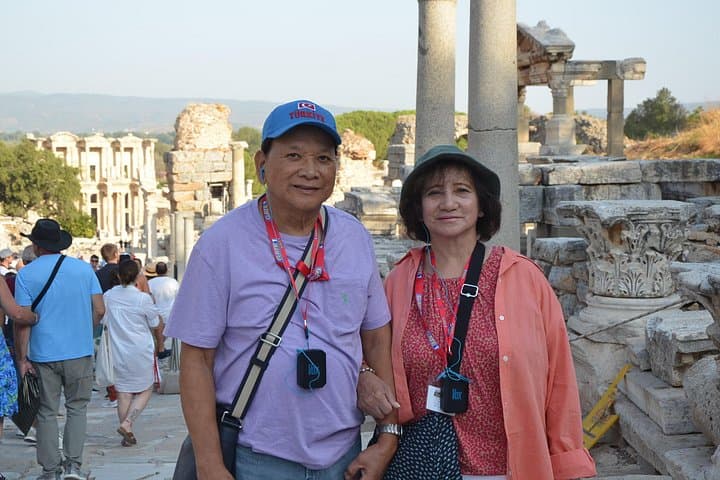
You step off the ship into Kusadasi’s sunlit port and the Aegean breeze tugs at your jacket, asking you to move inland toward a city that still speaks in marble and stone.
You step off the ship into Kusadasi’s sunlit port and the Aegean breeze tugs at your jacket, asking you to move inland toward a city that still speaks in marble and stone.
Within an hour you are walking Ephesus’ marble Cardo, the soles of your shoes tracing the same grooves carved by Roman carts. The Grand Theater sweeps up like an amphitheater of memory; imagine St. Paul addressing bands of listeners where echoes still gather. On Ayasoluk Hill, the Basilica of St. John marks the Byzantine devotion that followed the apostolic era, and farther up, pines and olives cradle the simple stone chapel known as the House of the Virgin Mary.
Geology here is plain and powerful: alluvial plains meet Aegean limestone, and quarry-cut marble from local slopes built the city’s colonnades. Culturally, this is a crossroads — Roman administration, Hellenistic learning, Byzantine Christianity and Ottoman commerce all left readable layers. Your guide will point to architectural details, ritual spaces, and where pagan rites gave way to Christian practice.
Practically, expect 4–5 hours with 2–3 km of walking on uneven ancient stone and a short hill climb to Ayasoluk. Tickets and skip-the-line access are handled by the guide, though local vendors and a countryside lunch require small cash. Mornings are cooler and quieter; midafternoon draws more cruise traffic. Wear sturdy shoes, bring water and sun protection, and leave time to browse Selçuk or the nearby village of Şirince for local wine and olive products. This is a private, guided encounter with one of antiquity’s most significant Christian landscapes — reverent, tactile, and remarkably intact.