THE ADVENTURE COLLECTIVE® · Independent discovery and booking for outdoor travel

Ride nine high-speed ziplines and cross a scenic suspension bridge on a three-hour tour that pushes you through Big Bear’s forest canopy. This route blends accessible thrills with local history, sensible safety briefings, and striking valley views.
Ride nine high-speed ziplines and cross a scenic suspension bridge on a three-hour tour that pushes you through Big Bear’s forest canopy. This route blends accessible thrills with local history, sensible safety briefings, and striking valley views.
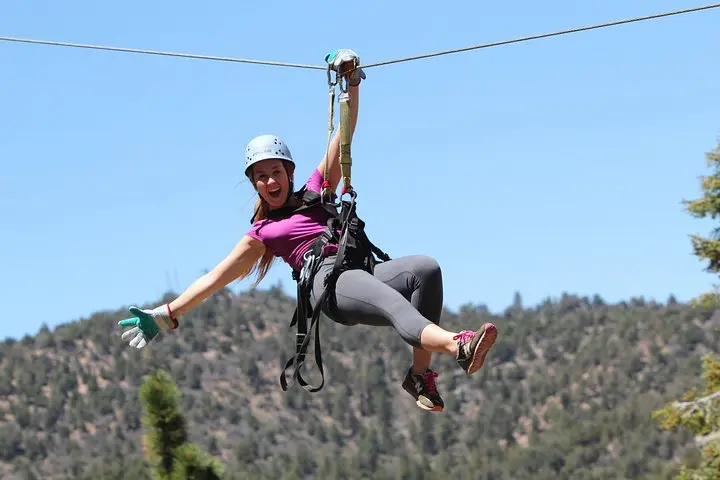
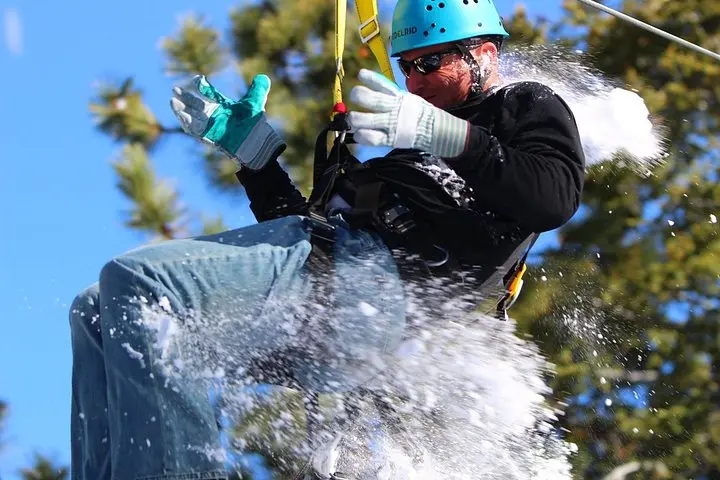
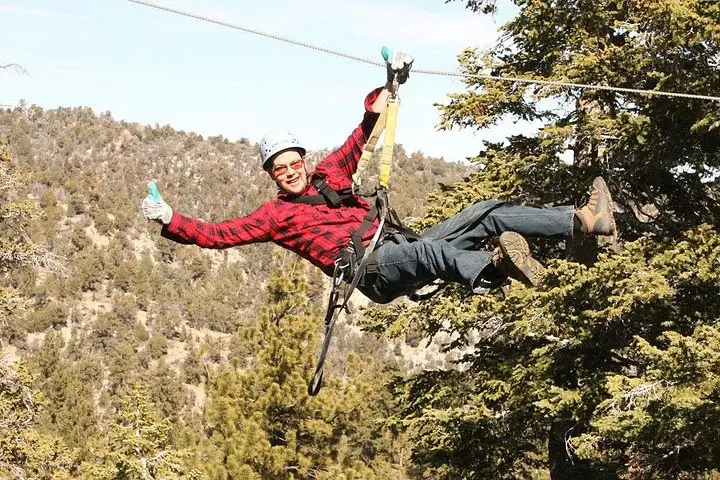
The van jerks onto a dirt track and the pines close ranks, leaning like an audience waiting for the act. Up here the air is thinner and cooler; it smells of resin and dust and the distant lake that reflects the sky like a mirror. Guides click harnesses, hand out helmets, and a hush falls over the group as the first person steps off the launch deck. For three hours the mountain becomes a conveyor of adrenaline—nine ziplines that drop, curve, and accelerate you toward the valley below while a suspension bridge lets the forest itself measure your nerve.
Verified experiences and guided adventures in the surrounding area.
Operated by Action Zipline Tours · Big Bear Lake, California
The van jerks onto a dirt track and the pines close ranks, leaning like an audience waiting for the act. Up here the air is thinner and cooler; it smells of resin and dust and the distant lake that reflects the sky like a mirror. Guides click harnesses, hand out helmets, and a hush falls over the group as the first person steps off the launch deck. For three hours the mountain becomes a conveyor of adrenaline—nine ziplines that drop, curve, and accelerate you toward the valley below while a suspension bridge lets the forest itself measure your nerve.
Big Bear sits in a glacially carved basin east of the San Bernardino Mountains. The land remembers the Serrano people who lived here long before cabins, resorts, or ziplines; later, miners and loggers tested the slopes. The pines you fly above are hardy, adapted to thin soil and summer lightning; the terrain owes its steepness to uplift and erosion that have been working the range for millions of years.
Culturally, Big Bear blends outdoor sports and a small-mountain town rhythm: early risers with thermoses, fishermen on the lake, and the occasional weekend crowd. Guides on the zipline route weave in local stories—an old mining road beneath your boots, a lookout point used during a century of wildfire-watch shifts—so the adventure feels rooted in place, not just speed.
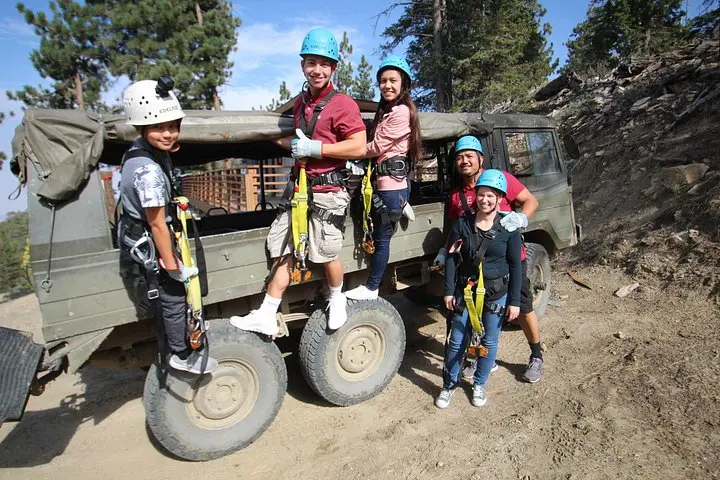
The tour starts at the Action Zipline departure center in town, then moves by van and Pinzgauer two miles deeper into the forest to the launch point. Lines range from about 140 to 860 feet and top out near 45 mph; you’ll cross a suspension bridge with Johnson Valley framing the view. Staff provide helmets, gloves, harnesses, lockers, and a short safety briefing. Expect short hikes, stairs, and uneven surfaces; participants must be at least 8 years old, weigh between 65–250 lbs, and not be pregnant.
Practical planning: arrive 15–20 minutes early to sign waivers and watch the safety video. Wear closed-toe shoes and dress in layers—mountain mornings can be brisk, midday sun can be strong. Bring water and a small camera or phone on a secure lanyard; loose items aren’t allowed and lockers are provided. If you suffer from back or heart conditions, consult your doctor first; extreme weather can cancel runs, but the operator offers alternatives or vouchers.
A zipline day in Big Bear is equal parts landscape and motion—trees that dare you to look down, wind that pushes your shoulders forward, and a suspended stretch of wood and rope that tests balance and breath. It’s fast, immediate, and undeniably place-based: a slope you experience not by walking, but by flying through its story.
Participants must be at least 8 years old, weigh between 65–250 lbs, and be under 6'6" in height.
Yes—guides provide instruction and the tour is designed for first-timers with basic mobility; those with serious medical issues should consult a physician.
No—pregnant travelers are not permitted due to safety and harnessing requirements.
Extreme weather can cancel tours; in that case you’ll be offered an alternative date or a voucher per the operator’s policy.
You can bring phones or small cameras if securely tethered, but loose items are not permitted; lockers are available at the departure center.
The tour meets at the Action Zipline departure center in town; vans and a Pinzgauer provide transfers to the launch area as part of the experience.
Action Zipline Tours operates guided outdoor trips and adventures with an emphasis on safety, stewardship, and memorable experiences.
The van jerks onto a dirt track and the pines close ranks, leaning like an audience waiting for the act. Up here the air is thinner and cooler; it smells of resin and dust and the distant lake that reflects the sky like a mirror. Guides click harnesses, hand out helmets, and a hush falls over the group as the first person steps off the launch deck. For three hours the mountain becomes a conveyor of adrenaline—nine ziplines that drop, curve, and accelerate you toward the valley below while a suspension bridge lets the forest itself measure your nerve.
The van jerks onto a dirt track and the pines close ranks, leaning like an audience waiting for the act. Up here the air is thinner and cooler; it smells of resin and dust and the distant lake that reflects the sky like a mirror. Guides click harnesses, hand out helmets, and a hush falls over the group as the first person steps off the launch deck. For three hours the mountain becomes a conveyor of adrenaline—nine ziplines that drop, curve, and accelerate you toward the valley below while a suspension bridge lets the forest itself measure your nerve.
Big Bear sits in a glacially carved basin east of the San Bernardino Mountains. The land remembers the Serrano people who lived here long before cabins, resorts, or ziplines; later, miners and loggers tested the slopes. The pines you fly above are hardy, adapted to thin soil and summer lightning; the terrain owes its steepness to uplift and erosion that have been working the range for millions of years.
Culturally, Big Bear blends outdoor sports and a small-mountain town rhythm: early risers with thermoses, fishermen on the lake, and the occasional weekend crowd. Guides on the zipline route weave in local stories—an old mining road beneath your boots, a lookout point used during a century of wildfire-watch shifts—so the adventure feels rooted in place, not just speed.
The tour starts at the Action Zipline departure center in town, then moves by van and Pinzgauer two miles deeper into the forest to the launch point. Lines range from about 140 to 860 feet and top out near 45 mph; you’ll cross a suspension bridge with Johnson Valley framing the view. Staff provide helmets, gloves, harnesses, lockers, and a short safety briefing. Expect short hikes, stairs, and uneven surfaces; participants must be at least 8 years old, weigh between 65–250 lbs, and not be pregnant.
Practical planning: arrive 15–20 minutes early to sign waivers and watch the safety video. Wear closed-toe shoes and dress in layers—mountain mornings can be brisk, midday sun can be strong. Bring water and a small camera or phone on a secure lanyard; loose items aren’t allowed and lockers are provided. If you suffer from back or heart conditions, consult your doctor first; extreme weather can cancel runs, but the operator offers alternatives or vouchers.
A zipline day in Big Bear is equal parts landscape and motion—trees that dare you to look down, wind that pushes your shoulders forward, and a suspended stretch of wood and rope that tests balance and breath. It’s fast, immediate, and undeniably place-based: a slope you experience not by walking, but by flying through its story.