THE ADVENTURE COLLECTIVE® · Independent discovery and booking for outdoor travel

Descend from the highlands into Ngorongoro’s volcanic bowl for a concentrated Big Five experience. This full-day safari from Arusha mixes intense wildlife viewing with geological and cultural insight in one of Africa’s most prolific ecosystems.
Descend from the highlands into Ngorongoro’s volcanic bowl for a concentrated Big Five experience. This full-day safari from Arusha mixes intense wildlife viewing with geological and cultural insight in one of Africa’s most prolific ecosystems.
You crest the Ngorongoro rim at first light and the crater floor drops away like a wild valley—savanna grasses, scatterings of thorny bush and dark forest, and animals braided along game trails. The drive from Arusha is long but cinematic: 3–4 hours on graded roads, a climb from roughly 1,400 m to the rim at about 2,200–2,450 m, then a steep descent of ~600 m into the 20 km-wide caldera.
Verified experiences and guided adventures in the surrounding area.
Operated by Kiota Adventures & Safaris · Arusha, Arusha Region
You crest the Ngorongoro rim at first light and the crater floor drops away like a wild valley—savanna grasses, scatterings of thorny bush and dark forest, and animals braided along game trails. The drive from Arusha is long but cinematic: 3–4 hours on graded roads, a climb from roughly 1,400 m to the rim at about 2,200–2,450 m, then a steep descent of ~600 m into the 20 km-wide caldera.
Geology here is blunt and old—the crater formed when a giant volcano collapsed 2–3 million years ago. That sunken bowl traps water and grazing herbivores, which in turn concentrate predators; the result is one of Africa’s highest wildlife densities. Maasai communities live on the rim and have grazed cattle in these highlands for generations, a cultural presence you’ll notice in roadside homesteads and traditional dress.
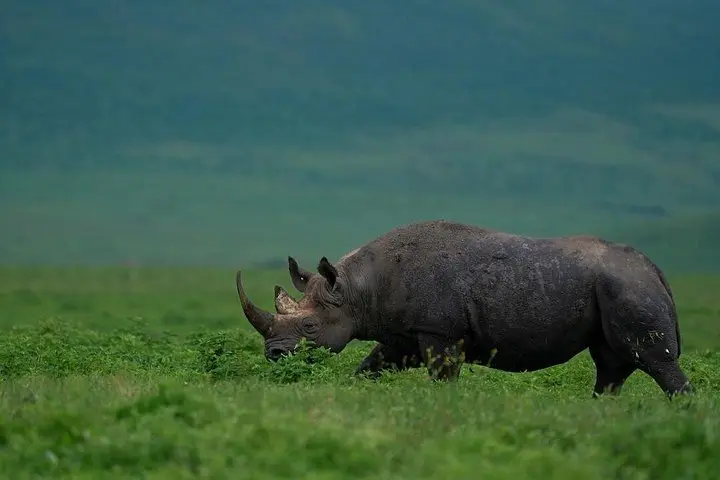
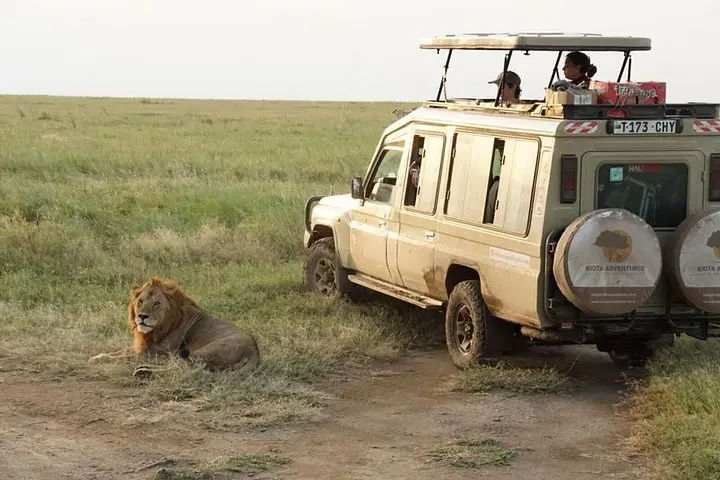
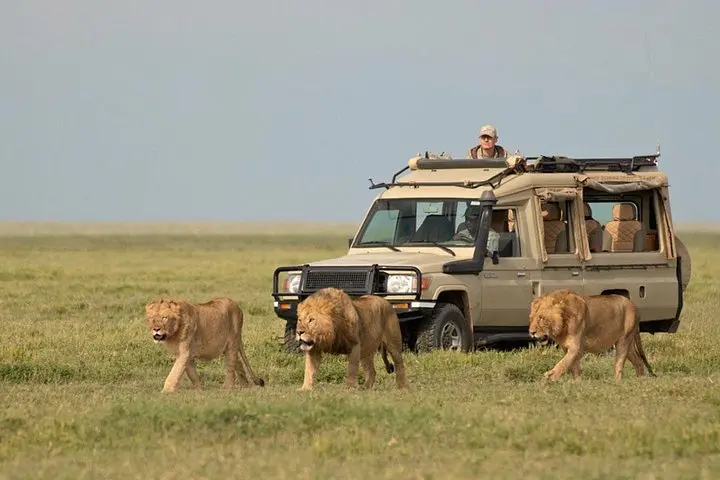
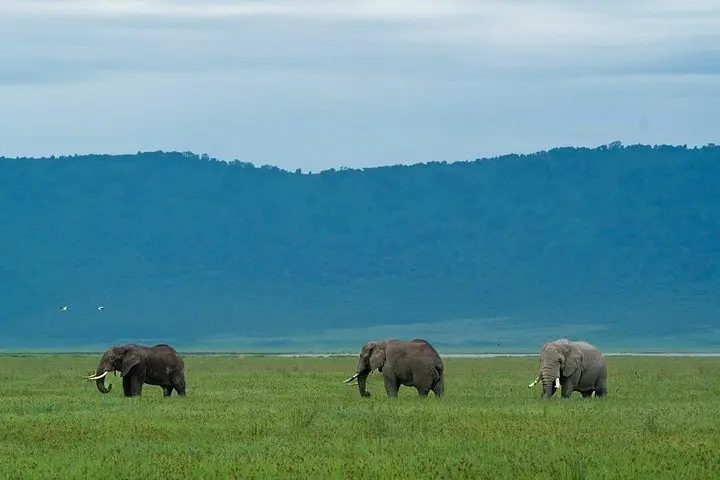
Expect mosaic terrain on the floor: open grassland, acacia patches, seasonal marshes and rocky kopjes where lions survey their domain. Wildlife sightings commonly include elephants, buffalo, lions, and occasionally black rhino; guides read spoor and water patterns to find the best viewing.
Practical notes: tours are full-day affairs (about 11 hours), so start early to beat midday heat and crowds. Wear layered clothing—mornings on the rim can be chilly, afternoons warm. Bring binoculars, a charged camera, sun protection and motion-sickness remedies for winding descents. Follow your guide’s instructions: keep windows and doors closed near big game and observe the 7–10 m rule for safety and conservation.
Expect roughly 3–4 hours one-way depending on your pickup point and traffic; many operators plan an 11-hour round trip including game viewing.
Ngorongoro has a high concentration of key species and sightings are common, but wildlife is never guaranteed—behaviour and timing influence encounters.
Most full-day tours include entrance fees, lunch and bottled water—confirm specifics with your operator before booking.
The tour is vehicle-based and suitable for most ages, but long drives and bumpy roads can be challenging; check pickup accessibility and seat arrangements for reduced mobility.
Kiota Adventures & Safaris operates guided outdoor trips and adventures with an emphasis on safety, stewardship, and memorable experiences.
You crest the Ngorongoro rim at first light and the crater floor drops away like a wild valley—savanna grasses, scatterings of thorny bush and dark forest, and animals braided along game trails. The drive from Arusha is long but cinematic: 3–4 hours on graded roads, a climb from roughly 1,400 m to the rim at about 2,200–2,450 m, then a steep descent of ~600 m into the 20 km-wide caldera.
You crest the Ngorongoro rim at first light and the crater floor drops away like a wild valley—savanna grasses, scatterings of thorny bush and dark forest, and animals braided along game trails. The drive from Arusha is long but cinematic: 3–4 hours on graded roads, a climb from roughly 1,400 m to the rim at about 2,200–2,450 m, then a steep descent of ~600 m into the 20 km-wide caldera.
Geology here is blunt and old—the crater formed when a giant volcano collapsed 2–3 million years ago. That sunken bowl traps water and grazing herbivores, which in turn concentrate predators; the result is one of Africa’s highest wildlife densities. Maasai communities live on the rim and have grazed cattle in these highlands for generations, a cultural presence you’ll notice in roadside homesteads and traditional dress.
Expect mosaic terrain on the floor: open grassland, acacia patches, seasonal marshes and rocky kopjes where lions survey their domain. Wildlife sightings commonly include elephants, buffalo, lions, and occasionally black rhino; guides read spoor and water patterns to find the best viewing.
Practical notes: tours are full-day affairs (about 11 hours), so start early to beat midday heat and crowds. Wear layered clothing—mornings on the rim can be chilly, afternoons warm. Bring binoculars, a charged camera, sun protection and motion-sickness remedies for winding descents. Follow your guide’s instructions: keep windows and doors closed near big game and observe the 7–10 m rule for safety and conservation.