THE ADVENTURE COLLECTIVE® · Independent discovery and booking for outdoor travel

Cross Morocco in 15 days from Casablanca to Marrakech: imperial cities, cedar forests, Sahara dunes and coastal towns. This guided itinerary combines cultural highlights with overnight riads and a Berber desert camp — practical advice for planning, packing and pacing your trip.
Cross Morocco in 15 days from Casablanca to Marrakech: imperial cities, cedar forests, Sahara dunes and coastal towns. This guided itinerary combines cultural highlights with overnight riads and a Berber desert camp — practical advice for planning, packing and pacing your trip.
You step out of Mohamed V airport into dry Atlantic air and a driver holding a placard with your name — the beginning of a 15-day cross-country run through Morocco’s shifting landscapes.
Verified experiences and guided adventures in the surrounding area.
Operated by Tilila Travel · Casablanca, Casablanca-Settat
You step out of Mohamed V airport into dry Atlantic air and a driver holding a placard with your name — the beginning of a 15-day cross-country run through Morocco’s shifting landscapes.
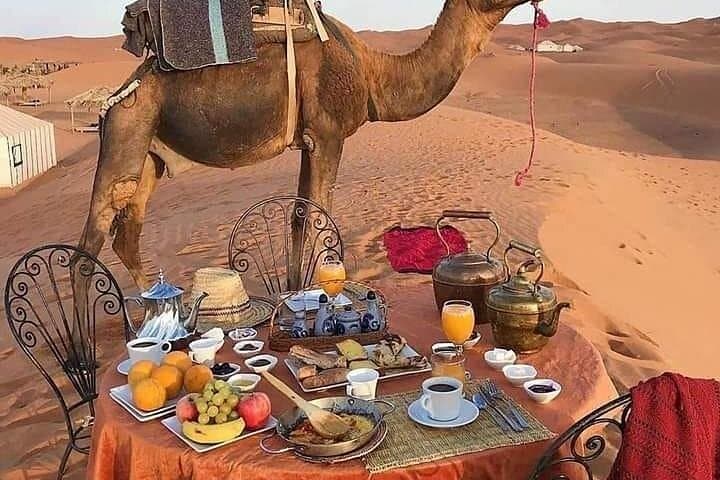
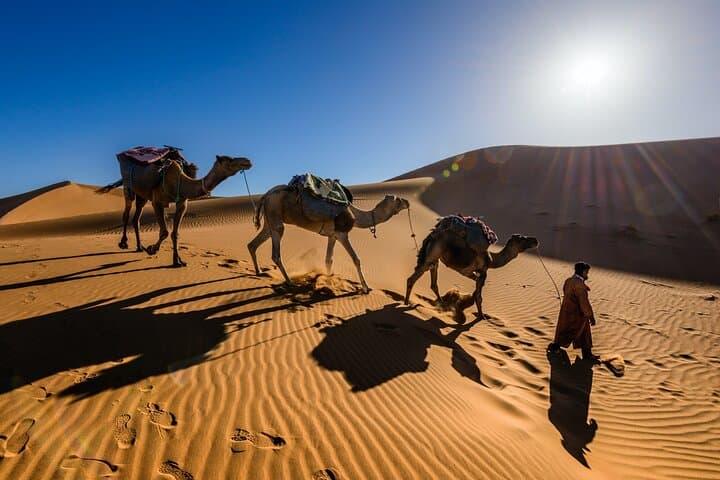
From Casablanca’s modern boulevards you’ll drive along the Atlantic, across the fortified ramparts of Rabat, and into Tangier’s converging seas. The route curves into the Rif and Middle Atlas where cedar forests and Berber villages give way to the ochre layers of the High Atlas. In the south, Erg Chebbi’s dunes rise like liquid hills, daring you to climb for sunset. The trip threads Roman ruins at Volubilis, the sculpted canyons of Todra, the rose farms around Ouarzazate and the windswept port of Essaouira before finishing in Marrakech’s frantic Djemaa el-Fna.
History sits on stone here: Roman mosaics, Almohad minarets, Saadian tombs and kasbahs that mark trade routes across the Sahara. Geology is visible — folded limestone, sandstone gorges and wind-sculpted dunes that move with the seasons. Local life is equally vivid: market bargaining, saffron and argan harvests, and Berber music around a desert campfire.
Practical guidance: carry photocopies of documents and a small amount of cash for souks; luggage transfers run with the group but expect simple riads and one night in a Berber desert camp. Pack layered clothing for big day-to-night temperature swings, sturdy walking shoes for medina stones and short hikes, and a refillable water bottle.
This itinerary balances cultural cities and raw landscapes — it’s a long road, rich in variety and easy on fitness but full of sensory detail worth preparing for.
The tour is rated easy physically—most travel is by private minivan with short walks and one overnight desert camp; basic mobility is all that’s required.
Accommodations alternate between standard hotels and riads, with one night in a Berber desert camp; expect shared facilities in some rural lodgings.
Tipping is customary for guides, drivers and service staff; small amounts in local currency are appropriate and appreciated.
Guides typically speak English and may also speak French and Arabic; local vendors often speak limited English.
Tilila Travel operates guided outdoor trips and adventures with an emphasis on safety, stewardship, and memorable experiences.
You step out of Mohamed V airport into dry Atlantic air and a driver holding a placard with your name — the beginning of a 15-day cross-country run through Morocco’s shifting landscapes.
You step out of Mohamed V airport into dry Atlantic air and a driver holding a placard with your name — the beginning of a 15-day cross-country run through Morocco’s shifting landscapes.
From Casablanca’s modern boulevards you’ll drive along the Atlantic, across the fortified ramparts of Rabat, and into Tangier’s converging seas. The route curves into the Rif and Middle Atlas where cedar forests and Berber villages give way to the ochre layers of the High Atlas. In the south, Erg Chebbi’s dunes rise like liquid hills, daring you to climb for sunset. The trip threads Roman ruins at Volubilis, the sculpted canyons of Todra, the rose farms around Ouarzazate and the windswept port of Essaouira before finishing in Marrakech’s frantic Djemaa el-Fna.
History sits on stone here: Roman mosaics, Almohad minarets, Saadian tombs and kasbahs that mark trade routes across the Sahara. Geology is visible — folded limestone, sandstone gorges and wind-sculpted dunes that move with the seasons. Local life is equally vivid: market bargaining, saffron and argan harvests, and Berber music around a desert campfire.
Practical guidance: carry photocopies of documents and a small amount of cash for souks; luggage transfers run with the group but expect simple riads and one night in a Berber desert camp. Pack layered clothing for big day-to-night temperature swings, sturdy walking shoes for medina stones and short hikes, and a refillable water bottle.
This itinerary balances cultural cities and raw landscapes — it’s a long road, rich in variety and easy on fitness but full of sensory detail worth preparing for.