THE ADVENTURE COLLECTIVE® · Independent discovery and booking for outdoor travel

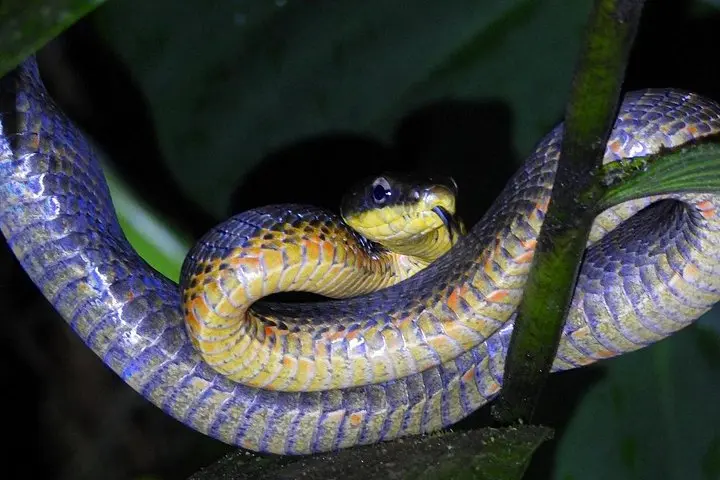
Experience Bijagua’s rainforest after dark on a 90-minute guided night walk to see frogs, insects, snakes, and sloths. This easy trail tour combines knowledgeable guiding with close-but-respectful wildlife viewing and low-light photography opportunities.
Experience Bijagua’s rainforest after dark on a 90-minute guided night walk to see frogs, insects, snakes, and sloths. This easy trail tour combines knowledgeable guiding with close-but-respectful wildlife viewing and low-light photography opportunities.
Moonlight filters through broadleaf canopy as you step onto the soft, loamy trails at the foot of Costa Rica’s Central Volcanic Range. On the Bijagua night walk, the rainforest shifts gear — insects tune their calls, frogs punctuate the dark with bright notes, and sloths move with deliberate, shadowed patience among the branches. A local guide leads a small group along easy, well-worn paths, pausing at leaf litter and fallen logs where the most interesting life hides.
Verified experiences and guided adventures in the surrounding area.
Operated by Rio Celeste Wildlife Tours · Bijagua, Alajuela
Moonlight filters through broadleaf canopy as you step onto the soft, loamy trails at the foot of Costa Rica’s Central Volcanic Range. On the Bijagua night walk, the rainforest shifts gear — insects tune their calls, frogs punctuate the dark with bright notes, and sloths move with deliberate, shadowed patience among the branches. A local guide leads a small group along easy, well-worn paths, pausing at leaf litter and fallen logs where the most interesting life hides.
Bijagua sits on the northern flank of Tenorio’s volcanic complex, where volcanic soils and steady rainfall create rich forest and clear, mineral-tinged streams. The area’s history is tied to smallholder agriculture and conservation efforts that followed the protection of Tenorio Volcano National Park and the Rio Celeste watershed. Culturally, guides often blend scientific ID with local folklore — naming species and recounting practical uses of plants.
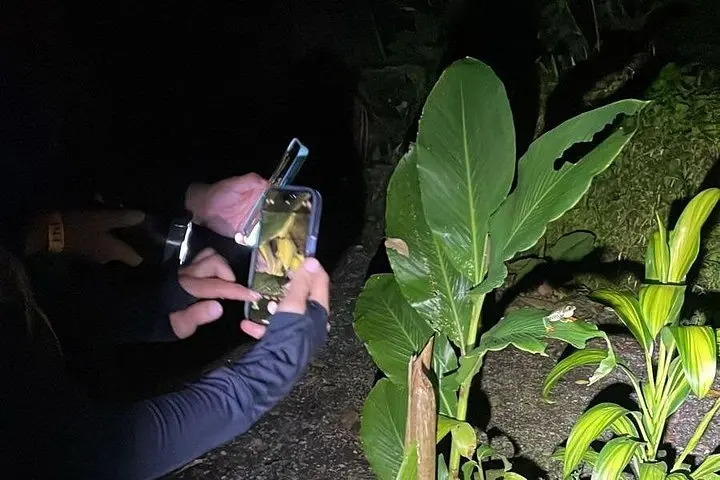
Practically, expect narrow dirt trails, low roots, and occasional mud; the 90-minute tour is low-impact but sensory-rich. Bring a reliable flashlight or headlamp, wear closed-toe shoes with good traction, and dress in lightweight, quick-dry layers. Keep noise to a minimum and follow your guide’s instructions for safe viewing distances — many animals are easier to spot with silence and patient scanning.
The tour is ideal for families, photographers using low-light techniques, and wildlife enthusiasts curious about nocturnal behaviors. It’s a short, accessible way to experience the rainforest in a different rhythm — still, alert, and alive with small, urgent movements that define the jungle after dark.
The tour lasts about 90 minutes and follows easy, mostly flat trails suitable for most physical abilities; expect slow-paced stops for viewing and photography.
This tour focuses on small and medium nocturnal species — frogs, insects, snakes, owls, and occasionally sloths; sightings of large mammals are rare at night on short walks.
Yes; the experience is family-friendly but children should be supervised and comfortable walking on natural trails at night.
Tours may operate in light rain with proper gear; severe weather can lead to cancellation with refund per the operator’s 24-hour policy.
Rio Celeste Wildlife Tours operates guided outdoor trips and adventures with an emphasis on safety, stewardship, and memorable experiences.
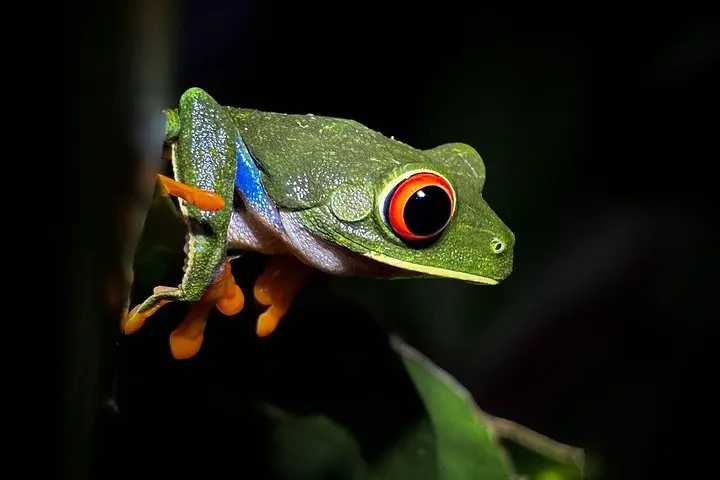
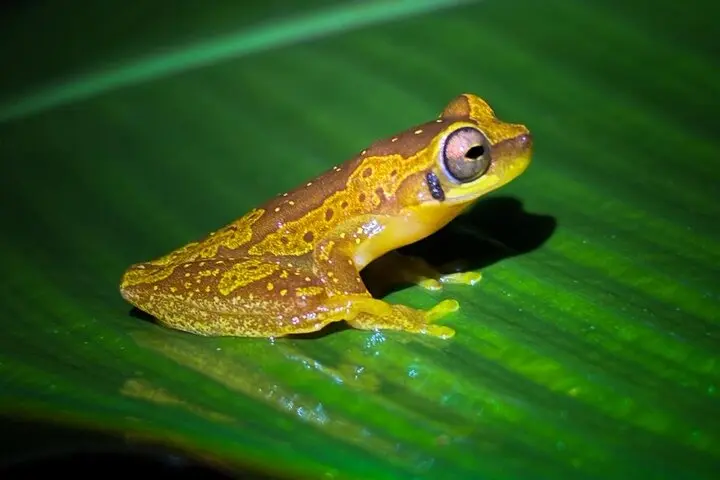
Moonlight filters through broadleaf canopy as you step onto the soft, loamy trails at the foot of Costa Rica’s Central Volcanic Range. On the Bijagua night walk, the rainforest shifts gear — insects tune their calls, frogs punctuate the dark with bright notes, and sloths move with deliberate, shadowed patience among the branches. A local guide leads a small group along easy, well-worn paths, pausing at leaf litter and fallen logs where the most interesting life hides.
Moonlight filters through broadleaf canopy as you step onto the soft, loamy trails at the foot of Costa Rica’s Central Volcanic Range. On the Bijagua night walk, the rainforest shifts gear — insects tune their calls, frogs punctuate the dark with bright notes, and sloths move with deliberate, shadowed patience among the branches. A local guide leads a small group along easy, well-worn paths, pausing at leaf litter and fallen logs where the most interesting life hides.
Bijagua sits on the northern flank of Tenorio’s volcanic complex, where volcanic soils and steady rainfall create rich forest and clear, mineral-tinged streams. The area’s history is tied to smallholder agriculture and conservation efforts that followed the protection of Tenorio Volcano National Park and the Rio Celeste watershed. Culturally, guides often blend scientific ID with local folklore — naming species and recounting practical uses of plants.
Practically, expect narrow dirt trails, low roots, and occasional mud; the 90-minute tour is low-impact but sensory-rich. Bring a reliable flashlight or headlamp, wear closed-toe shoes with good traction, and dress in lightweight, quick-dry layers. Keep noise to a minimum and follow your guide’s instructions for safe viewing distances — many animals are easier to spot with silence and patient scanning.
The tour is ideal for families, photographers using low-light techniques, and wildlife enthusiasts curious about nocturnal behaviors. It’s a short, accessible way to experience the rainforest in a different rhythm — still, alert, and alive with small, urgent movements that define the jungle after dark.