THE ADVENTURE COLLECTIVE® · Independent discovery and booking for outdoor travel
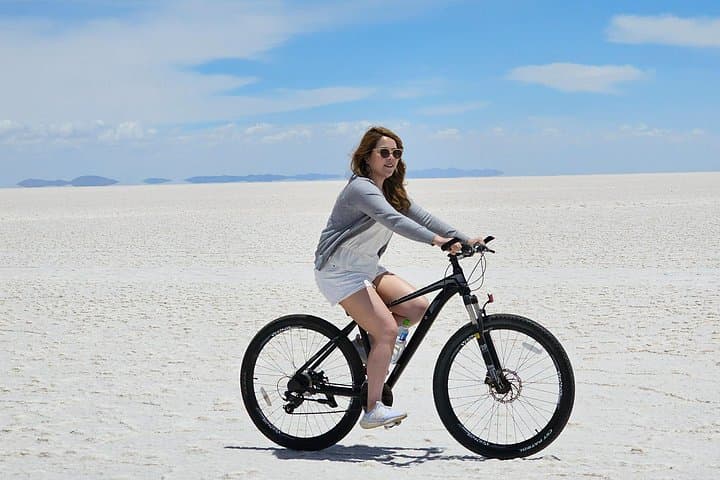
Ride a bicycle across the Salar de Uyuni on a private day trip that pairs surreal, flat panoramas with a guided cultural and geological introduction. Expect high-elevation, low-gradient cycling with private support, a lunch on the salt, and sunset over Tunupa.
Ride a bicycle across the Salar de Uyuni on a private day trip that pairs surreal, flat panoramas with a guided cultural and geological introduction. Expect high-elevation, low-gradient cycling with private support, a lunch on the salt, and sunset over Tunupa.
You step from the Land Cruiser onto a white plane that seems to go on forever; the air is thin, the horizon a clean, flat line broken only by the silhouette of Tunupa Volcano and the hulking shape of Incahuasi Island.
Verified experiences and guided adventures in the surrounding area.
Operated by Joker Expedition, Bolivia. · Uyuni, Potosí
You step from the Land Cruiser onto a white plane that seems to go on forever; the air is thin, the horizon a clean, flat line broken only by the silhouette of Tunupa Volcano and the hulking shape of Incahuasi Island.
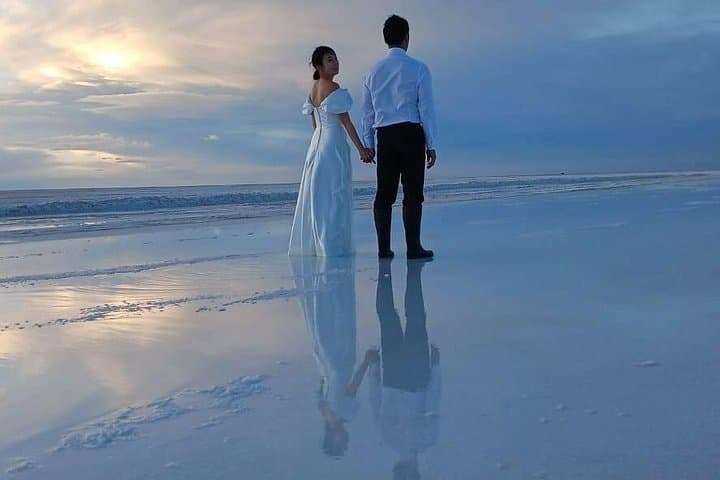
This private biking day starts with a short drive from Uyuni and easy instruction before you clip in. The salt crust is mostly firm—granular and bright—so the ride feels less technical and more surreal, riding on a natural polished floor at roughly 3,656 m (12,000 ft). The area was formed by a prehistoric lake; what remains today is a hard, crystalline salt pan layered over salt-brine pockets and, in the rainy season, a reflective mirror.
Local history is visible in scattered relics: rusting locomotives of the old train cemetery, salt-processing pits where generations harvested mineral wealth, and the giant cacti on Incahuasi that mark ancient islands. Guides will point out cultural notes about Quechua and Aymara salt use and legends of Tunupa.
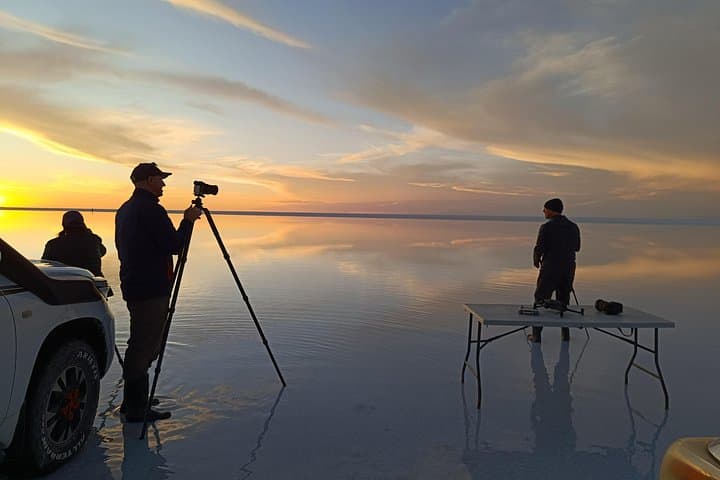
Practically speaking, expect an 8-hour private outing with several short stops, a guided 1–2 hour pedal segment (roughly 10–25 km depending on how much you ride), and a private lunch on the salt. Elevation is the main challenge—not steepness—so hydrate and pace yourself. Wear closed, stiff-soled shoes, sun protection, and windproof layers; a support 4x4 follows if you need a break. Timing matters: mid to late afternoon brings the most dramatic light and, in the wet season, spectacular salt-mirror reflections. Respect marked paths and avoid soft brine; the salt flat is fragile and otherworldly, and small precautions preserve it for everyone.
The salt flats sit around 3,600–3,700 m (about 12,000 ft). Low oxygen makes exertion harder—take it easy, hydrate, and use the support vehicle if needed.
Mostly yes: dry-season salt is firm and easy to ride, while the rainy season (Dec–Feb) can create mirror-like shallow water and soft patches—guides route around unsafe areas.
No advanced off-road skills are required; basic cycling competency and balance are enough since the terrain is flat, but occasional crystalline ridges demand attention.
Hotel pickup/drop-off, professional guide, bike use, bottled water, private 4x4 support, and a midday lunch on the salt are typically included.
Joker Expedition, Bolivia. operates guided outdoor trips and adventures with an emphasis on safety, stewardship, and memorable experiences.

You step from the Land Cruiser onto a white plane that seems to go on forever; the air is thin, the horizon a clean, flat line broken only by the silhouette of Tunupa Volcano and the hulking shape of Incahuasi Island.
You step from the Land Cruiser onto a white plane that seems to go on forever; the air is thin, the horizon a clean, flat line broken only by the silhouette of Tunupa Volcano and the hulking shape of Incahuasi Island.
This private biking day starts with a short drive from Uyuni and easy instruction before you clip in. The salt crust is mostly firm—granular and bright—so the ride feels less technical and more surreal, riding on a natural polished floor at roughly 3,656 m (12,000 ft). The area was formed by a prehistoric lake; what remains today is a hard, crystalline salt pan layered over salt-brine pockets and, in the rainy season, a reflective mirror.
Local history is visible in scattered relics: rusting locomotives of the old train cemetery, salt-processing pits where generations harvested mineral wealth, and the giant cacti on Incahuasi that mark ancient islands. Guides will point out cultural notes about Quechua and Aymara salt use and legends of Tunupa.
Practically speaking, expect an 8-hour private outing with several short stops, a guided 1–2 hour pedal segment (roughly 10–25 km depending on how much you ride), and a private lunch on the salt. Elevation is the main challenge—not steepness—so hydrate and pace yourself. Wear closed, stiff-soled shoes, sun protection, and windproof layers; a support 4x4 follows if you need a break. Timing matters: mid to late afternoon brings the most dramatic light and, in the wet season, spectacular salt-mirror reflections. Respect marked paths and avoid soft brine; the salt flat is fragile and otherworldly, and small precautions preserve it for everyone.
