THE ADVENTURE COLLECTIVE® · Independent discovery and booking for outdoor travel

Cycle from Miraflores to the Pantanos de Villa wetlands on a 40 km urban ride that ends with canoeing and close-up birdwatching. This full-day tour pairs city stories with hands-on conservation insights—ideal for fit riders who want a nature escape inside Lima.
Cycle from Miraflores to the Pantanos de Villa wetlands on a 40 km urban ride that ends with canoeing and close-up birdwatching. This full-day tour pairs city stories with hands-on conservation insights—ideal for fit riders who want a nature escape inside Lima.
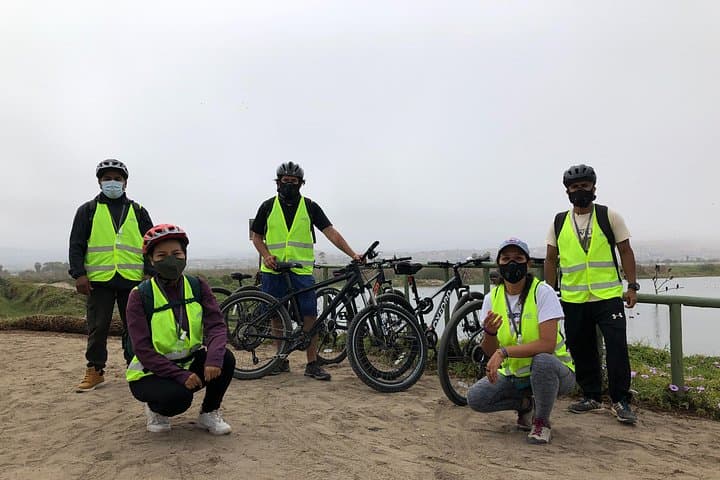
The day begins outside the adobe-brick facade of Huaca Pucllana, where guides tighten helmets and the city exhales into the Pacific. Riders roll through Miraflores’ palm-lined avenues, traffic thinning as the coastline opens into wide, salty air. By the time the skyline yields to low scrub and reflective lagoons, the concrete city feels like a distant rhythm and the wetlands take over—lagoons that vibrate with wings and the hush of shallow water.
Verified experiences and guided adventures in the surrounding area.
Operated by Desert Expeditions · Lima, Lima Province
The day begins outside the adobe-brick facade of Huaca Pucllana, where guides tighten helmets and the city exhales into the Pacific. Riders roll through Miraflores’ palm-lined avenues, traffic thinning as the coastline opens into wide, salty air. By the time the skyline yields to low scrub and reflective lagoons, the concrete city feels like a distant rhythm and the wetlands take over—lagoons that vibrate with wings and the hush of shallow water.
Pantanos de Villa is one of Lima’s last coastal wetlands, a narrow ribbon of marsh squeezed between the city and the sea. Archaeologists note that people have lived off these brackish waters for millennia; pre-Columbian communities exploited the rich fisheries and used the coast as a transport corridor. Today the reserve reads like a cross-section of Lima’s past and present—industrial neighborhoods elbowing up against protected ponds, fishermen mending nets near modern high-rises. Geologically, the area is a coastal plain of wind-blown sands and alluvial deposits, whose seasonal lagoons are fed by subterranean springs and occasional runoff from the Rimac basin.
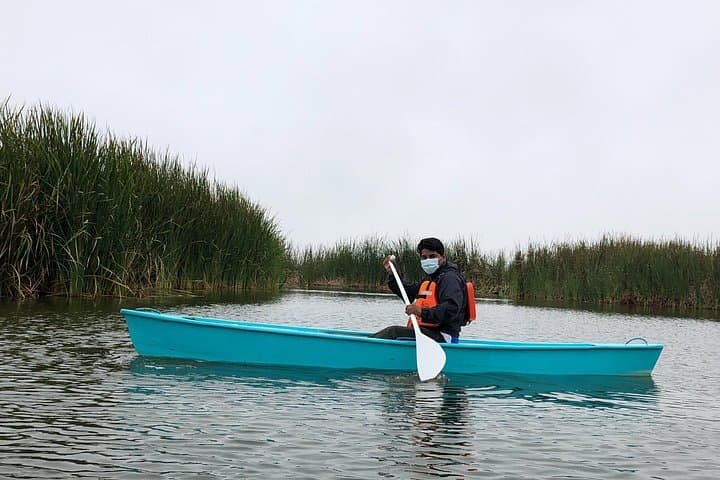
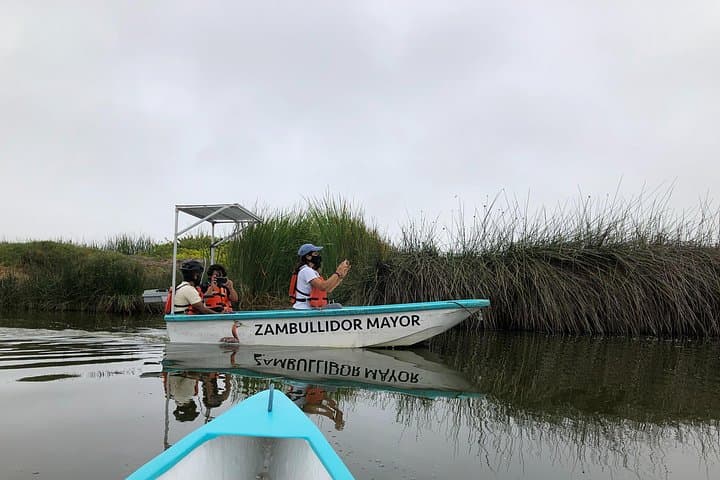
Local guides blend natural history with neighborhood stories: the artistic bohemianism of Barranco, the surf culture clinging to Chorrillos’ cliffs, and the quiet work of conservationists who restored channels and planted reeds to stabilize the shoreline. The wildlife is bold—Peruvian pelicans haul fish from the surf while herons and egrets stalk the shallows—and the bikes are the best way to thread the urban margins to reach them. At the reserve you swap pedals for paddles; a short canoe trip uncovers reed-edged lagoons where ducks, stilts, and terns inspect visitors like curious commuters.
Practicalities: this is a 40 km round trip best suited to experienced or intermediate riders. Terrain is mostly flat coastal plain with short stretches of packed dirt and occasional sand; elevation change is negligible but several urban-grade streets require confident handling. Guides provide a mountain bike, helmet, binoculars, snacks, bottled water, and mechanical support. Expect 6–7 hours including stops—plan mornings to catch bird activity and avoid afternoon city traffic.
Wear layered, sweat-wicking clothing, a sun hat under your helmet, and tires with good tread for mixed surfaces. Carry a compact repair kit and cash for a seaside lunch on return. Respect the wildlife: keep noise low on the lagoons, avoid approaching nesting areas, and follow your guide’s lead during canoeing. For photographers, early light renders plumage and reflections; for curious travelers, the ride stitches together Lima’s neighborhoods and natural edges into a day that feels equal parts urban exploration and field biology.
The full loop is about 40 km over mostly flat terrain; it’s suitable for experienced or intermediate cyclists and takes roughly 6–7 hours including stops.
No, the tour provides mountain bikes and helmets; you may bring your own if you prefer but notify the operator in advance.
Yes—early-morning departures yield the best sightings, including pelicans, herons, ducks, and migratory shorebirds depending on season.
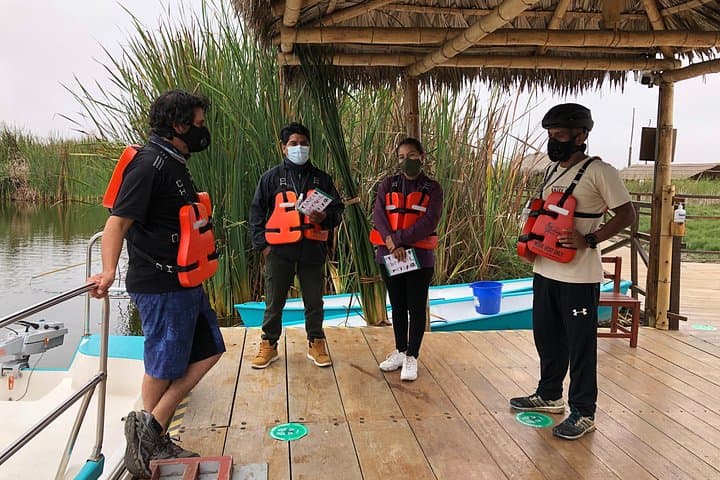
Yes; canoe segments are short, guided, and designed for beginners—guides provide instruction and life vests.
Restrooms and small cafes are available in Barranco and Chorrillos; bring snacks for the wetlands where facilities are limited.
Full refund if you cancel at least 24 hours in advance; tours may be canceled for bad weather by the operator.
Desert Expeditions operates guided outdoor trips and adventures with an emphasis on safety, stewardship, and memorable experiences.
The day begins outside the adobe-brick facade of Huaca Pucllana, where guides tighten helmets and the city exhales into the Pacific. Riders roll through Miraflores’ palm-lined avenues, traffic thinning as the coastline opens into wide, salty air. By the time the skyline yields to low scrub and reflective lagoons, the concrete city feels like a distant rhythm and the wetlands take over—lagoons that vibrate with wings and the hush of shallow water.
The day begins outside the adobe-brick facade of Huaca Pucllana, where guides tighten helmets and the city exhales into the Pacific. Riders roll through Miraflores’ palm-lined avenues, traffic thinning as the coastline opens into wide, salty air. By the time the skyline yields to low scrub and reflective lagoons, the concrete city feels like a distant rhythm and the wetlands take over—lagoons that vibrate with wings and the hush of shallow water.
Pantanos de Villa is one of Lima’s last coastal wetlands, a narrow ribbon of marsh squeezed between the city and the sea. Archaeologists note that people have lived off these brackish waters for millennia; pre-Columbian communities exploited the rich fisheries and used the coast as a transport corridor. Today the reserve reads like a cross-section of Lima’s past and present—industrial neighborhoods elbowing up against protected ponds, fishermen mending nets near modern high-rises. Geologically, the area is a coastal plain of wind-blown sands and alluvial deposits, whose seasonal lagoons are fed by subterranean springs and occasional runoff from the Rimac basin.
Local guides blend natural history with neighborhood stories: the artistic bohemianism of Barranco, the surf culture clinging to Chorrillos’ cliffs, and the quiet work of conservationists who restored channels and planted reeds to stabilize the shoreline. The wildlife is bold—Peruvian pelicans haul fish from the surf while herons and egrets stalk the shallows—and the bikes are the best way to thread the urban margins to reach them. At the reserve you swap pedals for paddles; a short canoe trip uncovers reed-edged lagoons where ducks, stilts, and terns inspect visitors like curious commuters.
Practicalities: this is a 40 km round trip best suited to experienced or intermediate riders. Terrain is mostly flat coastal plain with short stretches of packed dirt and occasional sand; elevation change is negligible but several urban-grade streets require confident handling. Guides provide a mountain bike, helmet, binoculars, snacks, bottled water, and mechanical support. Expect 6–7 hours including stops—plan mornings to catch bird activity and avoid afternoon city traffic.
Wear layered, sweat-wicking clothing, a sun hat under your helmet, and tires with good tread for mixed surfaces. Carry a compact repair kit and cash for a seaside lunch on return. Respect the wildlife: keep noise low on the lagoons, avoid approaching nesting areas, and follow your guide’s lead during canoeing. For photographers, early light renders plumage and reflections; for curious travelers, the ride stitches together Lima’s neighborhoods and natural edges into a day that feels equal parts urban exploration and field biology.