THE ADVENTURE COLLECTIVE® · Independent discovery and booking for outdoor travel

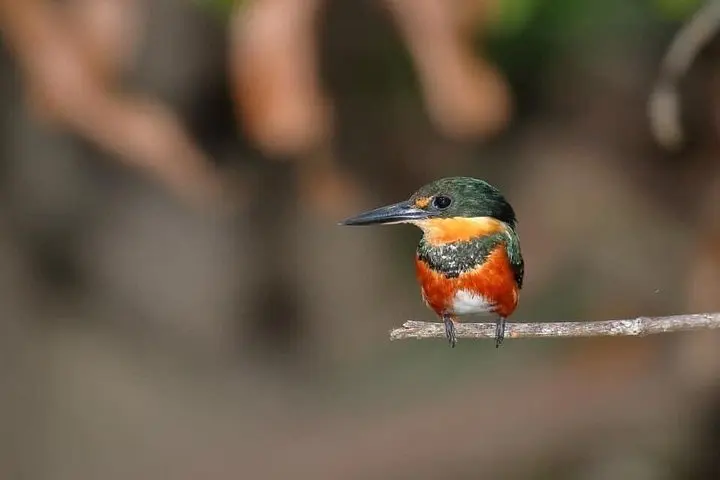
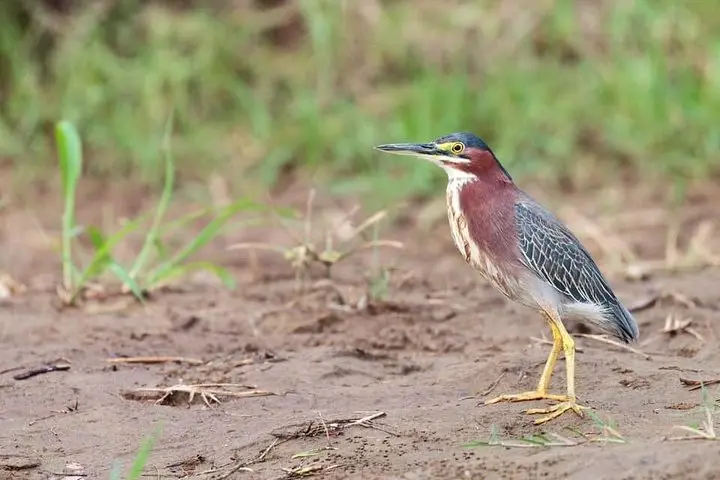
Explore El Rey’s marshes and rice fields with a private guide who brings spotting scopes and local expertise. This four-hour morning tour focuses on kingfishers, flycatchers, hummingbirds and edge specialists—ideal for photographers and birders looking for concentrated sightings near Manuel Antonio.
Explore El Rey’s marshes and rice fields with a private guide who brings spotting scopes and local expertise. This four-hour morning tour focuses on kingfishers, flycatchers, hummingbirds and edge specialists—ideal for photographers and birders looking for concentrated sightings near Manuel Antonio.
Dawn arrives over flat rice paddies and narrow canals; light slicks across open water while a kingfisher darts low and a rufous-tailed hummingbird hovers like a small, impatient engine. The El Rey area, a mosaic of marsh, rice fields and transitional tropical forest, frames a concentrated birding experience away from Manuel Antonio’s beaches—28 km to the northwest—where visibility is often better and species variety tight-packed.
Verified experiences and guided adventures in the surrounding area.
Operated by Costa Rica Wáköö Tours · Quepos, Puntarenas
Dawn arrives over flat rice paddies and narrow canals; light slicks across open water while a kingfisher darts low and a rufous-tailed hummingbird hovers like a small, impatient engine. The El Rey area, a mosaic of marsh, rice fields and transitional tropical forest, frames a concentrated birding experience away from Manuel Antonio’s beaches—28 km to the northwest—where visibility is often better and species variety tight-packed.
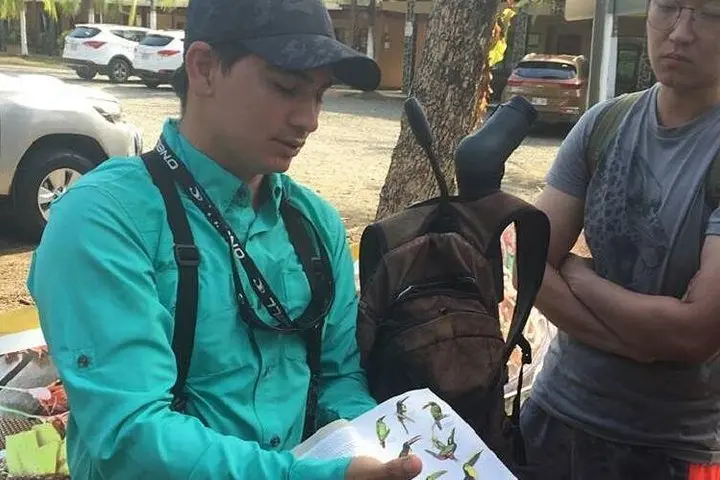
Geology here is low-elevation coastal plain: sedimentary soils, tidal-influenced marshes and irrigation channels that create predictable foraging lines for waders and kingfishers. Culturally the landscape reflects small-scale agriculture and traditional rice cultivation, which in turn supports a suite of edge specialists and migratory stopovers. Guides with local knowledge point out behavioral cues—perch choice, calls and feeding technique—that reveal species beyond initial sightlines.
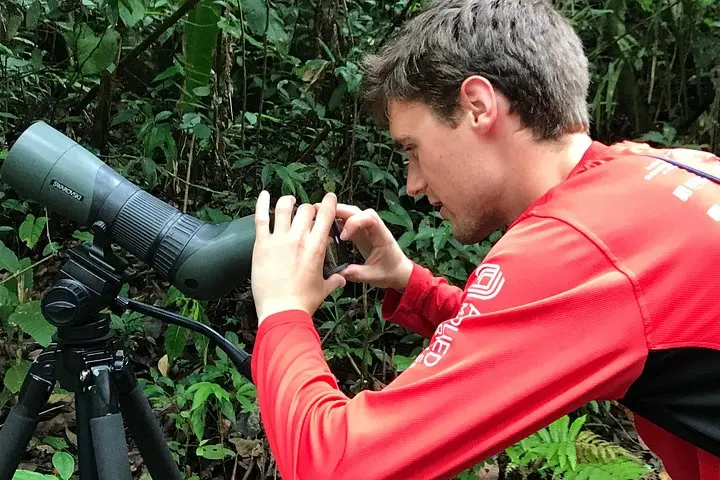
Expect to encounter flycatchers, seedeaters, several hummingbird species and woodpeckers, plus occasional shorebirds in season. Guides typically bring a Swarovski spotting scope and will supply a post-tour species list, so photographers and ID-curious visitors can compare shots to verified IDs.
Practically: aim for an early start (first three hours after sunrise), wear muted tones to avoid spooking birds, and bring insect repellent and a brimmed hat. Terrain is flat but can be muddy after rains; closed shoes with good tread are recommended. Tours are private, around four hours, and include water, snacks and expert interpretation—an efficient way to add depth to a Costa Rica wildlife itinerary without a long trek.
No guide can guarantee particular species; however, El Rey’s mix of habitats reliably produces kingfishers, flycatchers, hummingbirds and seedeaters most mornings.
Yes—guides tailor pace and explanations to all experience levels and provide a species list after the tour to support learning.
The operator provides a Swarovski spotting scope; bring personal binoculars or camera gear if you have them.
The tour is about four hours with gentle, flat walking and short standing sessions—no steep climbs required.
Costa Rica Wáköö Tours operates guided outdoor trips and adventures with an emphasis on safety, stewardship, and memorable experiences.
Dawn arrives over flat rice paddies and narrow canals; light slicks across open water while a kingfisher darts low and a rufous-tailed hummingbird hovers like a small, impatient engine. The El Rey area, a mosaic of marsh, rice fields and transitional tropical forest, frames a concentrated birding experience away from Manuel Antonio’s beaches—28 km to the northwest—where visibility is often better and species variety tight-packed.
Dawn arrives over flat rice paddies and narrow canals; light slicks across open water while a kingfisher darts low and a rufous-tailed hummingbird hovers like a small, impatient engine. The El Rey area, a mosaic of marsh, rice fields and transitional tropical forest, frames a concentrated birding experience away from Manuel Antonio’s beaches—28 km to the northwest—where visibility is often better and species variety tight-packed.
Geology here is low-elevation coastal plain: sedimentary soils, tidal-influenced marshes and irrigation channels that create predictable foraging lines for waders and kingfishers. Culturally the landscape reflects small-scale agriculture and traditional rice cultivation, which in turn supports a suite of edge specialists and migratory stopovers. Guides with local knowledge point out behavioral cues—perch choice, calls and feeding technique—that reveal species beyond initial sightlines.
Expect to encounter flycatchers, seedeaters, several hummingbird species and woodpeckers, plus occasional shorebirds in season. Guides typically bring a Swarovski spotting scope and will supply a post-tour species list, so photographers and ID-curious visitors can compare shots to verified IDs.
Practically: aim for an early start (first three hours after sunrise), wear muted tones to avoid spooking birds, and bring insect repellent and a brimmed hat. Terrain is flat but can be muddy after rains; closed shoes with good tread are recommended. Tours are private, around four hours, and include water, snacks and expert interpretation—an efficient way to add depth to a Costa Rica wildlife itinerary without a long trek.