THE ADVENTURE COLLECTIVE® · Independent discovery and booking for outdoor travel

Spend a day above the Algarve’s coast listening for woodland birds from Foia’s ridge to the spa village of Caldas de Monchique. Small groups, a knowledgeable guide and provided optics make this an accessible inland birding escape.
Spend a day above the Algarve’s coast listening for woodland birds from Foia’s ridge to the spa village of Caldas de Monchique. Small groups, a knowledgeable guide and provided optics make this an accessible inland birding escape.
A cool wind from Foia pushes across the ridge and the eucalyptus breathes in reply; here the inland Algarve feels like a different country from the coast below. You begin at Foia, the highest point in the Monchique hills, scanning cork oak and pine gullies for movement as a guide trains a telescope on a distant silhouette.
Verified experiences and guided adventures in the surrounding area.
Operated by A Rocha Life · Monchique, Algarve
A cool wind from Foia pushes across the ridge and the eucalyptus breathes in reply; here the inland Algarve feels like a different country from the coast below. You begin at Foia, the highest point in the Monchique hills, scanning cork oak and pine gullies for movement as a guide trains a telescope on a distant silhouette.
These hills have long been shaped by geology and human hands: schist and quartzite folded into high ridges, terraced slopes carved for chestnut, cork and olive, and Caldas de Monchique’s thermal springs that have drawn visitors since at least the early modern period. Cultural notes—rural mountain hamlets, wood-fired ovens, and artisans working cork—give the day texture between bird stops.
Expect woodland and scrub species distinct from coastal flocks; the guide points out calls, plumage and likely perches while you move on foot along gentle tracks. The itinerary usually includes a midday meal in Caldas de Monchique and short village exploration.
Practical guidance: wear stiff-soled walking shoes for uneven, sometimes loose trails; bring layered clothing for sudden wind at elevation and early-morning chill; carry water and sun protection—the day runs 5–7 hours. Telescopes are provided, but personal binoculars speed identification. Groups are small (max eight) and transport is private, making logistics straightforward. Check cancellation and weather policies—mountain fog can close viewpoints—and book at least a day ahead during peak season. This is a measured, accessible wildlife day that rewards patient scanning and quiet feet with discoveries you won’t see from the shore.
Most departures start near Foia for morning birding and include private transport with a midday stop and village visit to Caldas de Monchique before returning to the pickup point.
Yes—use of a telescope is included, though many birders bring personal binoculars for flexibility between scope sessions.
The tour is rated easy and suitable for all fitness levels, but participants should be able to walk short uneven sections; infant seats are available for young children.
Expect woodland and scrub species typical of inland Algarve—songbirds, corvids and raptors; sightings vary by season and weather.
A Rocha Life operates guided outdoor trips and adventures with an emphasis on safety, stewardship, and memorable experiences.
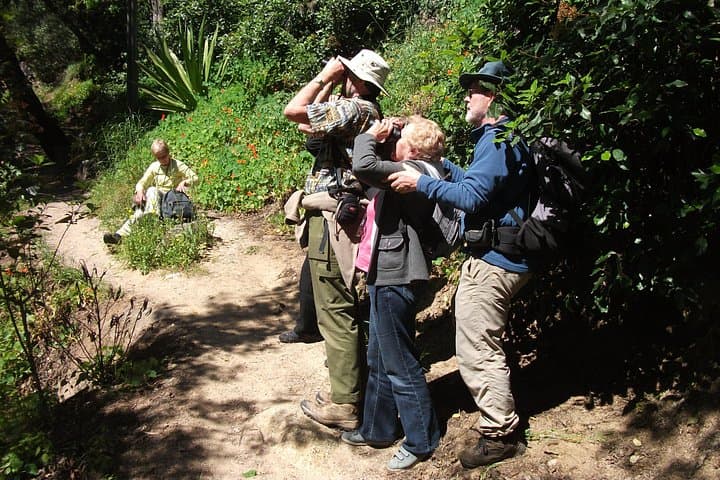


A cool wind from Foia pushes across the ridge and the eucalyptus breathes in reply; here the inland Algarve feels like a different country from the coast below. You begin at Foia, the highest point in the Monchique hills, scanning cork oak and pine gullies for movement as a guide trains a telescope on a distant silhouette.
A cool wind from Foia pushes across the ridge and the eucalyptus breathes in reply; here the inland Algarve feels like a different country from the coast below. You begin at Foia, the highest point in the Monchique hills, scanning cork oak and pine gullies for movement as a guide trains a telescope on a distant silhouette.
These hills have long been shaped by geology and human hands: schist and quartzite folded into high ridges, terraced slopes carved for chestnut, cork and olive, and Caldas de Monchique’s thermal springs that have drawn visitors since at least the early modern period. Cultural notes—rural mountain hamlets, wood-fired ovens, and artisans working cork—give the day texture between bird stops.
Expect woodland and scrub species distinct from coastal flocks; the guide points out calls, plumage and likely perches while you move on foot along gentle tracks. The itinerary usually includes a midday meal in Caldas de Monchique and short village exploration.
Practical guidance: wear stiff-soled walking shoes for uneven, sometimes loose trails; bring layered clothing for sudden wind at elevation and early-morning chill; carry water and sun protection—the day runs 5–7 hours. Telescopes are provided, but personal binoculars speed identification. Groups are small (max eight) and transport is private, making logistics straightforward. Check cancellation and weather policies—mountain fog can close viewpoints—and book at least a day ahead during peak season. This is a measured, accessible wildlife day that rewards patient scanning and quiet feet with discoveries you won’t see from the shore.