THE ADVENTURE COLLECTIVE® · Independent discovery and booking for outdoor travel

Start at the Edwardian Moor Street station and follow a GPS-driven audio guide through Victorian arcades, cathedral grounds, and Centenary Square. This 2–2.5 hour self-guided walk lays out Birmingham’s industrial rise while letting you explore at your own pace.
Start at the Edwardian Moor Street station and follow a GPS-driven audio guide through Victorian arcades, cathedral grounds, and Centenary Square. This 2–2.5 hour self-guided walk lays out Birmingham’s industrial rise while letting you explore at your own pace.
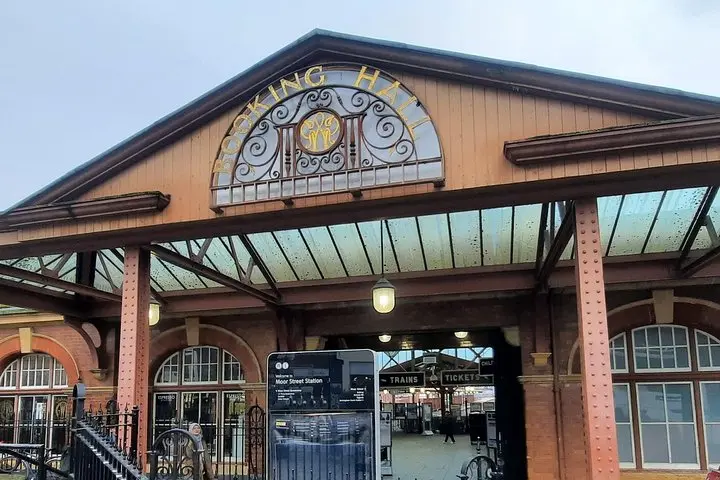
You stand beneath the wrought-iron canopy of Birmingham Moor Street station, the platform clock watching commuters and curious visitors alike. The city breathes around you: stone façades catch the morning light, market voices thread through narrow lanes, and the low hum of trains reminds you why this place became a transport crossroads.
Verified experiences and guided adventures in the surrounding area.
Operated by VoiceMap Audio Tours · Birmingham, West Midlands
You stand beneath the wrought-iron canopy of Birmingham Moor Street station, the platform clock watching commuters and curious visitors alike. The city breathes around you: stone façades catch the morning light, market voices thread through narrow lanes, and the low hum of trains reminds you why this place became a transport crossroads.
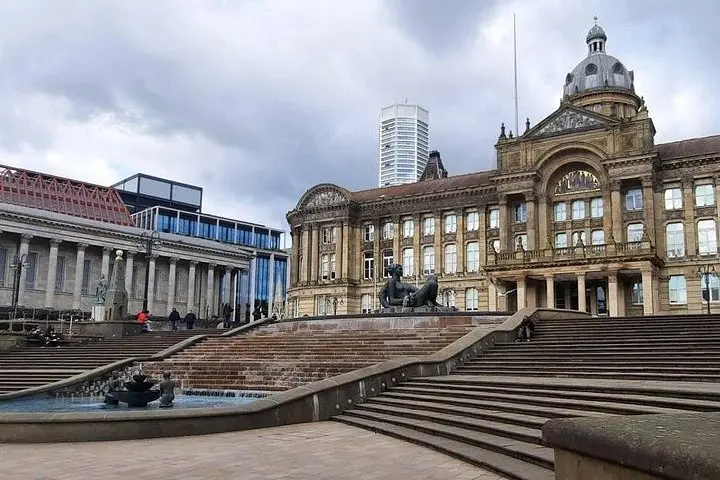
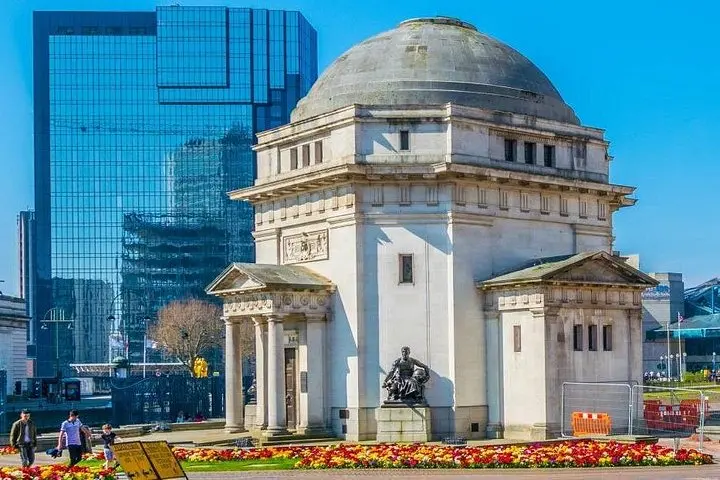
This self-guided audio route traces Birmingham’s unlikely ascent — a town with scarce natural resources that turned logistics and invention into economic muscle. Walk past Victorian arcades, Baroque cathedral walls, and neoclassical civic buildings while the narration sketches the Industrial Revolution, the 19th-century printing trade, and the civic rebuilding after wartime damage.
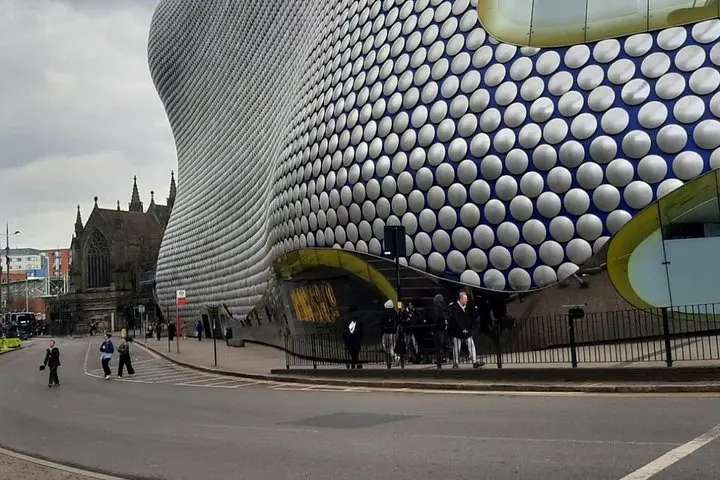
Geology here is subtle: the city sits on clays and sandstones that dictated early building materials and canal engineering. Culture shows in the markets and the Library of Birmingham’s bold modern geometry; Centenary Square closes the loop where public sculpture and municipal memory meet. Expect pockets of quiet — cathedral gardens, side-street courtyards — and sudden civic drama on larger squares.
Practical guidance: the tour runs roughly 2–2½ hours, is fully offline-friendly, and starts automatically at Moor Street with GPS checkpoints. Use good walking shoes and charged phone, and keep headphones ready for clear narration. Midday and early evening capture the livelier market and café culture; early morning gives fresher air and fewer crowds.
Accessibility is high for an urban walk but note cobbles and occasional steps in older sections. Respect private spaces, watch for traffic at junctions, and factor weather for exposed plazas — the city’s character changes with light and rain, offering a different story each season.
The tour runs about 120–150 minutes and begins at Birmingham Moor Street station; directions to the exact start point are provided in the app.
Yes — it’s suitable for most ages and physical abilities, though watch for cobbles and short flights of steps in parts of the route.
No — the audio points pass by major attractions and provide context, but admissions are not included in the tour price.
Yes — the product includes lifetime access and offline downloads of audio, maps, and geodata for use without cellular service.
VoiceMap Audio Tours operates guided outdoor trips and adventures with an emphasis on safety, stewardship, and memorable experiences.
You stand beneath the wrought-iron canopy of Birmingham Moor Street station, the platform clock watching commuters and curious visitors alike. The city breathes around you: stone façades catch the morning light, market voices thread through narrow lanes, and the low hum of trains reminds you why this place became a transport crossroads.
You stand beneath the wrought-iron canopy of Birmingham Moor Street station, the platform clock watching commuters and curious visitors alike. The city breathes around you: stone façades catch the morning light, market voices thread through narrow lanes, and the low hum of trains reminds you why this place became a transport crossroads.
This self-guided audio route traces Birmingham’s unlikely ascent — a town with scarce natural resources that turned logistics and invention into economic muscle. Walk past Victorian arcades, Baroque cathedral walls, and neoclassical civic buildings while the narration sketches the Industrial Revolution, the 19th-century printing trade, and the civic rebuilding after wartime damage.
Geology here is subtle: the city sits on clays and sandstones that dictated early building materials and canal engineering. Culture shows in the markets and the Library of Birmingham’s bold modern geometry; Centenary Square closes the loop where public sculpture and municipal memory meet. Expect pockets of quiet — cathedral gardens, side-street courtyards — and sudden civic drama on larger squares.
Practical guidance: the tour runs roughly 2–2½ hours, is fully offline-friendly, and starts automatically at Moor Street with GPS checkpoints. Use good walking shoes and charged phone, and keep headphones ready for clear narration. Midday and early evening capture the livelier market and café culture; early morning gives fresher air and fewer crowds.
Accessibility is high for an urban walk but note cobbles and occasional steps in older sections. Respect private spaces, watch for traffic at junctions, and factor weather for exposed plazas — the city’s character changes with light and rain, offering a different story each season.