THE ADVENTURE COLLECTIVE® · Independent discovery and booking for outdoor travel

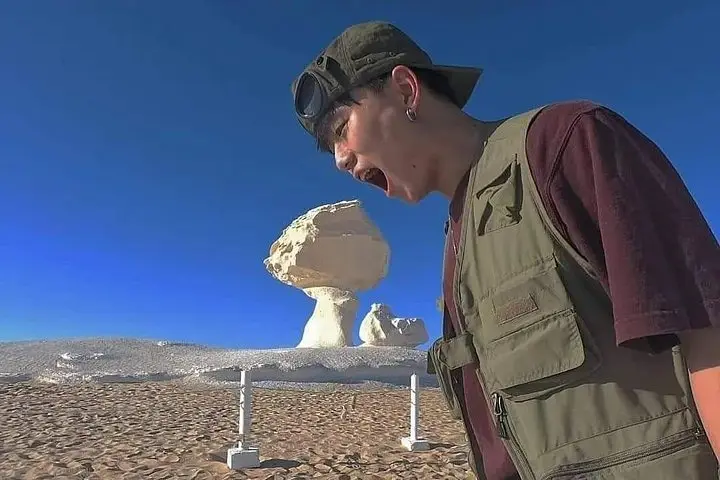
Two days across Egypt’s Western Desert combine volcanic black hills, crystalline outcrops and surreal white chalk formations. Camp under stars, climb El-Marsous for sunset, explore Crystal Mountain and the White Desert’s iconic Mushroom Rock.
Two days across Egypt’s Western Desert combine volcanic black hills, crystalline outcrops and surreal white chalk formations. Camp under stars, climb El-Marsous for sunset, explore Crystal Mountain and the White Desert’s iconic Mushroom Rock.
The road out of Cairo peels away at dawn and the landscape opens into a hushed sweep of sand and stone. By mid-morning you’re in Bahariya Oasis—palm groves framing low mud-brick lodges—before a line of basalt shoulders rises into the Black Desert, where volcanic hills blacken the horizon and El-Marsous waits for a climb and a long view.
Verified experiences and guided adventures in the surrounding area.
Operated by Egypt Travel Ways · Bahariya Oasis, Giza Governorate
The road out of Cairo peels away at dawn and the landscape opens into a hushed sweep of sand and stone. By mid-morning you’re in Bahariya Oasis—palm groves framing low mud-brick lodges—before a line of basalt shoulders rises into the Black Desert, where volcanic hills blacken the horizon and El-Marsous waits for a climb and a long view.
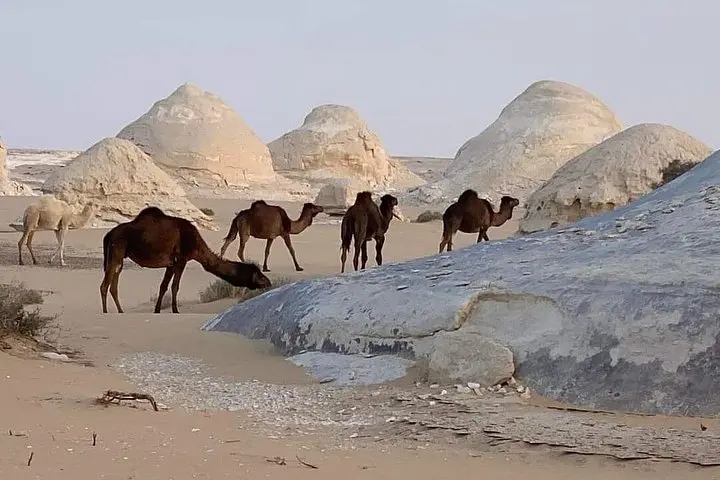
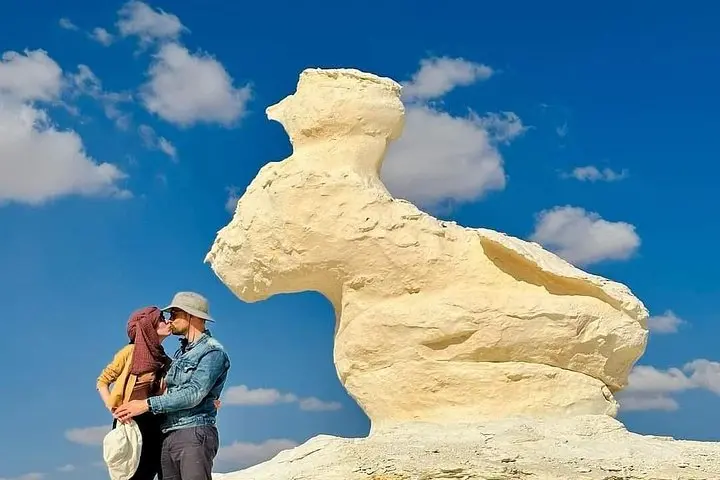
This short expedition stitches together deep time and human history: Greco-Roman mummies in the Golden Mummies Museum, a small temple attributed to Alexander-era builders, and Bedouin camps that have guided travelers across these wastes for generations. Geology writes the itinerary—wind-sculpted chalk in the White Desert, quartz-studded Crystal Mountain, and the limestone cliffs of Agabat Valley—each formation shaped by millennia of erosion.
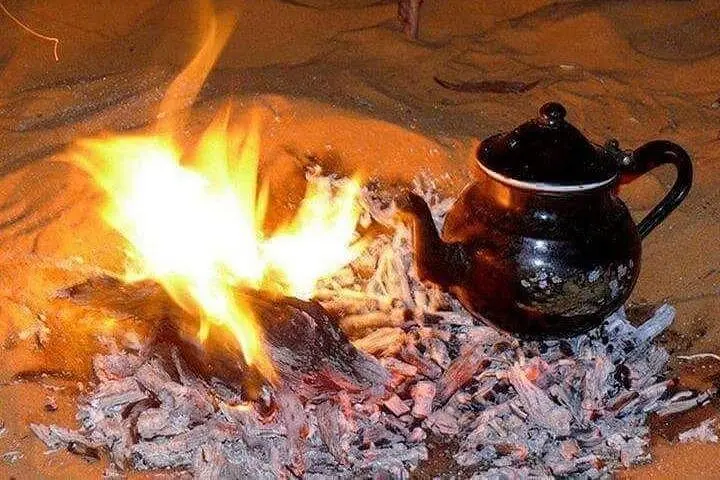
Expect open dunes, compacted jeep tracks, short scrambles on volcanic ridges, and surreal white domes that seem to defy gravity. Nights are wide and cold; stars feel near enough to touch while a small campfire and Bedouin music provide warmth and company.
Practicalities: the tour runs two days with long drives (4–5 hours each way from Cairo), light to moderate walking, and basic tented camping with meals provided. Bring layered clothing for hot days and chilly nights, lots of water, sun protection, sturdy footwear, and a camera with extra batteries—there’s limited power in the field. Follow local guidance on routes and wildlife, pack out all trash, and give rock formations a wide berth to avoid damage. This trip rewards travelers with dramatic scenery, cultural encounters, and a clear sense of the desert’s scale.
Camping is basic tented accommodation or open-sky sleeping on request; hosts provide mattresses and meals but expect minimal facilities.
Physically undemanding overall, but long vehicle transfers and uneven terrain mean it’s best for children used to travel and adults without severe mobility issues or heart conditions.
National park access and local admissions are typically included on organized tours—confirm with your operator before departure.
Power is limited in the field; bring power banks and conserve battery life—some lodges offer charging before/after desert legs.
Egypt Travel Ways operates guided outdoor trips and adventures with an emphasis on safety, stewardship, and memorable experiences.
The road out of Cairo peels away at dawn and the landscape opens into a hushed sweep of sand and stone. By mid-morning you’re in Bahariya Oasis—palm groves framing low mud-brick lodges—before a line of basalt shoulders rises into the Black Desert, where volcanic hills blacken the horizon and El-Marsous waits for a climb and a long view.
The road out of Cairo peels away at dawn and the landscape opens into a hushed sweep of sand and stone. By mid-morning you’re in Bahariya Oasis—palm groves framing low mud-brick lodges—before a line of basalt shoulders rises into the Black Desert, where volcanic hills blacken the horizon and El-Marsous waits for a climb and a long view.
This short expedition stitches together deep time and human history: Greco-Roman mummies in the Golden Mummies Museum, a small temple attributed to Alexander-era builders, and Bedouin camps that have guided travelers across these wastes for generations. Geology writes the itinerary—wind-sculpted chalk in the White Desert, quartz-studded Crystal Mountain, and the limestone cliffs of Agabat Valley—each formation shaped by millennia of erosion.
Expect open dunes, compacted jeep tracks, short scrambles on volcanic ridges, and surreal white domes that seem to defy gravity. Nights are wide and cold; stars feel near enough to touch while a small campfire and Bedouin music provide warmth and company.
Practicalities: the tour runs two days with long drives (4–5 hours each way from Cairo), light to moderate walking, and basic tented camping with meals provided. Bring layered clothing for hot days and chilly nights, lots of water, sun protection, sturdy footwear, and a camera with extra batteries—there’s limited power in the field. Follow local guidance on routes and wildlife, pack out all trash, and give rock formations a wide berth to avoid damage. This trip rewards travelers with dramatic scenery, cultural encounters, and a clear sense of the desert’s scale.