THE ADVENTURE COLLECTIVE® · Independent discovery and booking for outdoor travel

Walk two hours through the heart of Philadelphia while hearing the often-unheard stories of African‑American life from the colonial era onward. This guided tour reframes Independence National Historical Park’s landmarks through the perspective of Black Philadelphians.
Walk two hours through the heart of Philadelphia while hearing the often-unheard stories of African‑American life from the colonial era onward. This guided tour reframes Independence National Historical Park’s landmarks through the perspective of Black Philadelphians.
You step out of the Independence Visitor Center into a city that still carries the rhythms of its past: cobblestone streets underfoot, the Delaware River's breath to the east, and brick facades that once watched debates about liberty and bondage.
Verified experiences and guided adventures in the surrounding area.
You step out of the Independence Visitor Center into a city that still carries the rhythms of its past: cobblestone streets underfoot, the Delaware River's breath to the east, and brick facades that once watched debates about liberty and bondage.
This two-hour guided walk threads through Philadelphia’s foundational sites while centering African‑American stories often left at the margins. The route pauses at the President’s House site to discuss the nine enslaved people held there and the complex contradictions of a new republic. Nearby, the area historically called Congo Square and adjacent potter’s field speak to the lives — and resting places — of free and enslaved Africans.
Mother Bethel African Methodist Episcopal Church appears as a community anchor: founded in the late 18th century, it became a base for spiritual life and organized resistance. Along the way you’ll see Independence Hall, the Liberty Bell, and Congress Hall from a different angle — not as symbols only of national origin, but as settings where Black Philadelphians shaped legal and social change.
Geology and urban form matter here: the city sits near the fall line and the river shaped commerce and migration; historic bricks and granite tell a tactile story of building and rebuilding. The guide weaves archival detail with on‑street interpretation so you leave with names, dates, and directions to further reading.
Practical notes: this is a moderate urban walk on sidewalks and occasional cobbles, about two hours total. Wear stable shoes, bring water, and allow time afterward to explore museum exhibits or the church’s historic interior if open.
It begins at the Independence Visitor Center; the guide usually concludes near Independence Hall or a nearby landmark within central Old City.
Much of the route is on paved sidewalks, but some cobblestone sections can be uneven—contact the operator ahead to confirm accessibility accommodations.
Yes; the tour is family-friendly, though content includes difficult historical subjects—parents should judge appropriateness for younger children.
Photography is allowed at outdoor sites; be mindful and respectful at burial grounds and indoor spaces where photography may be restricted.
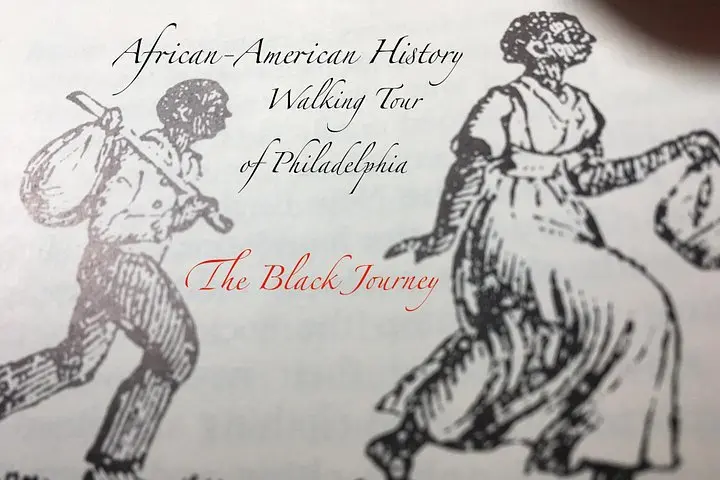
You step out of the Independence Visitor Center into a city that still carries the rhythms of its past: cobblestone streets underfoot, the Delaware River's breath to the east, and brick facades that once watched debates about liberty and bondage.
You step out of the Independence Visitor Center into a city that still carries the rhythms of its past: cobblestone streets underfoot, the Delaware River's breath to the east, and brick facades that once watched debates about liberty and bondage.
This two-hour guided walk threads through Philadelphia’s foundational sites while centering African‑American stories often left at the margins. The route pauses at the President’s House site to discuss the nine enslaved people held there and the complex contradictions of a new republic. Nearby, the area historically called Congo Square and adjacent potter’s field speak to the lives — and resting places — of free and enslaved Africans.
Mother Bethel African Methodist Episcopal Church appears as a community anchor: founded in the late 18th century, it became a base for spiritual life and organized resistance. Along the way you’ll see Independence Hall, the Liberty Bell, and Congress Hall from a different angle — not as symbols only of national origin, but as settings where Black Philadelphians shaped legal and social change.
Geology and urban form matter here: the city sits near the fall line and the river shaped commerce and migration; historic bricks and granite tell a tactile story of building and rebuilding. The guide weaves archival detail with on‑street interpretation so you leave with names, dates, and directions to further reading.
Practical notes: this is a moderate urban walk on sidewalks and occasional cobbles, about two hours total. Wear stable shoes, bring water, and allow time afterward to explore museum exhibits or the church’s historic interior if open.