THE ADVENTURE COLLECTIVE® · Independent discovery and booking for outdoor travel

Ride a Super Jeep onto Vatnajökull and spend five hours on blue ice, crampons on your feet and a professional guide explaining the glacier’s geology and movement. Smaller groups mean quieter viewpoints, deeper crevasses and more time inside the glacier’s blue walls.
Ride a Super Jeep onto Vatnajökull and spend five hours on blue ice, crampons on your feet and a professional guide explaining the glacier’s geology and movement. Smaller groups mean quieter viewpoints, deeper crevasses and more time inside the glacier’s blue walls.
A low wind scrapes across the black sand parking lot at Jökulsárlón and the Super Jeep arrives like a prow cutting into white. Passengers pile in beneath a curved roof of windows and the driver revs; tires climb moraine and old ice until the sea of blue opens—hollows, crevasses and ridges that look carved by a patient, restless hand. The guide clips helmets and hands out crampons. The air tastes metallic and sharp; the glacier seems to breathe around the group, moving only inches each year but shaping landscapes for millennia.
Verified experiences and guided adventures in the surrounding area.
Operated by Marina Travel · Höfn, Austurland
A low wind scrapes across the black sand parking lot at Jökulsárlón and the Super Jeep arrives like a prow cutting into white. Passengers pile in beneath a curved roof of windows and the driver revs; tires climb moraine and old ice until the sea of blue opens—hollows, crevasses and ridges that look carved by a patient, restless hand. The guide clips helmets and hands out crampons. The air tastes metallic and sharp; the glacier seems to breathe around the group, moving only inches each year but shaping landscapes for millennia.
Vatnajökull is Europe’s largest ice cap and a catalog of geological drama. Under its ribs are volcanic vents and subglacial rivers that can flood with no warning; the glacier itself drapes like a slow-moving shield across a landscape of lava, pumice and glacial outwash plains. The Blue Ice Experience takes you off the beaten path from the popular ice caves by guiding smaller groups onto a less-visited flank of Vatnajökull, where strata of compressed ice reveal bands of blue so saturated they leer rather than shimmer.
Guides are local glacier technicians who translate ice for visitors: how meltwater channels carve tunnels, why compacted ice absorbs red light and throws blue back, and why the glacier’s edge migrates seasonally. Culturally, this stretch of southeast Iceland is shaped by fishing, the long winters, and a pragmatic respect for sudden weather—and that shows in the expedition’s pace and safety focus.
Practically, expect four to six hours total. The Super Jeep reduces slog but not the physicality: you will walk on uneven, icy slopes with crampons, scramble around hummocks, and pause at wind-swept viewpoints. Dress in layers that block wind; a waterproof outer shell and warm mid-layer are non-negotiable. Bring at least 1.5 liters of water and high-energy snacks—the cold steals heat faster than you expect. The guide issues helmets and crampons and gives a short skills demo; pay attention during the crampon briefing and let the guide choose your route across any suspect snow bridges.
Weather can turn the plan on its head. Tours run only when access roads are open and conditions allow, and guides will reroute or cancel for safety. If you want photographs, plan for morning light when blue ice appears richest and the low sun slants through crevasses.
This is not a stroll: it’s a guided encounter with a living landscape. Take the time to listen—ice creaks like low thunder—and to read the guide’s explanations. Leave no trace: the glacier keeps its stories, not your footprints.
The route requires walking on crevassed and uneven ice for several hours; moderate fitness is necessary and guides will match pace to the group.
You may explore natural blue ice formations and shallow caverns; large tourist ice caves are seasonal and change yearly—guides will show the best accessible features.
Guides provide crampons and helmets and will brief you on safe use; transport to and from the glacier is included.
Yes—tours operate only when road access and glacier conditions are safe; refunds or rescheduling follow the operator’s cancellation policy.
Children with good mobility may join, but operators set age minimums for safety—check with the provider when booking.
Jökulsárlón is about a 4.5–5 hour drive from Reykjavík and roughly 1 hour 15 minutes from Höfn, so many travelers base in Höfn or include it as a stop along the Ring Road.
Marina Travel operates guided outdoor trips and adventures with an emphasis on safety, stewardship, and memorable experiences.
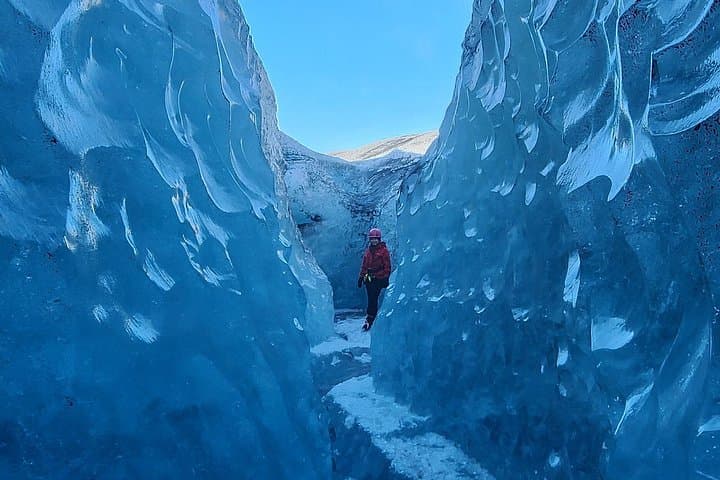

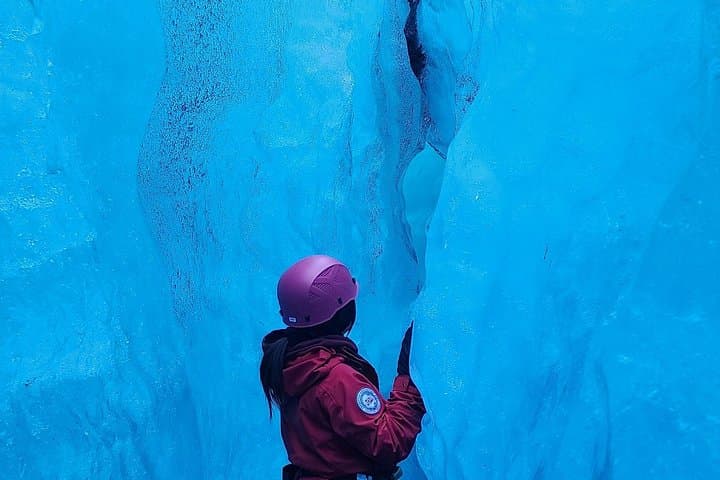
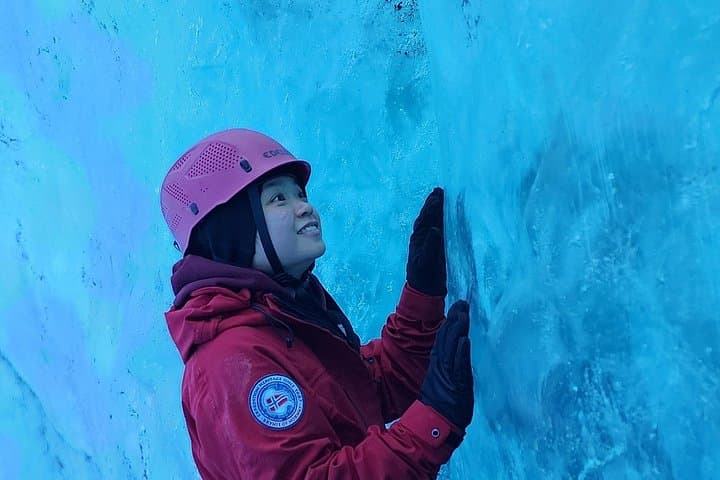
A low wind scrapes across the black sand parking lot at Jökulsárlón and the Super Jeep arrives like a prow cutting into white. Passengers pile in beneath a curved roof of windows and the driver revs; tires climb moraine and old ice until the sea of blue opens—hollows, crevasses and ridges that look carved by a patient, restless hand. The guide clips helmets and hands out crampons. The air tastes metallic and sharp; the glacier seems to breathe around the group, moving only inches each year but shaping landscapes for millennia.
A low wind scrapes across the black sand parking lot at Jökulsárlón and the Super Jeep arrives like a prow cutting into white. Passengers pile in beneath a curved roof of windows and the driver revs; tires climb moraine and old ice until the sea of blue opens—hollows, crevasses and ridges that look carved by a patient, restless hand. The guide clips helmets and hands out crampons. The air tastes metallic and sharp; the glacier seems to breathe around the group, moving only inches each year but shaping landscapes for millennia.
Vatnajökull is Europe’s largest ice cap and a catalog of geological drama. Under its ribs are volcanic vents and subglacial rivers that can flood with no warning; the glacier itself drapes like a slow-moving shield across a landscape of lava, pumice and glacial outwash plains. The Blue Ice Experience takes you off the beaten path from the popular ice caves by guiding smaller groups onto a less-visited flank of Vatnajökull, where strata of compressed ice reveal bands of blue so saturated they leer rather than shimmer.
Guides are local glacier technicians who translate ice for visitors: how meltwater channels carve tunnels, why compacted ice absorbs red light and throws blue back, and why the glacier’s edge migrates seasonally. Culturally, this stretch of southeast Iceland is shaped by fishing, the long winters, and a pragmatic respect for sudden weather—and that shows in the expedition’s pace and safety focus.
Practically, expect four to six hours total. The Super Jeep reduces slog but not the physicality: you will walk on uneven, icy slopes with crampons, scramble around hummocks, and pause at wind-swept viewpoints. Dress in layers that block wind; a waterproof outer shell and warm mid-layer are non-negotiable. Bring at least 1.5 liters of water and high-energy snacks—the cold steals heat faster than you expect. The guide issues helmets and crampons and gives a short skills demo; pay attention during the crampon briefing and let the guide choose your route across any suspect snow bridges.
Weather can turn the plan on its head. Tours run only when access roads are open and conditions allow, and guides will reroute or cancel for safety. If you want photographs, plan for morning light when blue ice appears richest and the low sun slants through crevasses.
This is not a stroll: it’s a guided encounter with a living landscape. Take the time to listen—ice creaks like low thunder—and to read the guide’s explanations. Leave no trace: the glacier keeps its stories, not your footprints.