THE ADVENTURE COLLECTIVE® · Independent discovery and booking for outdoor travel

Ride an open-air ex-Army Land Rover along sealed roads for sweeping Blue Mountains views. This three-hour guided tour combines geology, Aboriginal history, and practical stops for photos and short walks.
Ride an open-air ex-Army Land Rover along sealed roads for sweeping Blue Mountains views. This three-hour guided tour combines geology, Aboriginal history, and practical stops for photos and short walks.
You climb aboard an ex-Australian Army Land Rover and the ridge opens up — gum-scented wind, an elevated bench that removes glass and distance, and the Blue Mountains spreading like folded stone. The vehicle moves along sealed roads; there’s no off-road bouncing, but the open-air seating makes every turn a live postcard: cliffs, deep gullies, and a horizon that pushes the sky lower.
Verified experiences and guided adventures in the surrounding area.
Operated by Beyond The Blacktop Adventure Tours · Katoomba, New South Wales
You climb aboard an ex-Australian Army Land Rover and the ridge opens up — gum-scented wind, an elevated bench that removes glass and distance, and the Blue Mountains spreading like folded stone. The vehicle moves along sealed roads; there’s no off-road bouncing, but the open-air seating makes every turn a live postcard: cliffs, deep gullies, and a horizon that pushes the sky lower.
This part of the Blue Mountains sits on Triassic sandstone carved by rivers and time, its escarpments and plateaus formed over millions of years. Aboriginal Gundungurra and Darug peoples lived here for millennia; many lookouts and walking tracks follow routes used for seasonal movement. European arrival introduced logging and mining, and later conservation momentum led to the region’s World Heritage listing — the cultural and geological story is visible from each lookout.
Guides on a three-hour Army Truck tour weave natural history with practical stops: short photo pauses, eucalyptus-scented breezes, and quick explanations of local flora and the dramatic cliff-forming strata. Wildlife is often shy but visible — wallabies on morning slopes, lyrebirds in gullies. The operator keeps to sealed roads and small groups for a low-impact visit.
Practical notes: dress in layers for wind and sun, bring a brimmed hat and windproof jacket, and secure loose items in a daypack. Expect light walking at viewpoints, intermittent standing on the vehicle, and basic accessibility constraints when climbing in. Book for morning light if you want softer shadows across the valley and quieter trails; afternoons fill with tour traffic and stronger sun.
No — the tour runs on sealed roads and accesses established lookouts; the vehicle is open-air but stays on maintained routes.
Yes; the tour is rated easy and suitable for most ages, though guests must be able to step into the vehicle and stand briefly at lookouts.
There are short stops at staffed or public lookout areas with basic facilities; plan accordingly for limited amenities during the three-hour window.
You may spot kangaroos, wallabies, and lyrebirds from a distance; the tour avoids disturbing animals and follows a low-impact viewing approach.
Beyond The Blacktop Adventure Tours operates guided outdoor trips and adventures with an emphasis on safety, stewardship, and memorable experiences.
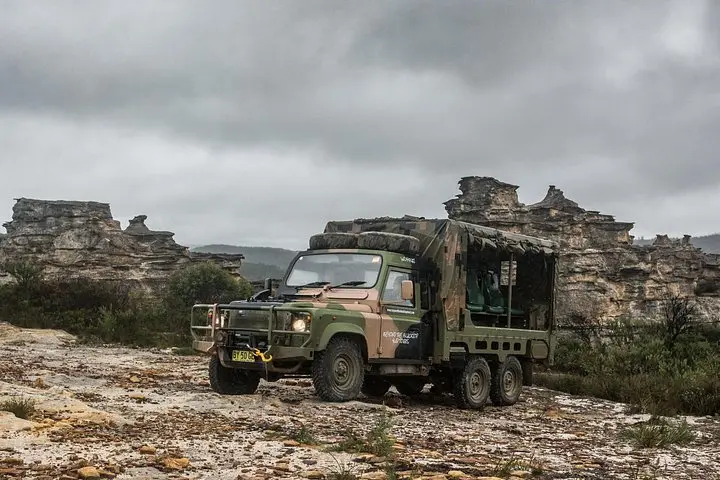
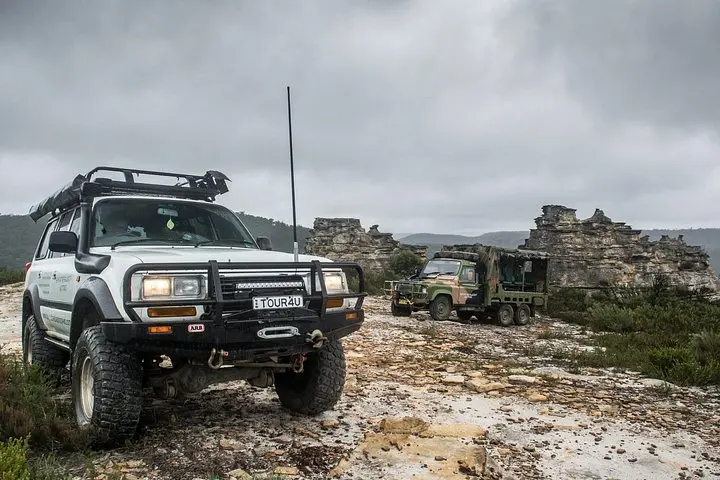
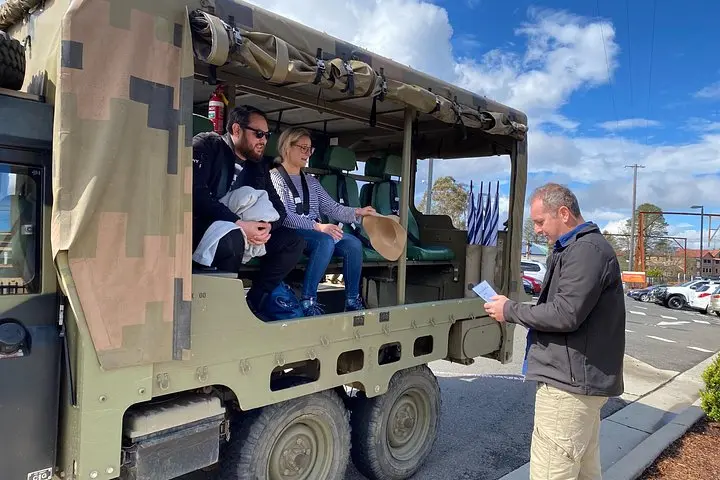
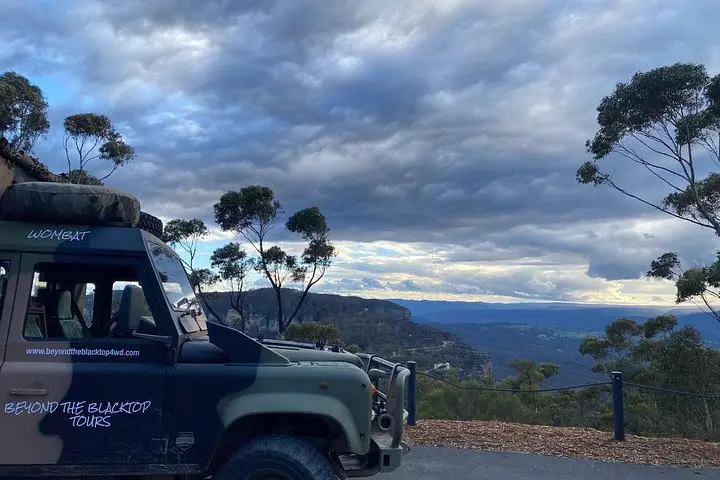
You climb aboard an ex-Australian Army Land Rover and the ridge opens up — gum-scented wind, an elevated bench that removes glass and distance, and the Blue Mountains spreading like folded stone. The vehicle moves along sealed roads; there’s no off-road bouncing, but the open-air seating makes every turn a live postcard: cliffs, deep gullies, and a horizon that pushes the sky lower.
You climb aboard an ex-Australian Army Land Rover and the ridge opens up — gum-scented wind, an elevated bench that removes glass and distance, and the Blue Mountains spreading like folded stone. The vehicle moves along sealed roads; there’s no off-road bouncing, but the open-air seating makes every turn a live postcard: cliffs, deep gullies, and a horizon that pushes the sky lower.
This part of the Blue Mountains sits on Triassic sandstone carved by rivers and time, its escarpments and plateaus formed over millions of years. Aboriginal Gundungurra and Darug peoples lived here for millennia; many lookouts and walking tracks follow routes used for seasonal movement. European arrival introduced logging and mining, and later conservation momentum led to the region’s World Heritage listing — the cultural and geological story is visible from each lookout.
Guides on a three-hour Army Truck tour weave natural history with practical stops: short photo pauses, eucalyptus-scented breezes, and quick explanations of local flora and the dramatic cliff-forming strata. Wildlife is often shy but visible — wallabies on morning slopes, lyrebirds in gullies. The operator keeps to sealed roads and small groups for a low-impact visit.
Practical notes: dress in layers for wind and sun, bring a brimmed hat and windproof jacket, and secure loose items in a daypack. Expect light walking at viewpoints, intermittent standing on the vehicle, and basic accessibility constraints when climbing in. Book for morning light if you want softer shadows across the valley and quieter trails; afternoons fill with tour traffic and stronger sun.