THE ADVENTURE COLLECTIVE® · Independent discovery and booking for outdoor travel

Follow turquoise water through steaming vents, spot sloths in low canopy, and swim beneath two dramatic waterfalls on a full-day Tenorio experience. Practical trail advice and wildlife tips prepare you for this rainforest hike and river swim.
Follow turquoise water through steaming vents, spot sloths in low canopy, and swim beneath two dramatic waterfalls on a full-day Tenorio experience. Practical trail advice and wildlife tips prepare you for this rainforest hike and river swim.
You step off the bus into humid forest; the air smells of wet earth and hot mineral vents. The trail pushes forward beneath a roof of heliconia and cecropia, and the Celeste River appears like a painted ribbon — bright turquoise where sunlight hits suspended minerals and pale where steam gathers. The river dares you closer, steam rising from thermal pools and mud pots that bubble like a simmering kettle.
Verified experiences and guided adventures in the surrounding area.
Operated by Nacho Tours · Bijagua de Upala, Guanacaste
You step off the bus into humid forest; the air smells of wet earth and hot mineral vents. The trail pushes forward beneath a roof of heliconia and cecropia, and the Celeste River appears like a painted ribbon — bright turquoise where sunlight hits suspended minerals and pale where steam gathers. The river dares you closer, steam rising from thermal pools and mud pots that bubble like a simmering kettle.
Tenorio Volcano National Park is young volcanically — its hydrothermal chemistry creates Río Celeste’s famous blue through light-scattering and dissolved minerals. The park sits in northern Guanacaste and has long been part of local livelihoods, with nearby Bijagua serving as the gateway town. Culture here is rural Costa Rica: cattle farms, family-run sodas, and guides who read the forest as a local reads a road map.
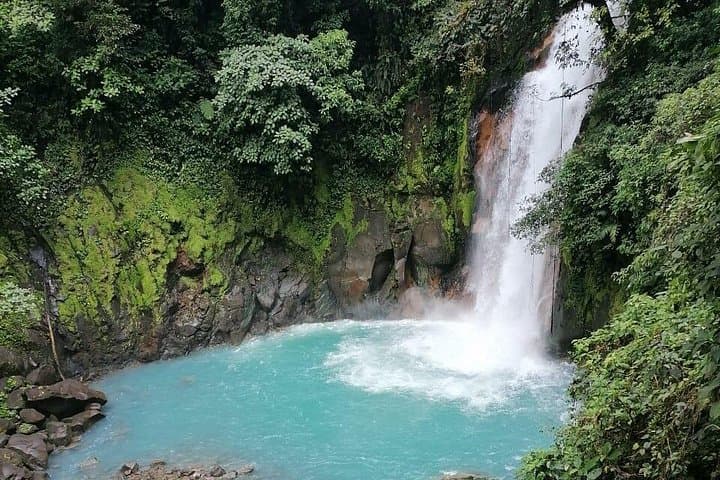
Expect an easy-to-moderate hike, roughly 2 hours on maintained trails and boardwalks, with occasional muddy and steep sections and modest elevation change. The route passes steam vents, a 98-foot Celeste waterfall, and pools suitable for swimming depending on conditions. Later, Llanos de Cortez delivers a broad 65-foot drop into a sandy swimming pond perfect for cooling off.
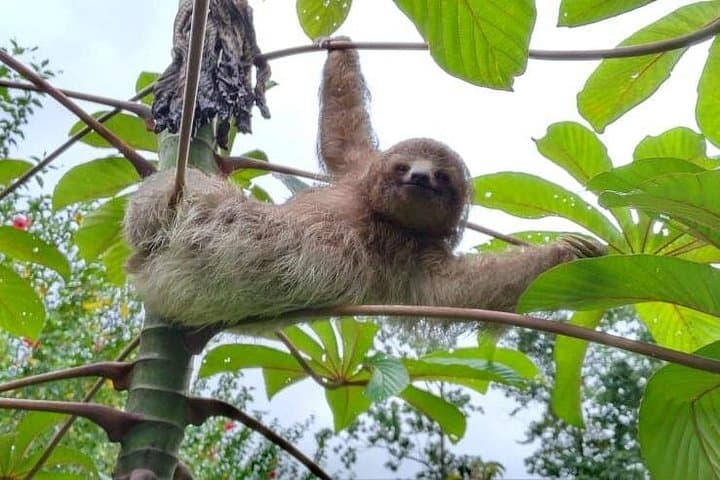
Practical tips: bring sturdy traction shoes, insect repellent, a quick-dry swimsuit, and layers for sudden rain. Start early to avoid crowds and midday heat. Respect posted signs — thermal areas can be dangerous. With a guide you’ll get wildlife sightings (sloths, toucans) and a culture-rich lunch to finish the day.
Many tours include a supervised swim in designated pools; local rules and safety conditions vary, so follow your guide and posted signage.
The main walk through Tenorio is rated easy to moderate—expect uneven ground and some short climbs over roughly 1.5–4 miles total, depending on route.
Yes: guides often spot sloths, toucans, and tree frogs along the trail, though sightings depend on time of day and luck.
Bring water, sun protection, insect repellent, sturdy shoes, a swimsuit, and a rain layer during the wet season.
Nacho Tours operates guided outdoor trips and adventures with an emphasis on safety, stewardship, and memorable experiences.

You step off the bus into humid forest; the air smells of wet earth and hot mineral vents. The trail pushes forward beneath a roof of heliconia and cecropia, and the Celeste River appears like a painted ribbon — bright turquoise where sunlight hits suspended minerals and pale where steam gathers. The river dares you closer, steam rising from thermal pools and mud pots that bubble like a simmering kettle.
You step off the bus into humid forest; the air smells of wet earth and hot mineral vents. The trail pushes forward beneath a roof of heliconia and cecropia, and the Celeste River appears like a painted ribbon — bright turquoise where sunlight hits suspended minerals and pale where steam gathers. The river dares you closer, steam rising from thermal pools and mud pots that bubble like a simmering kettle.
Tenorio Volcano National Park is young volcanically — its hydrothermal chemistry creates Río Celeste’s famous blue through light-scattering and dissolved minerals. The park sits in northern Guanacaste and has long been part of local livelihoods, with nearby Bijagua serving as the gateway town. Culture here is rural Costa Rica: cattle farms, family-run sodas, and guides who read the forest as a local reads a road map.
Expect an easy-to-moderate hike, roughly 2 hours on maintained trails and boardwalks, with occasional muddy and steep sections and modest elevation change. The route passes steam vents, a 98-foot Celeste waterfall, and pools suitable for swimming depending on conditions. Later, Llanos de Cortez delivers a broad 65-foot drop into a sandy swimming pond perfect for cooling off.
Practical tips: bring sturdy traction shoes, insect repellent, a quick-dry swimsuit, and layers for sudden rain. Start early to avoid crowds and midday heat. Respect posted signs — thermal areas can be dangerous. With a guide you’ll get wildlife sightings (sloths, toucans) and a culture-rich lunch to finish the day.