THE ADVENTURE COLLECTIVE® · Independent discovery and booking for outdoor travel

Spend a day trading Tangier’s harbor for Chefchaouen’s blue-washed alleys and the emerald pools of Akchour. This full-day private tour pairs cultural wandering with a short, scenic hike to waterfalls and natural pools.
Spend a day trading Tangier’s harbor for Chefchaouen’s blue-washed alleys and the emerald pools of Akchour. This full-day private tour pairs cultural wandering with a short, scenic hike to waterfalls and natural pools.
You arrive before the city wakes, the road unspooling north from Tangier through scrub and low, wind-sculpted hills. By mid-morning the blue of Chefchaouen is a physical thing: doorways, alleys, fountains painted in tones that pull light into themselves. The medina smells of spices and frying dough; women balance bundles on their heads and men pour mint tea at tiny tables while the kasbah keeps quiet watch over the square.
Verified experiences and guided adventures in the surrounding area.
Operated by Chefchaouen Adventures · Chefchaouen, Tanger-Tétouan-Al Hoceima
You arrive before the city wakes, the road unspooling north from Tangier through scrub and low, wind-sculpted hills. By mid-morning the blue of Chefchaouen is a physical thing: doorways, alleys, fountains painted in tones that pull light into themselves. The medina smells of spices and frying dough; women balance bundles on their heads and men pour mint tea at tiny tables while the kasbah keeps quiet watch over the square.
The city was founded in the 15th century by Moorish exiles from Andalusia; its signature blue came later—parts practical, part aesthetic—meant to repel mosquitoes and reflect the sky. Architecture here shows a soft Andalusian lineage: octagonal minarets, stepped alleys, and small fountains that still act as social nodes for daily life. Walk slowly and you can read that history on doors and lintels: old wood, ironwork, and inscriptions in Arabic.
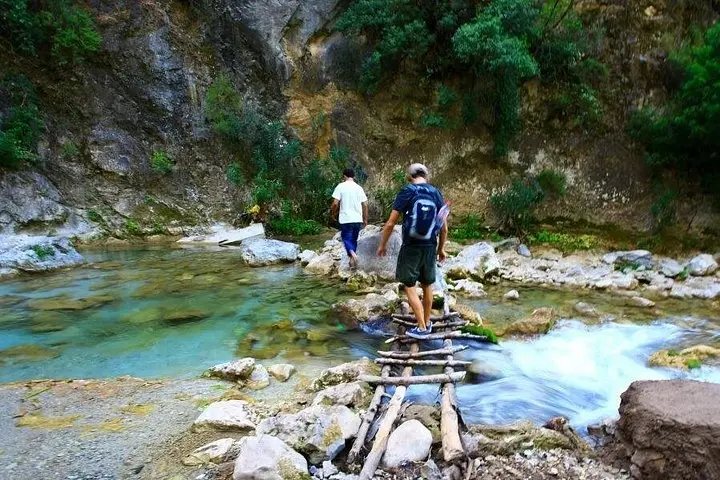
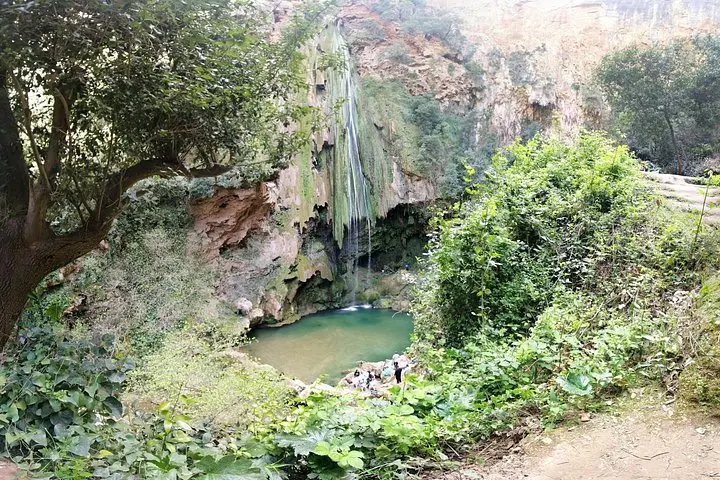
After lunch the landscape shifts. The driver threads a narrower road toward Talassemtane National Park, where the Kelaa river dares you off the asphalt and into canyon shade. The Akchour circuit opens into a gorge of cedar, fir, and cork oak—habitat for the rare Moroccan fir trees—and a river that carves pools the color of oxidized copper and tropical lagoons. The trail is mostly packed dirt and stone, with wet, slick sections near the cascades; small wooden bridges and carved steps ease the route but the gradient builds gently up to a main viewpoint.
Practical guide: the full day runs about 9–11 hours from Tangier, with roughly 2–3 hours of driving round-trip. Expect a 4–6 km hike at Akchour with about 200–350 m cumulative elevation gain depending on how far into the canyon you go. Terrain alternates between easy dirt trails and short technical sections—slippery rocks by the water—so a steady but not elite fitness level is enough.
Timing matters. Start early from Tangier to beat midday heat and to have the medina before tour buses arrive. Bring 1.5–2 liters of water, a quick-dry layer, sturdy shoes with grip, and a small towel if you want to swim—water is refreshingly cold even in summer. Respect local customs in Chefchaouen: dress modestly in public spaces and ask before photographing people.
The route combines culture, geology, and a slice of protected Mediterranean biodiversity. For a single day it offers a tidy contrast: human-scaled blue alleys that drink light, then a river that keeps moving, ahead and onward.
The main waterfall loop is typically 4–6 km round trip with roughly 200–350 m of cumulative elevation gain, depending on how far you push past the main falls.
Lunch is at your own leisure; the tour allows time in Chefchaouen for a meal at local cafes or restaurants.
Yes—the operator offers pick-up from central Tangier locations including Tanger Ville port and selected hotels; confirm pick-up when booking.
There may be small local access or parking fees; these are typically not included in the tour price—check with the operator in advance.
Children with reasonable stamina can manage the lower sections; older adults should consider mobility and avoid the slippery sections near the water.
The tour includes multilingual staff: local guides in Chefchaouen and a multilingual driver are part of the service.
Chefchaouen Adventures operates guided outdoor trips and adventures with an emphasis on safety, stewardship, and memorable experiences.
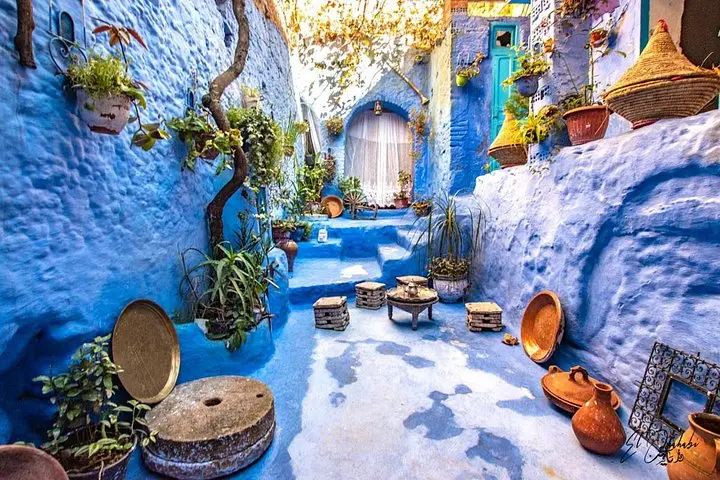
You arrive before the city wakes, the road unspooling north from Tangier through scrub and low, wind-sculpted hills. By mid-morning the blue of Chefchaouen is a physical thing: doorways, alleys, fountains painted in tones that pull light into themselves. The medina smells of spices and frying dough; women balance bundles on their heads and men pour mint tea at tiny tables while the kasbah keeps quiet watch over the square.
You arrive before the city wakes, the road unspooling north from Tangier through scrub and low, wind-sculpted hills. By mid-morning the blue of Chefchaouen is a physical thing: doorways, alleys, fountains painted in tones that pull light into themselves. The medina smells of spices and frying dough; women balance bundles on their heads and men pour mint tea at tiny tables while the kasbah keeps quiet watch over the square.
The city was founded in the 15th century by Moorish exiles from Andalusia; its signature blue came later—parts practical, part aesthetic—meant to repel mosquitoes and reflect the sky. Architecture here shows a soft Andalusian lineage: octagonal minarets, stepped alleys, and small fountains that still act as social nodes for daily life. Walk slowly and you can read that history on doors and lintels: old wood, ironwork, and inscriptions in Arabic.
After lunch the landscape shifts. The driver threads a narrower road toward Talassemtane National Park, where the Kelaa river dares you off the asphalt and into canyon shade. The Akchour circuit opens into a gorge of cedar, fir, and cork oak—habitat for the rare Moroccan fir trees—and a river that carves pools the color of oxidized copper and tropical lagoons. The trail is mostly packed dirt and stone, with wet, slick sections near the cascades; small wooden bridges and carved steps ease the route but the gradient builds gently up to a main viewpoint.
Practical guide: the full day runs about 9–11 hours from Tangier, with roughly 2–3 hours of driving round-trip. Expect a 4–6 km hike at Akchour with about 200–350 m cumulative elevation gain depending on how far into the canyon you go. Terrain alternates between easy dirt trails and short technical sections—slippery rocks by the water—so a steady but not elite fitness level is enough.
Timing matters. Start early from Tangier to beat midday heat and to have the medina before tour buses arrive. Bring 1.5–2 liters of water, a quick-dry layer, sturdy shoes with grip, and a small towel if you want to swim—water is refreshingly cold even in summer. Respect local customs in Chefchaouen: dress modestly in public spaces and ask before photographing people.
The route combines culture, geology, and a slice of protected Mediterranean biodiversity. For a single day it offers a tidy contrast: human-scaled blue alleys that drink light, then a river that keeps moving, ahead and onward.