THE ADVENTURE COLLECTIVE® · Independent discovery and booking for outdoor travel

Escape Fez for a day to wander the blue alleys of Chefchaouen, a Rif Mountain town where limestone ridges meet rooftop cafés. This practical guide covers what to see, local history, and how to prepare for the 10–11 hour round trip.
Escape Fez for a day to wander the blue alleys of Chefchaouen, a Rif Mountain town where limestone ridges meet rooftop cafés. This practical guide covers what to see, local history, and how to prepare for the 10–11 hour round trip.
You arrive as the road leaves the plains and begins to climb, the van pushing toward the Rif Mountains while villages thin and olive groves spread. Chefchaouen appears like a compact mosaic of pale blues stacked against green slopes; the medina lanes are narrow and cool, the Ras Elma stream daring you to follow it upstream toward quiet cafés and rooftop views.
Verified experiences and guided adventures in the surrounding area.
Operated by Morocco Trip · Chefchaouen, Tanger-Tetouan-Al Hoceima
You arrive as the road leaves the plains and begins to climb, the van pushing toward the Rif Mountains while villages thin and olive groves spread. Chefchaouen appears like a compact mosaic of pale blues stacked against green slopes; the medina lanes are narrow and cool, the Ras Elma stream daring you to follow it upstream toward quiet cafés and rooftop views.
Founded in the late 15th century by Moorish and Andalusian exiles, Chefchaouen’s bluewashed alleys reflect cultural layers—Islamic architecture, Spanish influence, and a history as a mountain refuge. Geologically the town sits on folded limestone ridges of the Rif; terraces and gullies funnel winter rains into seasonal streams, shaping the town’s placement where water and trade routes meet.
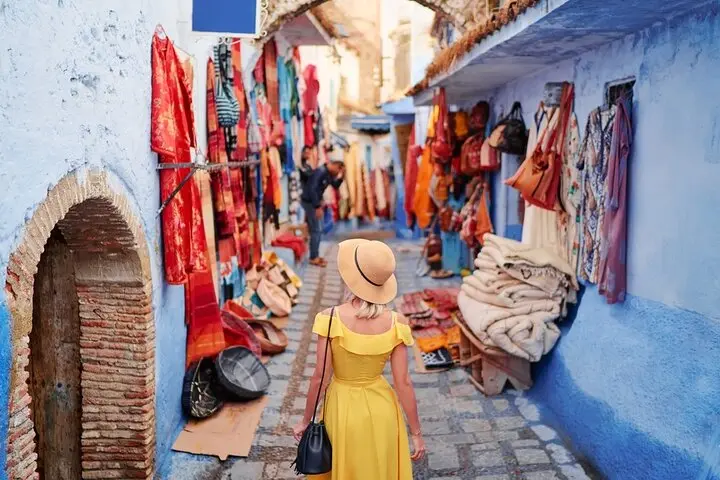
The medina centers around Plaza Uta el-Hammam, the Kasbah Museum and the Grand Mosque; street vendors sell woven wool, spices, and hand-dyed fabrics. Local life is quiet but tactile: rooftop tea, the sound of water in stone channels, and bakers pulling hot breads from wood-fired ovens.
Practical guidance: the tour is a full-day outing (about 10–11 hours round trip from Fez). Plan comfortable walking shoes—cobblestones and steps dominate the medina—and sun protection for rooftop terraces. Bring cash for small purchases and lunch; many viewpoints and the Kasbah charge modest entry or menu prices. If you prefer a paced visit, choose the private option to stay longer at the Ras Elma springs or the ethnographic museum.
Timing matters—mornings are quieter for photos; late afternoons bring softer light but fewer open shops. Respect mosque rules (no entry for tourists during prayer times) and keep plastic waste out of streams to support the town’s fragile mountain watershed.
The drive takes roughly 3–3.5 hours each way depending on traffic and stops, making this a full-day outing of about 10–11 hours total.
The narrow, stepped alleys are child-friendly with supervision, but not stroller-friendly—use a baby carrier for infants instead.
Lunch is typically not included; the tour gives free time in the medina to buy a meal at rooftop cafés or local restaurants.
Non-Muslims generally cannot enter active mosques in Morocco; you can view the Grand Mosque from the Plaza Uta el-Hammam and visit secular museums instead.
Morocco Trip operates guided outdoor trips and adventures with an emphasis on safety, stewardship, and memorable experiences.
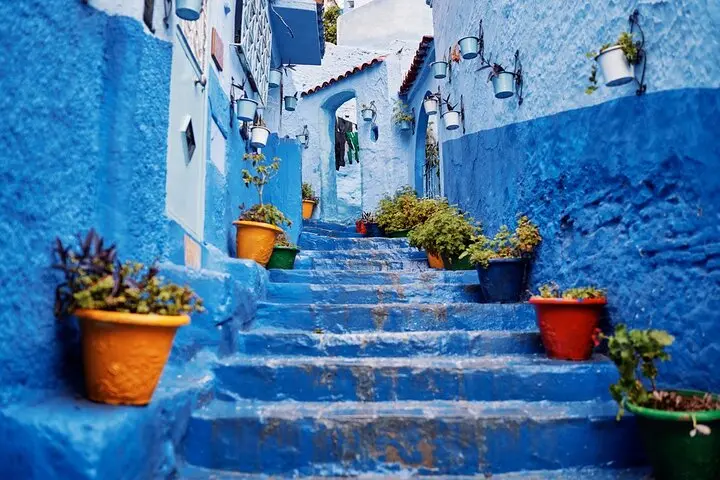

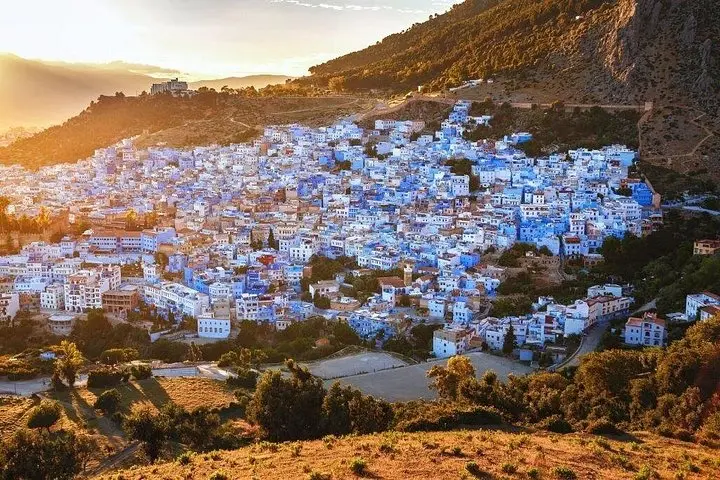
You arrive as the road leaves the plains and begins to climb, the van pushing toward the Rif Mountains while villages thin and olive groves spread. Chefchaouen appears like a compact mosaic of pale blues stacked against green slopes; the medina lanes are narrow and cool, the Ras Elma stream daring you to follow it upstream toward quiet cafés and rooftop views.
You arrive as the road leaves the plains and begins to climb, the van pushing toward the Rif Mountains while villages thin and olive groves spread. Chefchaouen appears like a compact mosaic of pale blues stacked against green slopes; the medina lanes are narrow and cool, the Ras Elma stream daring you to follow it upstream toward quiet cafés and rooftop views.
Founded in the late 15th century by Moorish and Andalusian exiles, Chefchaouen’s bluewashed alleys reflect cultural layers—Islamic architecture, Spanish influence, and a history as a mountain refuge. Geologically the town sits on folded limestone ridges of the Rif; terraces and gullies funnel winter rains into seasonal streams, shaping the town’s placement where water and trade routes meet.
The medina centers around Plaza Uta el-Hammam, the Kasbah Museum and the Grand Mosque; street vendors sell woven wool, spices, and hand-dyed fabrics. Local life is quiet but tactile: rooftop tea, the sound of water in stone channels, and bakers pulling hot breads from wood-fired ovens.
Practical guidance: the tour is a full-day outing (about 10–11 hours round trip from Fez). Plan comfortable walking shoes—cobblestones and steps dominate the medina—and sun protection for rooftop terraces. Bring cash for small purchases and lunch; many viewpoints and the Kasbah charge modest entry or menu prices. If you prefer a paced visit, choose the private option to stay longer at the Ras Elma springs or the ethnographic museum.
Timing matters—mornings are quieter for photos; late afternoons bring softer light but fewer open shops. Respect mosque rules (no entry for tourists during prayer times) and keep plastic waste out of streams to support the town’s fragile mountain watershed.