THE ADVENTURE COLLECTIVE® · Independent discovery and booking for outdoor travel

Spend a day in Costa Rica’s Nicoya Peninsula discovering how soil, climate and tradition combine to produce the world’s longest-lived communities. This private bean-to-bungalow tour pairs a micro-batch coffee walkthrough with Chorotega ceramics and a guided look at the Blue Zone lifestyle.
Spend a day in Costa Rica’s Nicoya Peninsula discovering how soil, climate and tradition combine to produce the world’s longest-lived communities. This private bean-to-bungalow tour pairs a micro-batch coffee walkthrough with Chorotega ceramics and a guided look at the Blue Zone lifestyle.
A thin morning mist lifts off the red soil as you arrive at a private beneficio outside Nicoya. The air smells of damp earth and green cherries; workers move with deliberate rhythm, and a guide breaks down each coffee-processing stage with the patience of someone who knows this land produces more than a crop—it shapes a life. Over the next six hours the tour moves from plantation terraces to a Mantambu indigenous bungalow where clay is still pressed by hand.
Verified experiences and guided adventures in the surrounding area.
Operated by Sweet Costa Rica · Nicoya, Guanacaste
A thin morning mist lifts off the red soil as you arrive at a private beneficio outside Nicoya. The air smells of damp earth and green cherries; workers move with deliberate rhythm, and a guide breaks down each coffee-processing stage with the patience of someone who knows this land produces more than a crop—it shapes a life. Over the next six hours the tour moves from plantation terraces to a Mantambu indigenous bungalow where clay is still pressed by hand.
Nicoya sits on a limestone peninsula whose mineral-rich soils and moderate Pacific climate are one reason the region joined the Blue Zone list. The Chorotega people left clear marks here: fired clay forms, painted motifs and communal foodways that echo in a Casado lunch served mid-day. Geology and microclimate conspire to create coffee with bright acidity and herbal undertones; culture adds the ritual—morning brews, slow conversations, and the “Plan de Vida” that frames daily movement and diet.
Practical side: expect about 6 hours, mostly easy walking on uneven farm tracks and inside a traditional bungalow. Bring sun protection, closed-toe shoes for steep trails, and a reusable bottle—hydration and respectful behavior at indigenous sites are essential. Photography is usually welcome but follow guide direction. The experience blends sensory tasting with hands-on pottery and a clear lesson: longevity here is lived, tasted and shared. Leave space in your luggage for small ceramics and new routines that travel better than souvenirs.
The tour lasts about 6 hours and includes private transport, coffee tastings, a Casado lunch, bottled water, an artisan pottery session, and return to Nicoya.
Yes—children can attend but should be supervised; note infants may need to sit on laps during transport and activities are hands-on with clay and small tools.
Yes—most providers can adapt the Casado plate for common dietary needs if notified at booking.
Photography is generally allowed but always ask permission before photographing people or rituals and follow the guide’s cultural protocols in the indigenous bungalow.
Sweet Costa Rica operates guided outdoor trips and adventures with an emphasis on safety, stewardship, and memorable experiences.
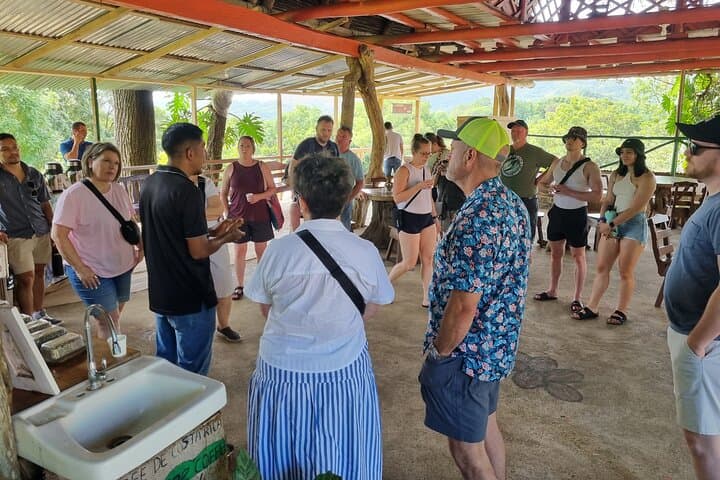


A thin morning mist lifts off the red soil as you arrive at a private beneficio outside Nicoya. The air smells of damp earth and green cherries; workers move with deliberate rhythm, and a guide breaks down each coffee-processing stage with the patience of someone who knows this land produces more than a crop—it shapes a life. Over the next six hours the tour moves from plantation terraces to a Mantambu indigenous bungalow where clay is still pressed by hand.
A thin morning mist lifts off the red soil as you arrive at a private beneficio outside Nicoya. The air smells of damp earth and green cherries; workers move with deliberate rhythm, and a guide breaks down each coffee-processing stage with the patience of someone who knows this land produces more than a crop—it shapes a life. Over the next six hours the tour moves from plantation terraces to a Mantambu indigenous bungalow where clay is still pressed by hand.
Nicoya sits on a limestone peninsula whose mineral-rich soils and moderate Pacific climate are one reason the region joined the Blue Zone list. The Chorotega people left clear marks here: fired clay forms, painted motifs and communal foodways that echo in a Casado lunch served mid-day. Geology and microclimate conspire to create coffee with bright acidity and herbal undertones; culture adds the ritual—morning brews, slow conversations, and the “Plan de Vida” that frames daily movement and diet.
Practical side: expect about 6 hours, mostly easy walking on uneven farm tracks and inside a traditional bungalow. Bring sun protection, closed-toe shoes for steep trails, and a reusable bottle—hydration and respectful behavior at indigenous sites are essential. Photography is usually welcome but follow guide direction. The experience blends sensory tasting with hands-on pottery and a clear lesson: longevity here is lived, tasted and shared. Leave space in your luggage for small ceramics and new routines that travel better than souvenirs.