THE ADVENTURE COLLECTIVE® · Independent discovery and booking for outdoor travel

Spend a half-day on a working Nicoya farm to learn trapiche sugar-making, milk cows, gather eggs, and share a farm-to-table meal with a local family. This private cultural immersion highlights the lifestyle patterns behind the peninsula’s Blue Zone longevity.
Spend a half-day on a working Nicoya farm to learn trapiche sugar-making, milk cows, gather eggs, and share a farm-to-table meal with a local family. This private cultural immersion highlights the lifestyle patterns behind the peninsula’s Blue Zone longevity.
A low, humid morning opens over La Mencha as visitors step from the van into a working Costa Rican farm where chickens chatter and a trapiche’s wooden gears still turn. The air smells of fresh-cut sugarcane and coffee; a local family greets guests with simple, homegrown food and an invitation to learn. Over four to five hours participants move from milking cows to collecting eggs and watching traditional sugar extraction, all within walking distance of a braided river and pasture slopes that hint at the peninsula’s volcanic soils.
Verified experiences and guided adventures in the surrounding area.
Operated by Manakin Tours · La Mencha, Puntarenas Province
A low, humid morning opens over La Mencha as visitors step from the van into a working Costa Rican farm where chickens chatter and a trapiche’s wooden gears still turn. The air smells of fresh-cut sugarcane and coffee; a local family greets guests with simple, homegrown food and an invitation to learn. Over four to five hours participants move from milking cows to collecting eggs and watching traditional sugar extraction, all within walking distance of a braided river and pasture slopes that hint at the peninsula’s volcanic soils.
Nicoya’s designation as a Blue Zone isn’t folklore but a pattern—diet rich in legumes and fresh produce, daily physical work, strong family bonds—that the tour makes tangible. Geologically the peninsula is a mix of older volcanic bedrock and sedimentary terraces, which give way to fertile valleys supporting mixed agriculture. Culturally the visit centers on “Tico” rhythms: early starts, shared meals, and practical craft skills such as trapiche operation and small-scale animal husbandry.
Practically, expect moderate activity: steady walking, hands-on chores, and a short horseback ride to the river. The host family provides farm-to-table breakfast or lunch and private transport from Santa Teresa. Guests should bring sturdy closed-toe shoes, sun protection, and a refillable water bottle; be prepared for uneven ground and occasional mud. The experience is as much about slowing down and learning day-to-day practices that support longevity as it is about sightseeing—an educational, tactile window into rural Costa Rican life.
The farm in La Mencha is approximately a 45-minute drive from Santa Teresa; private transport is usually provided by the operator.
Yes — the tour includes a farm-to-table breakfast or lunch prepared with local ingredients, plus snacks during the day.
Families can join; infants can ride in strollers and infant seats are available, but the activity involves livestock and uneven ground, so supervision is required.
Not recommended for travelers with significant spinal, cardiovascular, or mobility issues because the tour involves active farm tasks and uneven terrain.
Manakin Tours operates guided outdoor trips and adventures with an emphasis on safety, stewardship, and memorable experiences.
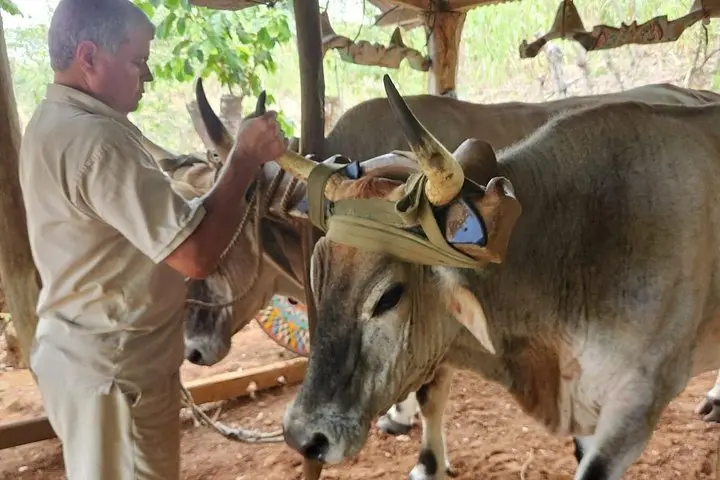
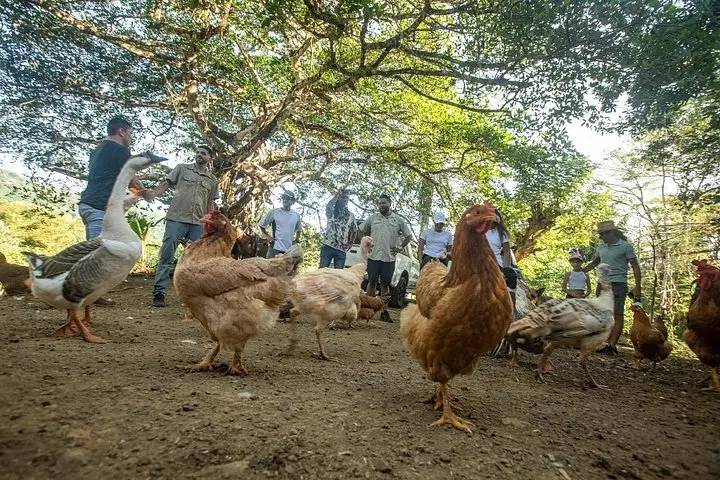
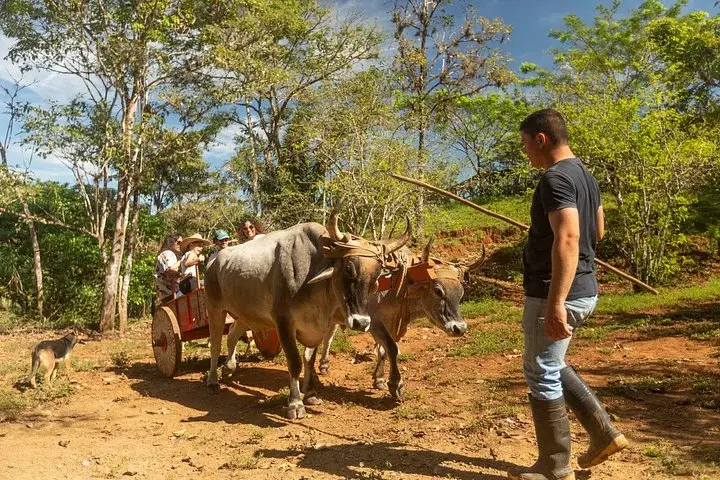
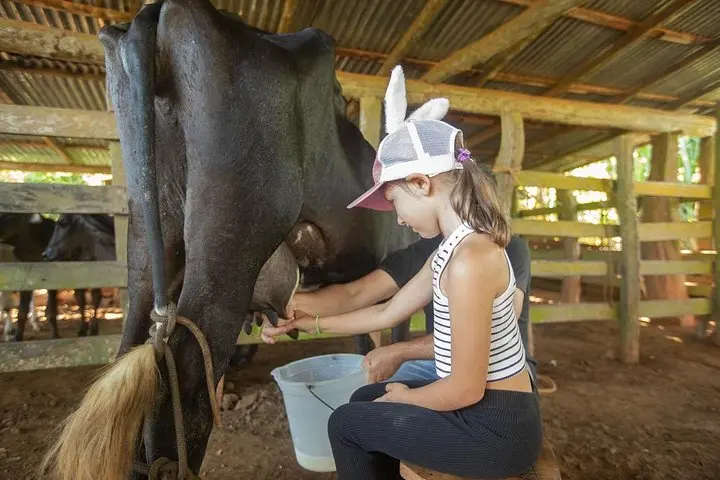
A low, humid morning opens over La Mencha as visitors step from the van into a working Costa Rican farm where chickens chatter and a trapiche’s wooden gears still turn. The air smells of fresh-cut sugarcane and coffee; a local family greets guests with simple, homegrown food and an invitation to learn. Over four to five hours participants move from milking cows to collecting eggs and watching traditional sugar extraction, all within walking distance of a braided river and pasture slopes that hint at the peninsula’s volcanic soils.
A low, humid morning opens over La Mencha as visitors step from the van into a working Costa Rican farm where chickens chatter and a trapiche’s wooden gears still turn. The air smells of fresh-cut sugarcane and coffee; a local family greets guests with simple, homegrown food and an invitation to learn. Over four to five hours participants move from milking cows to collecting eggs and watching traditional sugar extraction, all within walking distance of a braided river and pasture slopes that hint at the peninsula’s volcanic soils.
Nicoya’s designation as a Blue Zone isn’t folklore but a pattern—diet rich in legumes and fresh produce, daily physical work, strong family bonds—that the tour makes tangible. Geologically the peninsula is a mix of older volcanic bedrock and sedimentary terraces, which give way to fertile valleys supporting mixed agriculture. Culturally the visit centers on “Tico” rhythms: early starts, shared meals, and practical craft skills such as trapiche operation and small-scale animal husbandry.
Practically, expect moderate activity: steady walking, hands-on chores, and a short horseback ride to the river. The host family provides farm-to-table breakfast or lunch and private transport from Santa Teresa. Guests should bring sturdy closed-toe shoes, sun protection, and a refillable water bottle; be prepared for uneven ground and occasional mud. The experience is as much about slowing down and learning day-to-day practices that support longevity as it is about sightseeing—an educational, tactile window into rural Costa Rican life.