THE ADVENTURE COLLECTIVE® · Independent discovery and booking for outdoor travel

Cover Mpumalanga’s high escarpment panoramas and Kruger’s open savanna in a single 48-hour loop. From God’s Window and Bourke’s Luck Potholes to an open-vehicle Big Five safari, this short tour pairs dramatic geology with classic African wildlife viewing.
Cover Mpumalanga’s high escarpment panoramas and Kruger’s open savanna in a single 48-hour loop. From God’s Window and Bourke’s Luck Potholes to an open-vehicle Big Five safari, this short tour pairs dramatic geology with classic African wildlife viewing.
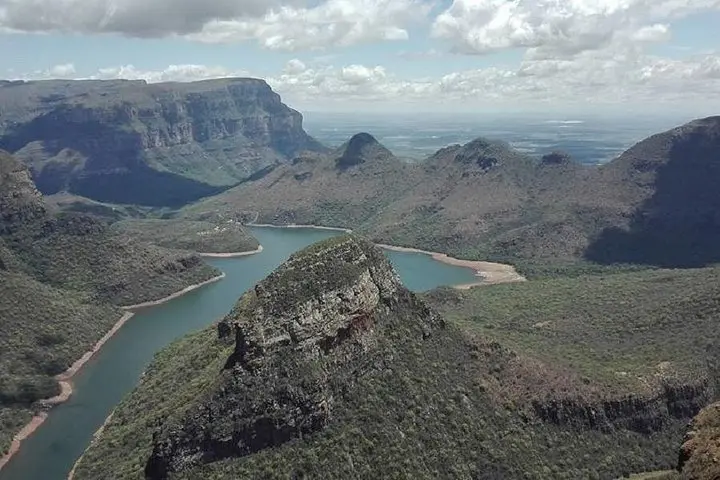
The minibus hums away from Nelspruit as the Lowveld unfurls: flat sugarcane fields giving way to an abrupt escarpment where mist clings to the Drakensberg rim. By midmorning you’re standing above a gorge that seems to swallow sound — the Blyde River Canyon opening beneath you, rock faces steep and cedar-dotted, and the Three Rondawels rising like rounded roofs over the river’s green bowl.
Verified experiences and guided adventures in the surrounding area.
Operated by Mbombela Experience Tours and Safaris · Hazyview, Mpumalanga
The minibus hums away from Nelspruit as the Lowveld unfurls: flat sugarcane fields giving way to an abrupt escarpment where mist clings to the Drakensberg rim. By midmorning you’re standing above a gorge that seems to swallow sound — the Blyde River Canyon opening beneath you, rock faces steep and cedar-dotted, and the Three Rondawels rising like rounded roofs over the river’s green bowl.
This tour stitches together two of Mpumalanga’s most direct contrasts: escarpment panoramas carved by millennia of water and a savanna that still runs on old rhythms. Mac-Mac Falls, a short early stop, remembers the gold rush era; miners blasted the rocks that now throw a tidy curtain into a fern-lined plunge pool. At God’s Window the Lowveld stretches in layers toward Mozambique and the Indian Ocean — a geological page-turn from high, iron-rich sandstone to the Lowveld’s alluvial plains.
Bourke’s Luck Potholes are where the landscape explains itself: swirling eddies bored cylindrical basins into banded quartzite, each pool a gallery of striated stone and tiny waterfalls. Lunch in Graskop has a tourist-town charm — Harries Pancakes is a good break point — then the road takes you into Kruger through Numbi or Phabeni Gate. By late afternoon a Kruger ranger meets the group and you climb into an open safari vehicle; the raised seating grants an unobstructed view as light drops and nocturnal animals begin to stir.
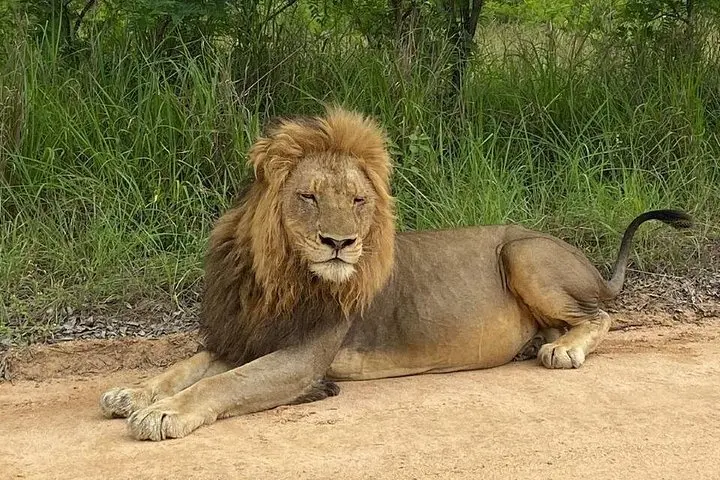
Overnight you’ll sleep at a rest camp within Kruger — tents or simple huts with beds provide surprising comfort — and an optional night drive can turn the bush into a brief, luminous world of eyeshine and insect calls. Dawn the next day is uncompromising: ten hours on an open vehicle, scanning for spoor, listening to guides parse behavior, searching out the Big Five as the bush warms.
Practicalities: plan for long days and varied weather. The escarpment can be cool and windy while the Lower Lowveld is hot; bring layers, sun protection, and sturdy shoes for short walks at viewpoints. A passport is required for travel documentation; national park fees and park-side accommodation are included. Minimum age is 12.
This itinerary is compact but vivid — a two-day primer on Mpumalanga’s geology and fauna. For photographers, sunrise and late afternoon in Kruger offer the most dramatic light; for wildlife seekers, the dry winter months condense animal activity around water. Guides handle logistics and interpretation, so come ready to watch closely and move quietly — the veld rewards patience.
You’ll stay in a Kruger rest camp in a tent or simple hut with beds; upgrades may be offered at extra cost if available.
National park fees, dinner, breakfast and bottled water are included; lunch on the second day is at own cost.
Minimum age is 12; younger children are not permitted due to vehicle and park regulations.
An optional night drive is available at extra cost subject to availability and park rules—book or inquire with your guide on the day.
Yes — a current valid passport is required when traveling and on the day of the tour.
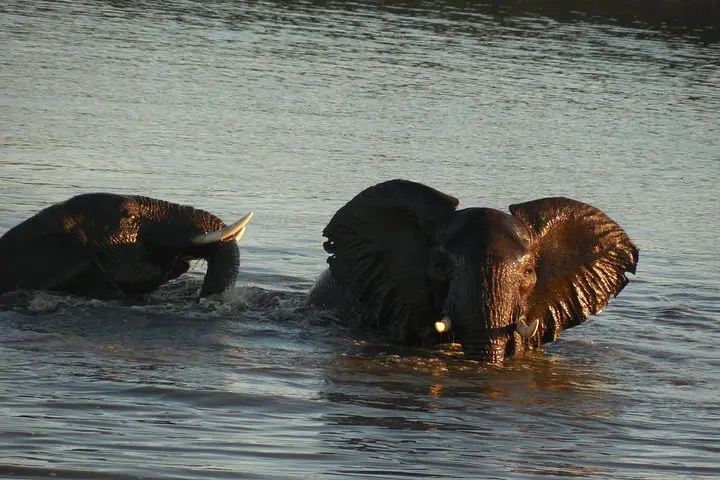
Guides use tracks and knowledge of water points to find animals; sightings of elephants, buffalo, lions, leopards and rhino are possible but not guaranteed.
Mbombela Experience Tours and Safaris operates guided outdoor trips and adventures with an emphasis on safety, stewardship, and memorable experiences.
The minibus hums away from Nelspruit as the Lowveld unfurls: flat sugarcane fields giving way to an abrupt escarpment where mist clings to the Drakensberg rim. By midmorning you’re standing above a gorge that seems to swallow sound — the Blyde River Canyon opening beneath you, rock faces steep and cedar-dotted, and the Three Rondawels rising like rounded roofs over the river’s green bowl.
The minibus hums away from Nelspruit as the Lowveld unfurls: flat sugarcane fields giving way to an abrupt escarpment where mist clings to the Drakensberg rim. By midmorning you’re standing above a gorge that seems to swallow sound — the Blyde River Canyon opening beneath you, rock faces steep and cedar-dotted, and the Three Rondawels rising like rounded roofs over the river’s green bowl.
This tour stitches together two of Mpumalanga’s most direct contrasts: escarpment panoramas carved by millennia of water and a savanna that still runs on old rhythms. Mac-Mac Falls, a short early stop, remembers the gold rush era; miners blasted the rocks that now throw a tidy curtain into a fern-lined plunge pool. At God’s Window the Lowveld stretches in layers toward Mozambique and the Indian Ocean — a geological page-turn from high, iron-rich sandstone to the Lowveld’s alluvial plains.
Bourke’s Luck Potholes are where the landscape explains itself: swirling eddies bored cylindrical basins into banded quartzite, each pool a gallery of striated stone and tiny waterfalls. Lunch in Graskop has a tourist-town charm — Harries Pancakes is a good break point — then the road takes you into Kruger through Numbi or Phabeni Gate. By late afternoon a Kruger ranger meets the group and you climb into an open safari vehicle; the raised seating grants an unobstructed view as light drops and nocturnal animals begin to stir.
Overnight you’ll sleep at a rest camp within Kruger — tents or simple huts with beds provide surprising comfort — and an optional night drive can turn the bush into a brief, luminous world of eyeshine and insect calls. Dawn the next day is uncompromising: ten hours on an open vehicle, scanning for spoor, listening to guides parse behavior, searching out the Big Five as the bush warms.
Practicalities: plan for long days and varied weather. The escarpment can be cool and windy while the Lower Lowveld is hot; bring layers, sun protection, and sturdy shoes for short walks at viewpoints. A passport is required for travel documentation; national park fees and park-side accommodation are included. Minimum age is 12.
This itinerary is compact but vivid — a two-day primer on Mpumalanga’s geology and fauna. For photographers, sunrise and late afternoon in Kruger offer the most dramatic light; for wildlife seekers, the dry winter months condense animal activity around water. Guides handle logistics and interpretation, so come ready to watch closely and move quietly — the veld rewards patience.