THE ADVENTURE COLLECTIVE® · Independent discovery and booking for outdoor travel
Walk the Bogside with a guide who links Derry’s powerful murals to the events of Bloody Sunday and the civil rights era. This 90‑minute tour combines on-street storytelling, memorial sites, and local perspectives for a grounded, respectful history walk.
Walk the Bogside with a guide who links Derry’s powerful murals to the events of Bloody Sunday and the civil rights era. This 90‑minute tour combines on-street storytelling, memorial sites, and local perspectives for a grounded, respectful history walk.
A cool wind off the River Foyle brushes past painted walls as you step into the Bogside. The walking tour begins on narrow streets where concrete and paint carry memory; the guide’s voice maps human detail onto broad, graphic murals. You move from panel to panel, stopping where slogans once echoed across barricades and where a whitewashed wall — Free Derry Corner — still marks a defiant claim to place.
Verified experiences and guided adventures in the surrounding area.
Operated by Derry Guided Tours · Derry, Northern Ireland
A cool wind off the River Foyle brushes past painted walls as you step into the Bogside. The walking tour begins on narrow streets where concrete and paint carry memory; the guide’s voice maps human detail onto broad, graphic murals. You move from panel to panel, stopping where slogans once echoed across barricades and where a whitewashed wall — Free Derry Corner — still marks a defiant claim to place.
The murals that form The People’s Gallery were created by the Bogside Artists to record key moments of The Troubles; they sit alongside sites tied to 20th-century civil rights struggles, most notably the Bloody Sunday killings of 1972. Geology matters here more for the river that shaped Derry’s layout than for stone peaks — the city’s defensive walls and the low sandstone of the Foyle bank give the place its compact feel. Local culture is present in hard-won pride: community-led storytelling, small museums, and memorials that anchor interpretation in lived experience.
Practically, expect 90 minutes of standing and street walking on uneven pavements; a knowledgeable guide frames dates, names, and local perspectives while pointing out lesser-seen panels and the context behind each image. Bring a waterproof layer, sturdy shoes, and time to visit the nearby Museum of Free Derry afterward. Photography is permitted, but remember these are memorial spaces — listen to your guide and follow local requests when pausing at sensitive sites. Tours run year-round; mornings are quieter and weekday walks give more room for questions. This is a history walk as much as a mural tour — visceral, informative, and rooted in community memory.
The guided tour lasts about 90 minutes and covers a short, concentrated route through the Bogside—roughly 1–2 km with several stops at murals and memorials.
Children can attend but should be comfortable standing and listening; mobility-restricted visitors should contact the operator in advance—some pavements are uneven and there are no guaranteed alternative routes.
Yes, photography is generally allowed, but guides may request quiet or private reflection at sensitive memorial sites—respect those requests.
The standard offering is in English; check the booking page or contact the operator for other language options or private-group arrangements.
Derry Guided Tours operates guided outdoor trips and adventures with an emphasis on safety, stewardship, and memorable experiences.
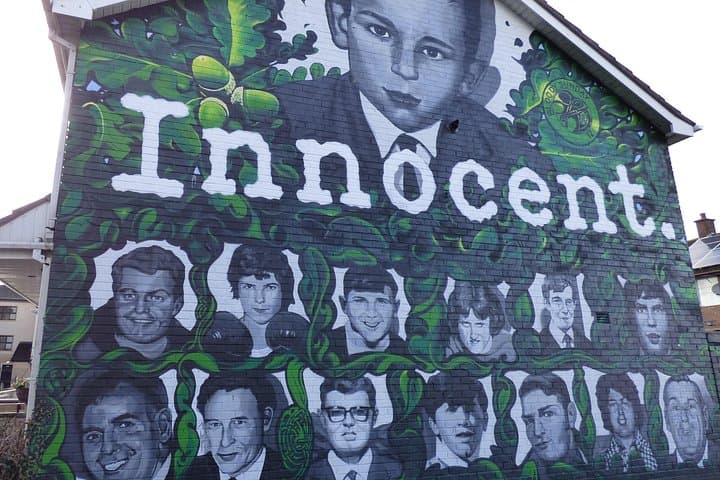
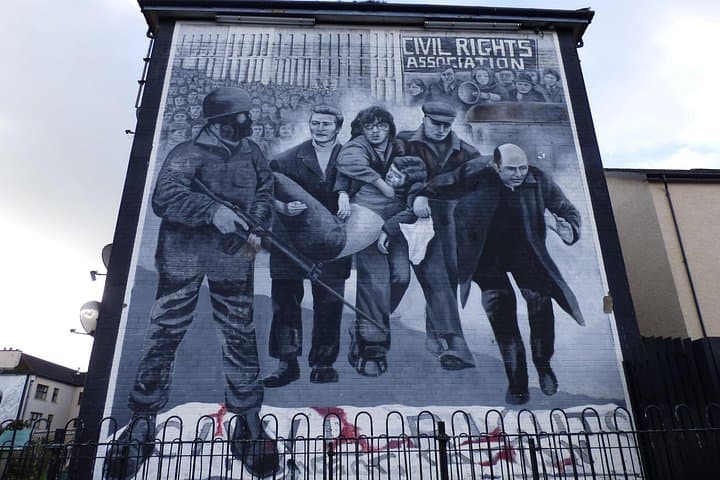
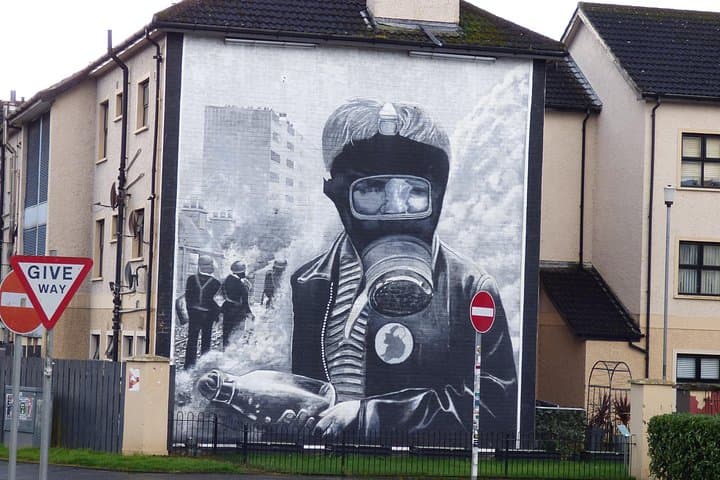
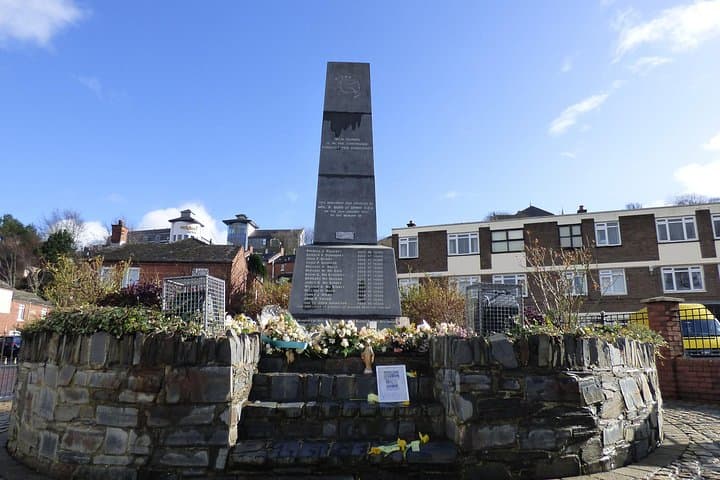
A cool wind off the River Foyle brushes past painted walls as you step into the Bogside. The walking tour begins on narrow streets where concrete and paint carry memory; the guide’s voice maps human detail onto broad, graphic murals. You move from panel to panel, stopping where slogans once echoed across barricades and where a whitewashed wall — Free Derry Corner — still marks a defiant claim to place.
A cool wind off the River Foyle brushes past painted walls as you step into the Bogside. The walking tour begins on narrow streets where concrete and paint carry memory; the guide’s voice maps human detail onto broad, graphic murals. You move from panel to panel, stopping where slogans once echoed across barricades and where a whitewashed wall — Free Derry Corner — still marks a defiant claim to place.
The murals that form The People’s Gallery were created by the Bogside Artists to record key moments of The Troubles; they sit alongside sites tied to 20th-century civil rights struggles, most notably the Bloody Sunday killings of 1972. Geology matters here more for the river that shaped Derry’s layout than for stone peaks — the city’s defensive walls and the low sandstone of the Foyle bank give the place its compact feel. Local culture is present in hard-won pride: community-led storytelling, small museums, and memorials that anchor interpretation in lived experience.
Practically, expect 90 minutes of standing and street walking on uneven pavements; a knowledgeable guide frames dates, names, and local perspectives while pointing out lesser-seen panels and the context behind each image. Bring a waterproof layer, sturdy shoes, and time to visit the nearby Museum of Free Derry afterward. Photography is permitted, but remember these are memorial spaces — listen to your guide and follow local requests when pausing at sensitive sites. Tours run year-round; mornings are quieter and weekday walks give more room for questions. This is a history walk as much as a mural tour — visceral, informative, and rooted in community memory.
